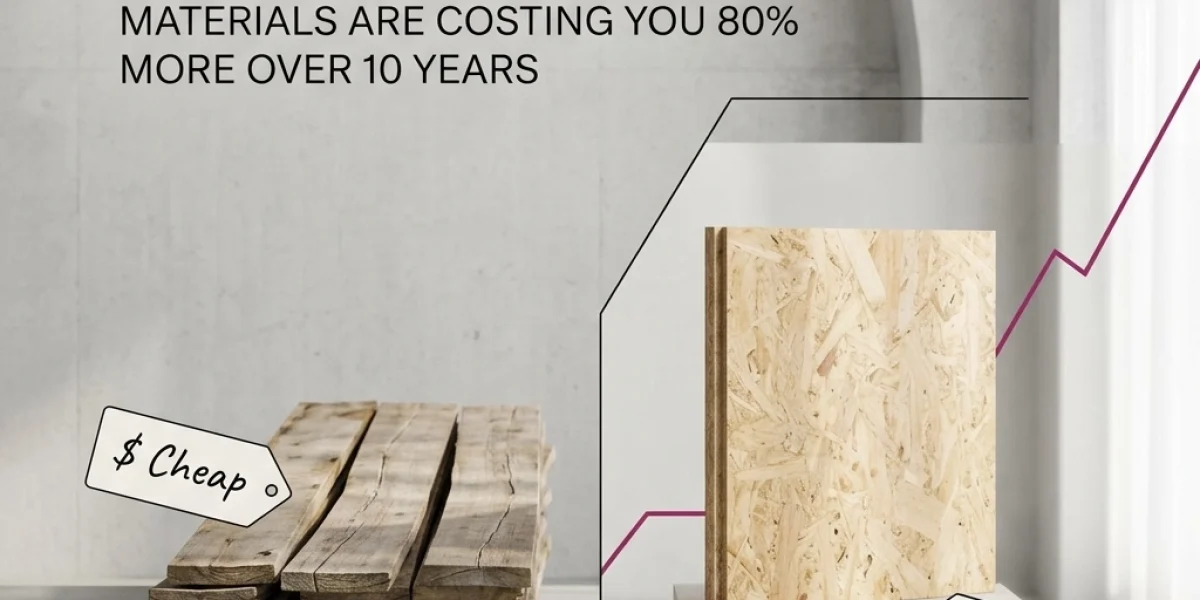
If you’re pricing materials on upfront cost alone, timber can look like the easy win. On paper, it might come in 40% cheaper on day one. That’s the trap.
The problem is simple: cheap to buy doesn’t mean cheap to own. Once you factor in sealing, sanding, oiling, repairs, moisture damage, and replacement cycles, that “saving” disappears fast.
At Resourceful Living, we see this over and over. Projects that start with timber to save money end up paying a long-term maintenance tax that blows out budgets and drains labour.
That’s why more specifiers are switching to recycled plastic sheets australia for outdoor, wet-area, and high-wear applications. The upfront comparison is only part of the story. The real number that matters is whole-of-life cost.
Let’s break down where timber loses and why rHDPE changes the equation.
The "Timber Trap": Why the 40% Upfront Saving Is a Lie
Most material decisions still get made on CAPEX. That’s the purchase price. But if you stop there, you’re missing the number that actually hurts: OPEX.
Timber often looks around 40% cheaper upfront. That sounds efficient until the maintenance schedule starts, the weather gets involved, and the replacement cycle kicks in.
The issue isn’t that timber fails instantly. The issue is that it fails predictably:
- It absorbs moisture
- It moves, swells, and warps
- It needs repeated coating and surface treatment
- It can rot, split, and degrade in exposed environments
- It keeps pulling labour back into old jobs
That’s the trap. You don’t buy timber once. You keep buying it again in maintenance, downtime, and replacement.
When you compare recycled plastic vs timber, the “cheaper” option starts looking expensive very quickly.
The "Maintenance Tax": Oiling, Sanding, and Rotting
Timber’s real cost shows up after install. Not in the quote. Not in the procurement spreadsheet. In the years of maintenance that follow.
Here’s what that usually looks like:
- Oiling and sealing every 12–18 months
- Sanding to remove weathering, splinters, and surface breakdown
- Rot repairs in wet or shaded areas
- Board replacement when sections split, warp, or fail
- Extra labour callouts to keep assets safe and presentable
For councils, builders, schools, hospitality venues, and public infrastructure teams, this becomes a recurring budget leak. You’re not just maintaining a surface. You’re funding a maintenance programme that never really ends.
If a material needs constant attention to survive outdoors, it isn’t low cost. It’s high commitment.
The rHDPE Advantage: 100% Waterproof, Inert, Zero Maintenance
This is where rHDPE changes the game.
At Resourceful Living, we manufacture durable products from recycled high-density polyethylene: a material that is non-porous, chemically inert, and built for harsh Australian conditions. It doesn’t behave like timber because it isn’t biological.
That means you get:
- 100% waterproof performance: It won’t absorb water, swell, or rot.
- Inert stability: It doesn’t need oiling, sealing, or chemical treatment to stay functional.
- Zero maintenance requirements: No sanding. No repainting. No ongoing preservation cycle.
- No termite appeal: Pests don’t feed on it.
- Long service life: Ideal for outdoor and high-moisture applications where timber becomes a liability.
If you want to see that in practice, check out how custom recycled plastic fixed a public bin nightmare. The win wasn’t just replacement. It was removing the maintenance cycle altogether.
Why "Cheap" Plywood is a False Economy
We see it all the time in fit-outs and construction: formply or marine plywood used in high-moisture areas because it's "cheaper" than plastic.
It’s a lie.
Within five years, that plywood will delaminate. The edges will swell. The glue will fail. You’ll be back on site, paying for demolition, new materials, and new labor. You’ve effectively paid for the project twice.
By switching to our recycled plastic sheets in Australia, you move from a 5-year replacement cycle to a 50-year asset life. That is how you move maintenance-free infrastructure from OPEX to CAPEX. You spend once, and you spend right.

The Australian Advantage: 100% Traceable, 100% Recycled
In 2026, "greenwashing" is a legal and reputational risk. If you’re specifying recycled materials, you need to know exactly where they came from.
A lot of "recycled" plastic on the Australian market is actually imported from overseas with murky supply chains. Resourceful Living is different. We use 100% Australian post-consumer waste.
- Traceability: We can tell you exactly which waste stream your sheets came from.
- Sovereign Capability: By manufacturing in Australia, we aren't at the mercy of global shipping delays or supply chain risks.
- Carbon Reporting: Our materials help you smash your ESG targets and embodied carbon reporting requirements.
We don't just sell you a product; we provide a documented sustainability win that helps you win government tenders.
The Ultimate Circular Loop: Our Take-Back Program
Timber ends up in a skip bin at the end of its life. That’s more money out of your pocket in landfill levies.
Resourceful Living operates a Closed-Loop Take-Back Program. Because our sheets are 100% HDPE and contain no resins or toxic glues, they are infinitely recyclable.
When your project eventually reaches the end of its life: whether that’s in 20 years or 50: we don't want that material in the ground. We will take it back, granulate it, and turn it into new sheets.

This isn’t just good for the planet; it’s a massive insurance policy for your waste management costs. You are essentially pre-paying for your waste disposal by choosing a material that has intrinsic value at the end of its life. That is the definition of a Closed-Loop ESG Partner Program.
The Math: 50-Year Comparison ($100k for Timber vs $18k for rHDPE)
If you want the shortest version, here it is:
- Timber looks cheaper upfront
- Timber keeps charging you for decades
- rHDPE costs more at the start but far less over the life of the asset
Example whole-of-life comparison
| Cost Category | Timber | Resourceful Living rHDPE |
|---|---|---|
| Initial install | Lower upfront | Higher upfront |
| Oiling / sealing / sanding | Recurring | $0 |
| Rot, warping, board replacement | Recurring | $0 |
| Pest treatment / risk | Possible ongoing cost | $0 |
| 50-year whole-of-life cost | ~$100,000 | ~$18,000 |
That’s the difference between buying a material and buying a maintenance burden.
A 40% saving at install means nothing if the 50-year outcome is $100k for timber versus $18k for rHDPE.
For specifiers, asset owners, and builders, this is the real commercial argument for recycled plastic sheets australia. You reduce maintenance exposure, protect lifecycle budgets, and avoid predictable replacement costs.
Stop Paying the Maintenance Tax
If your project is exposed to water, weather, impact, cleaning cycles, or public use, timber is rarely the low-cost option it pretends to be.
Our recycled plastic vs timber comparison makes the trade-off clear: less maintenance, longer life, lower total cost.
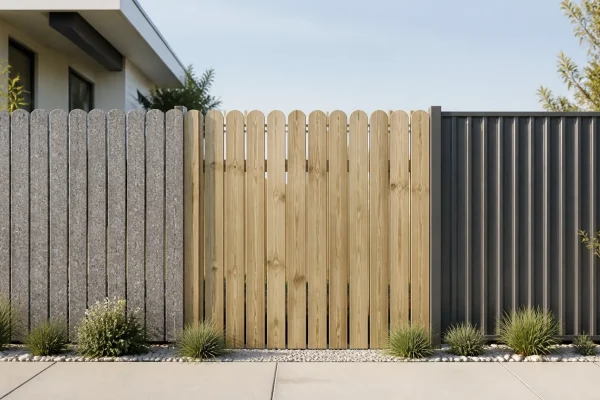
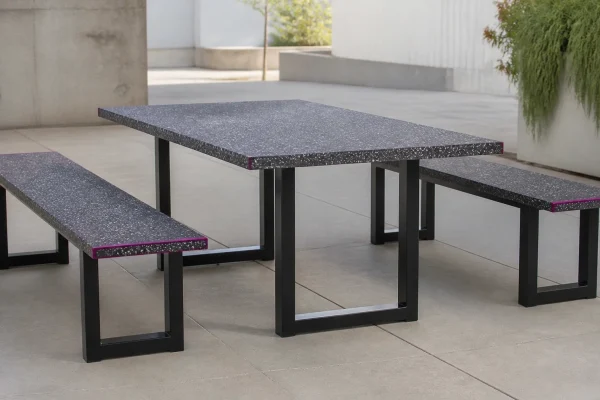
Whether you need recycled plastic sheets australia for cladding, screening, furniture, wet areas, industrial fit-outs, or public infrastructure, we can help you specify a material that works harder for longer.
Ready to switch?
Don’t let your next project fall into the timber trap.
- Book a waste audit: We’ll help you identify where recycled plastic can replace high-maintenance materials.
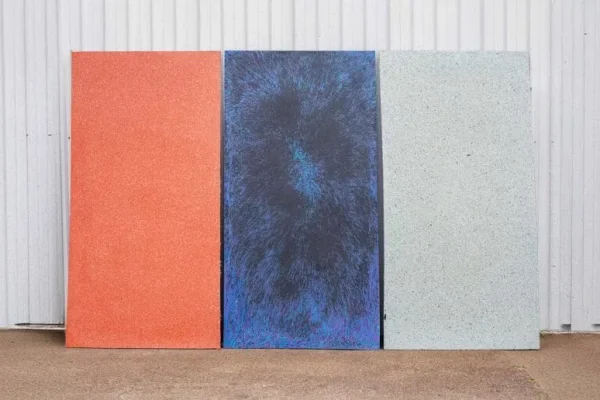
- Order a sample pack: See the colours, thicknesses, and finish options for your next specification.
- Talk to our team: We’ll help you compare lifecycle cost, application suitability, and lead times.
It’s time to stop paying for oiling, sanding, and replacement. Reach out to Resourceful Living and build it once.