When we talk about the circular economy, we often focus on the "easy" stuff: milk bottles, soft plastics, or cardboard. But what about the tiny, complex items that fall through the cracks?
Enter the humble SIM card. Individually, they weigh next to nothing. Collectively? They represent a massive waste stream of high-quality plastic that usually ends up in a hole in the ground.
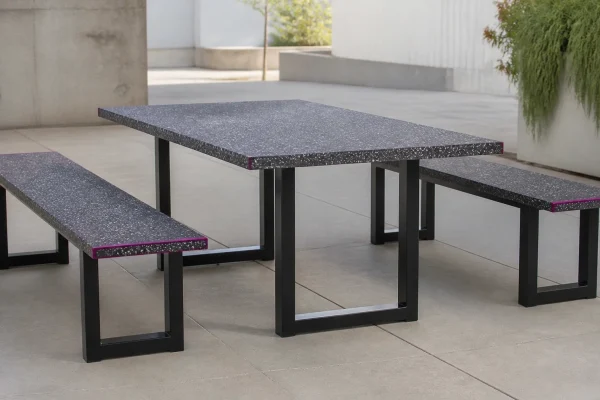
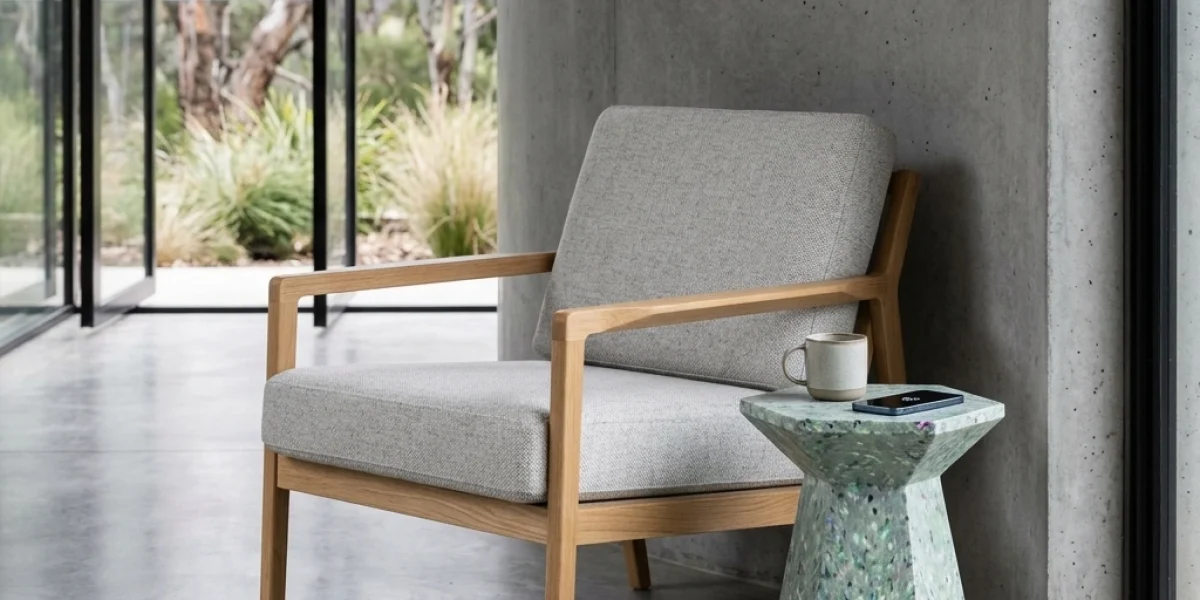
At Resourceful Living, we’ve always believed that waste is just a design flaw. That’s why our partnership with Telstra wasn't just a project: it was a proof of concept for the entire country. We took 3 million decommissioned SIM cards and turned them into high-end, sustainable furniture for Australia's retail stores and corporate offices.
Here’s how we did it, why it matters for social procurement, and what it means for the future of Australian manufacturing.
The Problem: 3 Million Tiny Plastic Headaches
Think about your own tech drawer. You probably have two or three old SIM cards rattling around. Now, multiply that by a national telecommunications giant.
When Telstra transitioned to new SIM formats and shifted towards eSIM technology, they were left with a mountain of obsolete plastic. Traditional recycling streams aren't set up for items this small. They fall through the grates of sorting machines and vanish into landfill.
For a company committed to Net Zero and circularity, "landfill" wasn't an option. They needed a way to keep that material in the loop.
Why SIM Cards?
SIM cards are made from high-grade polymers. While the "chip" part is metal, the surrounding card is durable, moisture-resistant plastic. By harvesting this material, we aren't just "recycling"; we are capturing a resource that has already been through an energy-intensive manufacturing process.
The Process: From E-Waste to Designer Furniture
Turning 3 million SIM cards into a sleek boardroom table or a retail display unit isn't as simple as melting them down. It requires a precise, traceable manufacturing procedure.
- Collection & Stripping: The SIM cards were collected and the metallic chips removed for separate e-waste processing.
- Shredding: The plastic frames were shredded into uniform granules.
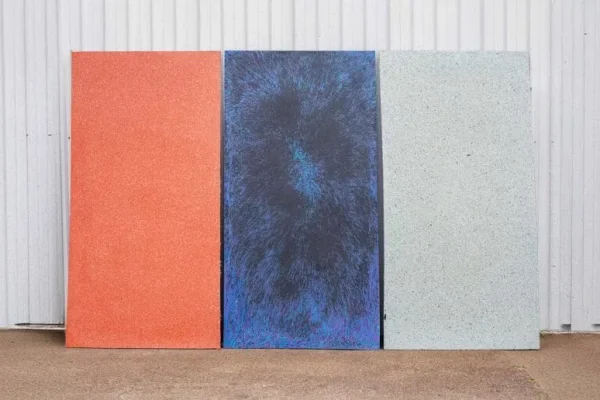
- Blending: We mixed these granules to create a specific aesthetic. Because the cards come in various colours, we were able to create a unique "terrazzo" effect that told the story of the material.
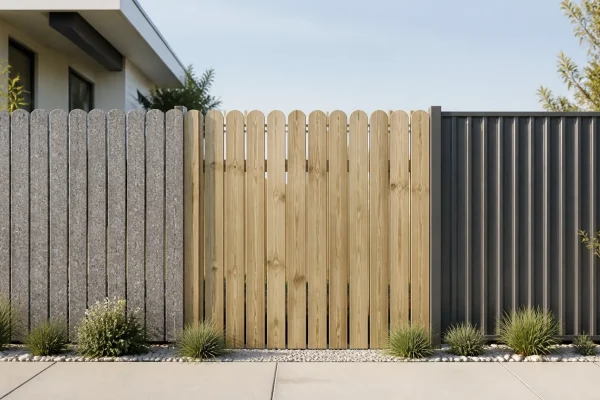
- Heat & Pressure: Using our proprietary technology in the Hunter Valley, we pressed these granules into large-format, high-density panels.
- Fabrication: Our CNC machines then cut these panels into the final components for sustainable furniture in Australia.

"The result wasn't just a 'recycled' product. It was a premium piece of functional art that fulfilled a commercial need while diverting tonnes of plastic from landfill."
Why This Matters for Social Procurement
If you work in procurement for a major corporation or government body, you’ve likely heard the term social procurement. It’s no longer enough to buy the cheapest product; you have to consider the social and environmental impact of your spend.
By choosing sustainable furniture in Australia made from their own waste, Telstra hit a "triple bottom line":
- Environmental: 3 million SIM cards stayed out of landfill.
- Economic: They supported local Australian manufacturing and jobs.
- Social: They demonstrated a transparent, closed-loop system to their customers and stakeholders.
This is a textbook example of strategic procurement. When you look at the beyond the bin strategy, it’s clear that the future of business lies in these circular partnerships.
Local Manufacturing: The Traceability Advantage
One of the biggest risks in the "green" space right now is greenwashing. Many companies claim their furniture is "made from recycled ocean plastic," but the material is often sourced overseas with zero traceability.
Because we are based in Newcastle, NSW, Telstra could literally walk through our factory and see their SIM cards being turned into tables. This local traceability is your best defence against greenwashing.

Performance That Beats Traditional Materials
We didn't just make these tables for looks. In a busy retail environment, furniture takes a beating. Unlike traditional timber or plywood, our recycled plastic panels are:
- 100% Waterproof: They won't swell or rot if a drink is spilled.
- UV Stable: They won't fade or crack in sunny storefront windows.
- Low Maintenance: No oiling, sanding, or painting required.
In fact, when you look at the ROI of circularity, recycled plastic often outlasts traditional materials by 5x in high-traffic conditions.
Building the Case for Your Next Fit-Out
You might not have 3 million SIM cards sitting in your warehouse, but you likely have a waste stream or a sustainability target that feels impossible to reach.
Whether you are looking for recycled plastic sheets for construction or custom-made sustainable furniture, the lesson from the Telstra story is simple: The material is already here.
How to Start Your Circular Journey:
- Audit Your Waste: What are you currently throwing away? Could it be a raw material?
- Define Your Metrics: Are you chasing Embodied Carbon reduction or Social Procurement targets? Check out our guide on embodied carbon reporting for more.
- Partner Locally: Work with Australian manufacturers who can provide a certificate of origin and a 100% circular guarantee.

The Future of Australian Retail and Office Spaces
By 2026, the landscape of Australian procurement will be unrecognisable for those who aren't prepared. Government tenders are already moving toward "if not, why not" policies regarding recycled content.
Projects like the Telstra SIM card furniture prove that we don't have to sacrifice aesthetics or durability to meet these goals. We can create beautiful, functional spaces that actually clean up the planet.
Ready to transform your supply chain?
If you’re a project manager, designer, or procurement officer, don't wait for the regulations to force your hand. Start reaping the benefits of durable, locally-made, sustainable furniture in Australia today.
We offer a 7-day fast-track guide for commercial fit-outs to help you get your project off the ground quickly.

The Telstra story is just the beginning. Your waste could be the next designer piece in your office lobby. Let's make it happen.
Key Takeaways for Project Managers:
- ✅ Scale is possible: If we can do 3 million SIM cards, we can handle your project.
- ✅ Durability is key: Recycled plastic panels outperform timber in high-traffic retail.
- ✅ Social Procurement: Buying local and recycled isn't just "good": it's a competitive advantage in 2026 tenders.
- ✅ Traceability: Local manufacturing ensures your ESG claims are bulletproof.