If you're managing a commercial project in 2026, you've probably felt the pressure to "go green" without blowing the budget. It's a tough balancing act. Usually, the first instinct is to reach for timber. It’s familiar, it looks natural, and on the initial quote, it’s significantly cheaper than high-performance recycled plastic.
But here’s the truth that most procurement teams miss: Timber is a debt you pay off every single year.
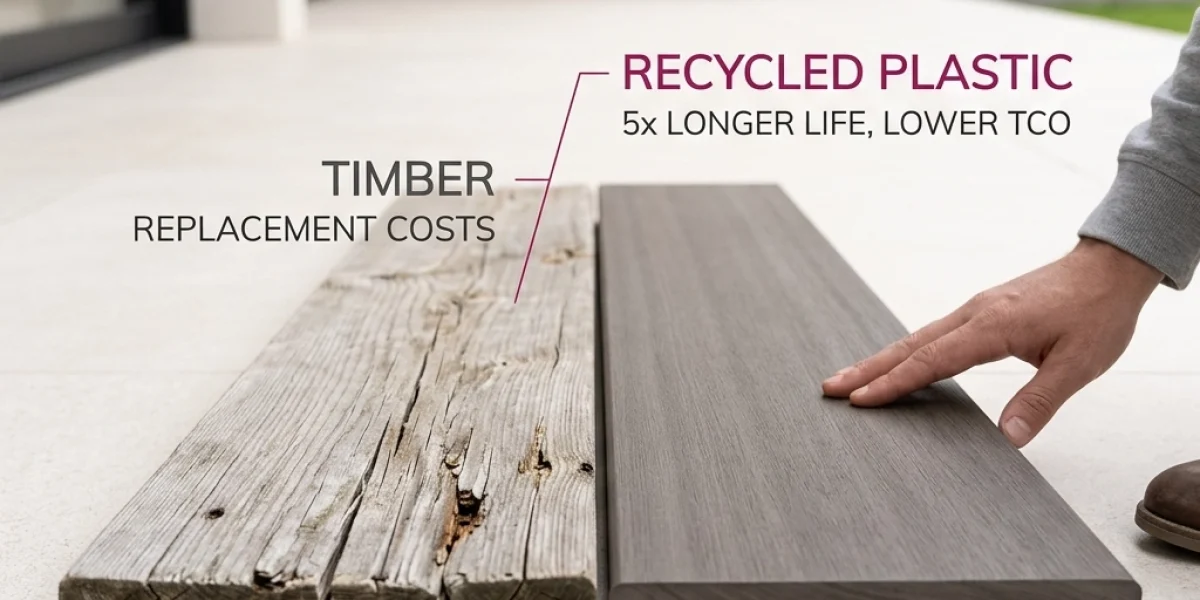
When we look at the recycled plastic vs timber comparison over a 10-year horizon, the "cheaper" option starts to look like a financial black hole. Between the rising costs of specialized labor, the skyrocketing price of landfill levies, and the sheer physics of rot in the Australian climate, timber is actually costing your project up to 5x more than recycled plastic.
Let’s break down the math.
The Upfront Cost Illusion
I get it. When you’re looking at a 2026 price guide, recycled HDPE (High-Density Polyethylene) panels often carry a premium of 1.8x to 2x the cost of treated pine or plywood. On a spreadsheet, timber wins the first round.
However, that initial price tag only accounts for Day 1. It doesn't account for the fact that timber begins to degrade the moment it hits the site. In the Australian sun and humidity, timber is a ticking clock. By the time you've sanded, sealed, and treated it for the second time, you've already closed the price gap.
Maintenance: The Silent Profit Killer
This is where the math gets ugly for timber. To keep timber looking decent and structurally sound, you're looking at a maintenance cycle every 12 to 24 months.
- Year 2: Sanding and re-staining.
- Year 4: Replacing warped boards or termite-damaged sections.
- Year 6: Another round of chemical treatments and sealant.
- Year 8: Major structural repairs.
By Year 10, most external timber installations are ready for a total overhaul. When you factor in the cost of labor: which has only gone up: the simple act of maintaining a timber deck or retaining wall can cost $750 to $1,500 annually for a mid-sized commercial installation.
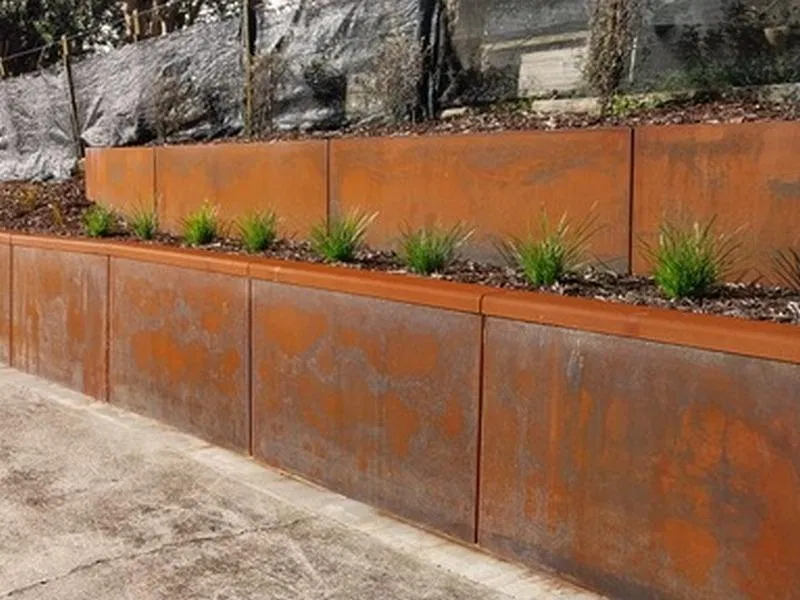
Recycled plastic requires zero maintenance. No oiling. No staining. No sanding. You might hit it with a pressure washer once a year if it gets muddy, but that’s it. In our experience, the ROI of circularity becomes crystal clear by Year 3. Every dollar you spend on timber maintenance after that is pure profit lost.
The 5x Durability Rule
Why do we say recycled plastic lasts 5x longer? Because HDPE is chemically inert. It doesn't absorb water, it doesn't rot, and termites find it incredibly boring.
While a standard timber retaining wall or garden bed might have a functional life of 7 to 10 years before the structural integrity is compromised, our recycled plastic panels are rated for 50+ years.
"Choosing timber for long-term infrastructure is like leasing a car that you have to rebuild piece-by-piece every three years. Recycled plastic is the car you buy once and drive for the rest of your life." : Jess Hodge, Resourceful Living.
When you spread the initial cost over 50 years instead of 10, the "expensive" material becomes the bargain of the century. You aren't just buying a panel; you're buying the end of your replacement cycle.
Landfill Levies: The Hidden Exit Fee
In 2026, getting rid of waste isn't just a hassle: it's a massive line item. Landfill levies in Australia have continued to climb, often exceeding $140 per tonne.
When that timber installation finally fails at Year 10, you have to pay to:
- Demolish it.
- Transport it.
- Dispose of it (and because it's often treated with chemicals, it can't always go into standard skip bins).
With recycled plastic, you're looking at a closed-loop system. If you ever decide to change the design of your project, those panels don't go to the tip. They come back to us. We can regrind them and turn them into something else. You avoid the landfill levy entirely and bolster your ESG credentials in the process. Understanding site waste is the key to protecting your margins in the long run.

ESG and the "If Not, Why Not" Procurement Shift
It’s not just about the bank balance; it’s about winning the next contract. Government tenders and major developers are now using "If Not, Why Not" procurement policies. This means if you don't choose a sustainable material like recycled plastic, you have to justify why.
Using recycled plastic isn't just a "nice to have": it’s a data-driven defense of your project's carbon footprint. By choosing locally manufactured panels, you can provide embodied carbon reporting that meets NABERS standards and helps your clients hit their Net Zero targets.
A Quick Comparison Table: Timber vs. Recycled Plastic
| Feature | Timber (Treated Pine/Ply) | Resourceful Living Recycled HDPE |
|---|---|---|
| Initial Cost | Lower ($) | Moderate ($$) |
| Maintenance | High (Annual oiling/sanding) | Zero |
| Lifespan | 7–12 Years | 50+ Years |
| Termite/Rot Resistance | Low (Requires chemicals) | Immune |
| Landfill Cost | High (Disposal levies) | Zero (Take-back program) |
| 10-Year Total Cost | Up to 5x Higher | Locked-in Savings |
How to Pivot Your Project Today
If you're ready to stop the "Timber Trap," here is a simple 3-step plan to transition your next project:
- Audit Your High-Maintenance Areas: Look for spots where timber is currently used: decking, retaining walls, cabinetry carcasses, or site hoardings. These are your biggest ROI wins. Check out our 7 mistakes to fix for more guidance.
- Request a Lifecycle Cost Analysis: Don't just look at the quote. Ask for the 10-year projection including labor and maintenance. We can help provide the data you need for your stakeholders.
- Specify Local: Ensure your panels are traceable and Australian-made. This eliminates the risk of greenwashing and reduces transport emissions.

The Bottom Line
The recycled plastic vs timber comparison isn't really a contest anymore. In 2026, the data is clear: timber is a luxury that your maintenance budget can no longer afford.
By switching to 100% recycled Australian HDPE, you’re not just being "green." You're being smart. You're eliminating maintenance, dodging landfill taxes, and ensuring your project stands for 50 years instead of five.
If you're tired of seeing your profits rot away, let's talk about how to get Resourceful Living panels onto your next site. We can take you from waste to worktop in as little as seven days.
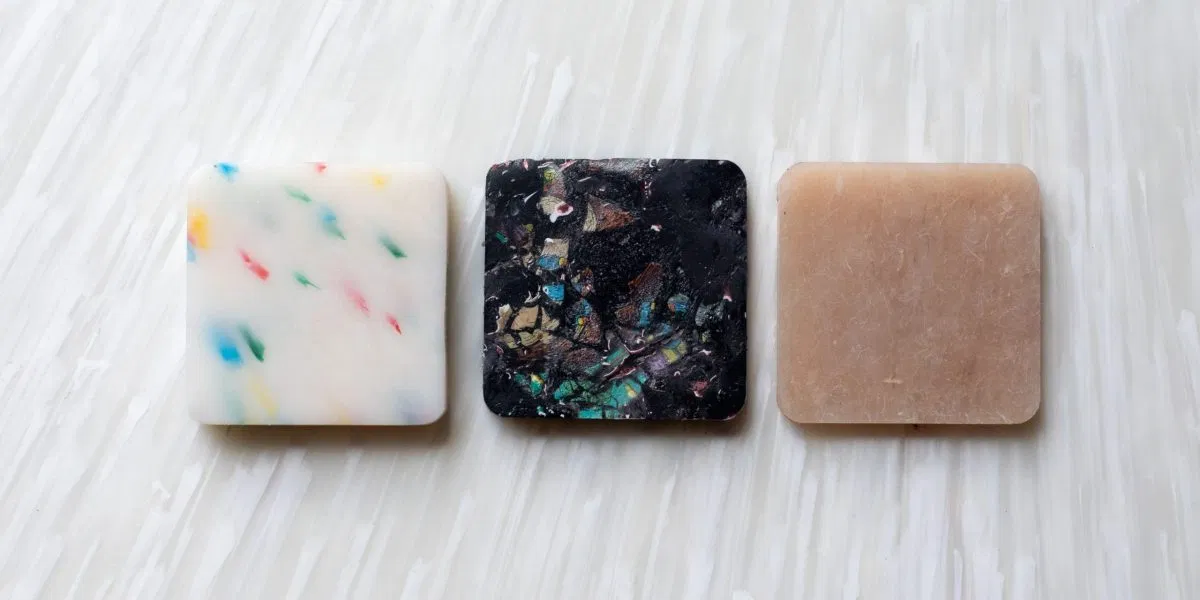
Ready to see the samples for yourself?
Don't let your next project become a 10-year liability. Choose the material that pays you back.