In 2026, the Australian construction landscape isn't just "going green", it’s being regulated into it. If you’re a Project Manager or Procurement Officer working on state-funded infrastructure, you’ve likely encountered the "If Not, Why Not" procurement logic.
Originally championed by Transport for NSW (TfNSW) and now standard across various government bodies, this policy flips the script on traditional material selection. Instead of builders having to justify why they want to use sustainable building materials in Australia, the burden of proof has shifted. You now have to justify why you aren’t using recycled content.
The goal of this guide is to remove the friction. We know that "standard" materials like timber and concrete are the path of least resistance because that’s "how it’s always been done." But with the Circular Construction 2026 movement in full swing, sticking to the status quo is becoming a high-risk strategy for your tenders.
Here is your 5-step checklist to successfully specify recycled plastic sheets in Australia and ace your next procurement audit.
1. Identify the "Default" Material Failures
The first step in any "If Not, Why Not" justification is identifying the weaknesses of the traditional material. To specify recycled plastic sheets in Australia, you must first prove that the incumbent material (usually plywood, timber, or concrete) is a long-term liability.
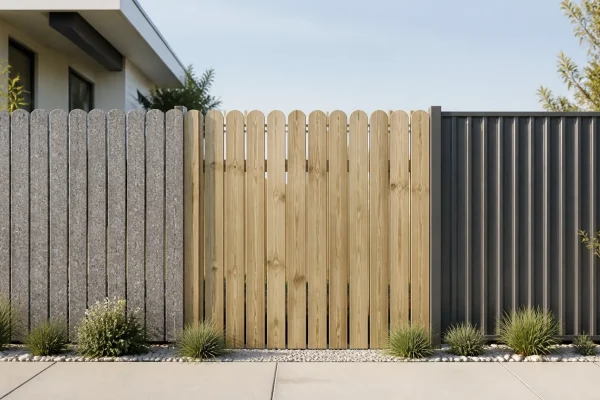
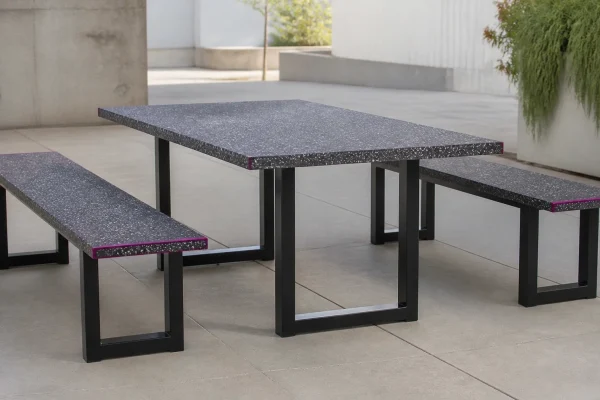
For example, if you are looking at site hoarding, formwork, or outdoor furniture, timber is the standard. However, timber rots, splinters, and requires constant staining or replacement. In harsh Australian conditions, the "cheap" upfront cost of plywood is a myth.
By highlighting the maintenance tax of traditional materials, you build the case for a swap. You aren't just buying plastic; you're buying an insurance policy against future OpEx costs.
"The most expensive material is the one you have to buy twice. When we look at the ROI of circularity, recycled HDPE outlasts plywood by 5x in high-exposure environments."
2. Match Technical Specs (Not Just "Feelings")
Procurement officers don't care about "saving the planet" as much as they care about risk mitigation. To get a recycled material over the line, you need to speak the language of data.
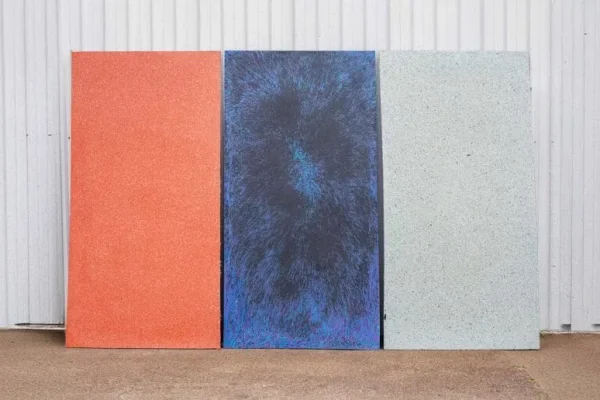
Don't just say it's "strong." Refer to the Product Data Sheets (PDS). At Resourceful Living, we provide full technical transparency so you can compare rHDPE (recycled High-Density Polyethylene) directly against structural timber or composite boards.
What to look for in your justification:
- Water Absorption: rHDPE has near-zero absorption. Timber does not.
- Chemical Resistance: Essential for mining and heavy industry.
- UV Stability: Our panels are designed for the Australian sun.
- Workability: Can it be cut with standard tools? (Yes, our panels work exactly like timber).
You can find our Product Data Sheet for 100% Recycled HDPE here to include in your tender submission.

3. Apply the Lifecycle Costing (LCC) Model
The biggest hurdle to sustainable building materials in Australia is often the upfront price. Recycled plastic can be more expensive per sheet than low-grade plywood.
This is where you apply the LCC Model. Under "If Not, Why Not" guidelines, government agencies are encouraged to look at the total cost of ownership, not just the purchase price.
The Math for your PM report:
- Initial Cost: $X
- Installation Cost: Same as timber.
- Maintenance Cost over 10 years: $0 (vs. $Y for timber).
- Replacement Frequency: 0 (vs. 3x for timber).
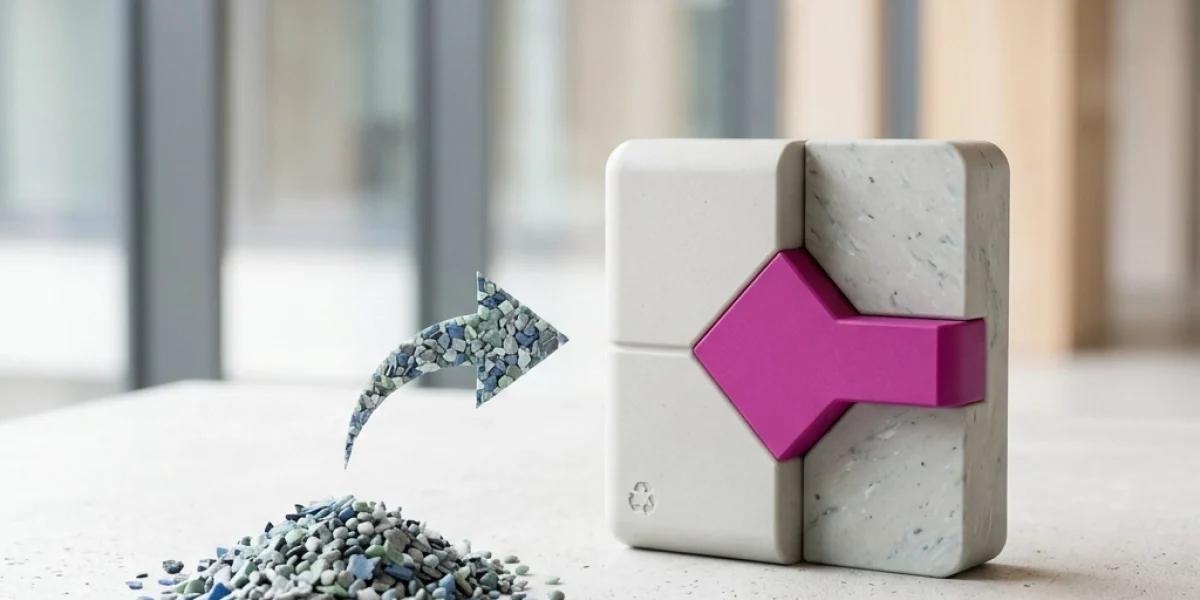
- End-of-Life Value: Resourceful Living offers a "Take-Back" program, meaning you pay zero landfill fees.
When you present the data this way, the "Why Not" becomes very difficult for a procurement officer to answer. Check out our 2026 Price Guide to start your calculations.
4. Verify Local Traceability & "Local Buy" Status
Greenwashing is a massive legal risk in 2026. If you specify "recycled plastic" but it's sourced from an offshore broker with no paper trail, you are opening your project up to an audit failure.
To pass the "If Not, Why Not" test, you need to prove the material is 100% Australian Recycled. This satisfies two government requirements:
- Environmental: Diverting local waste from local landfills.
- Economic: Supporting Australian manufacturing and jobs.
Resourceful Living is a Pre-Qualified Local Buy Supplier. This means we have already been vetted for quality, safety, and financial stability. Including our certification in your bid removes the "supplier risk" objection immediately.

5. Use the "Justification Script" (Copy & Paste)
We want to make your life easy. If you are sitting in a meeting and someone asks, "Why aren't we just using the standard specs?", here is the exact script to use:
*"While traditional timber is the historical standard, it fails to meet the Sustainable Procurement Policy mandated for this project. By switching to Resourceful Living’s 100% recycled HDPE panels, we achieve three critical goals:
- We eliminate the 10.7-year maintenance cycle common with timber.
- We meet the mandatory recycled content quotas for the Circular Construction 2026 framework.
- We utilise a pre-qualified 'Local Buy' supplier, ensuring 100% traceability and zero landfill waste at the project's end-of-life."*
This framing moves the conversation from "Should we be sustainable?" to "Here is how we are managing project risk and compliance."
Why Circular Construction 2026 is Your Competitive Advantage
If you’re still on the fence, consider this: the builders who are winning the biggest contracts right now aren't the ones with the lowest bid. They are the ones with the best ESG (Environmental, Social, and Governance) data.
By mastering the "If Not, Why Not" logic, you position your company as a forward-thinking leader rather than a laggard trying to catch up. Whether it's low-emissions projects or high-traffic infrastructure, the move to rHDPE is inevitable.

Common Mistakes to Avoid
When making the switch, don't fall into these traps:
- Ignoring Expansion/Contraction: Unlike timber, plastic moves with temperature. Ensure your installers follow our maintenance and repair guide.
- Forgetting Carbon Credits: Using our panels helps you with Embodied Carbon Reporting. Don't leave those credits on the table. Learn how to claim them here.
- Over-specifying: You don't always need the thickest panel. Ask us for a consultation to find the "sweet spot" for your budget.
The Bottom Line
The "If Not, Why Not" mandate isn't a hurdle; it’s an invitation to build better. By following these 5 steps, you aren't just checking a box for a government tender: you are building infrastructure that lasts longer, looks better, and costs less over time.
Ready to see the material for yourself? Don't just take our word for it. Order a sample kit today and feel the difference between "recycled plastic" and Resourceful Living quality.

Need help with a specific tender?
Reach out to our sales team for a custom quote and a compliance pack tailored to your project. Let's get your procurement justification sorted so you can get back to building.