For decades, the concept of "recycling" in Australia followed a simple, linear, and ultimately flawed path: put it in the yellow bin and hope for the best. Historically, this meant baling up our waste and shipping it to overseas markets where we lost all visibility of its final destination. In many cases, what we thought was being "recycled" was either stockpiled or incinerated in facilities with lower environmental standards than our own.
As we move through 2026, that era is officially over. The Australian Government’s Circular Economy Framework has set a clear course to double our circularity by 2035. However, reaching these targets isn't just about better sorting: it’s about onshore manufacturing.
True circularity requires a closed loop where the waste generated in Australia is transformed into new products right here on our soil. At Resourceful Living, we believe that domestic manufacturing is the "secret sauce" that turns a waste problem into a sovereign industrial opportunity.
The Export Trap: Why Overseas Shipping Isn't "Recycling"
When you export waste, you aren't just sending away plastic; you’re exporting energy, jobs, and carbon emissions. Shipping raw plastic waste halfway around the world to be processed and then shipping a finished product back to Australia creates a massive carbon footprint that often negates the environmental benefit of using recycled materials in the first place.
The Hidden Costs of Offshore Processing:
- 🚢 Logistical Emissions: The maritime transport industry is a significant contributor to global CO2. Moving bulk waste across oceans adds thousands of tonnes of unnecessary carbon to a product's lifecycle.
- 📉 Loss of Traceability: Once waste leaves Australian shores, verifying that it is handled ethically and processed according to strict standards becomes nearly impossible.
- 🏗️ Supply Chain Fragility: Relying on global shipping routes for "sustainable" building materials leaves your project vulnerable to port strikes, international conflict, and rising freight costs.
By keeping the process domestic, we eliminate these variables. We don't just "recycle"; we re-manufacture under the strictest Australian environmental and labour standards.
The 2026 Shift: Onshoring the Circular Economy

Australia’s waste export bans on unprocessed plastics have fundamentally changed the game. By forcing domestic processing, the government has essentially mandated the growth of a local circular economy. This shift is reflected in the Sustainable Building Materials Australia 2026 Buyer’s Guide, where local sourcing is now a top priority for developers seeking Green Star certification.
Closing the Loop with Domestic Manufacturing
Domestic manufacturing allows us to implement a Take-Back Program. This is the hallmark of a true circular economy. At Resourceful Living, we don't just sell you a panel; we offer to collect it for free at the end of its life to be remanufactured into a new product.
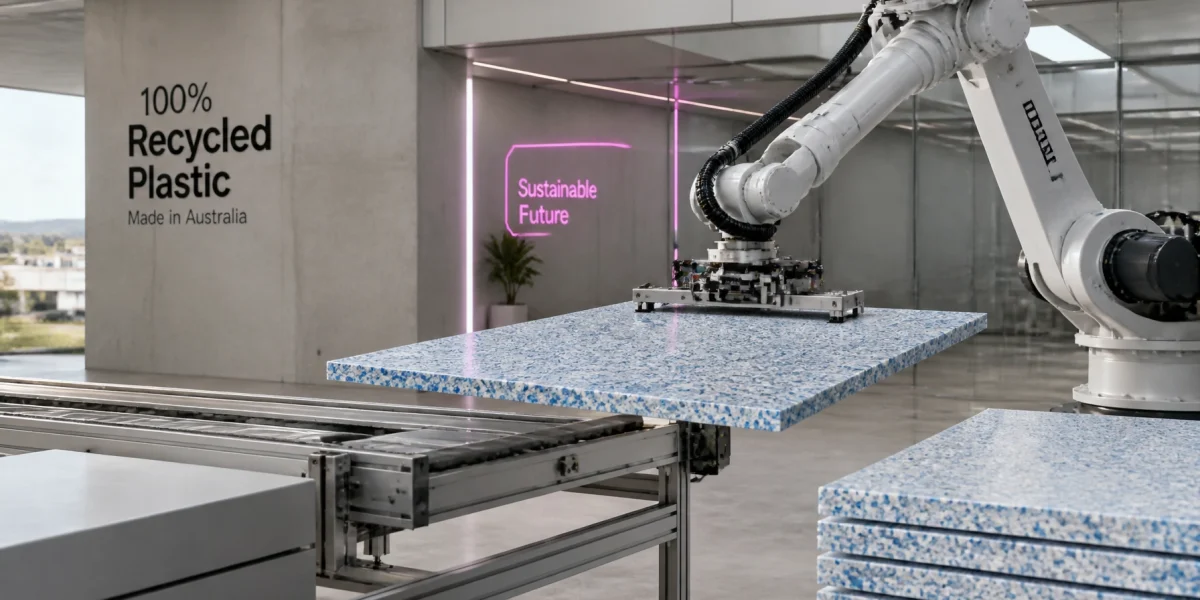
This model is only possible because we control the entire lifecycle: from the shredding of post-consumer plastic to the final 2400mm x 1200mm solid sheet. This level of extended producer responsibility is what separates 100% Australian recycled plastic from imported alternatives.
Why Domestic Manufacturing is the Real Solution
For businesses and specifiers, the move toward local manufacturing isn't just an "eco-friendly" choice: it’s a strategic business decision. When you source from a local manufacturer like Resourceful Living, you gain advantages that international supply chains simply cannot match.
1. Radical Traceability and Transparency
We use 100% Australian plastic waste. This means we can trace our material back to local collection points. If your project requires Embodied Carbon Reporting, having a local partner makes the data collection process seamless. You aren't guessing the carbon impact; you are measuring it based on local kilometres, not nautical miles.
2. High-Performance Materials
Local manufacturing doesn't mean "cottage industry." Our panels are solid blocks of 100% recycled plastic: no additives, no veneers, and no toxic resins. They are tested for:
- ✅ Strength and Durability: Outperforming traditional materials in high-moisture environments.
- ✅ Weather Resistance: UV-stabilised for the harsh Australian sun.
- ✅ Speed: We manufacture 1 tonne of plastic per day, ensuring faster turnaround times than international shipping allows.
3. Economic Sovereignty and Job Creation
Every tonne of plastic processed at our facility supports local Australian jobs. By investing in onshore manufacturing, we are building the infrastructure needed to handle our own waste independently. This reduces our reliance on global markets and ensures that Australia retains the economic value of its "waste" resources.
Onshore vs. Offshore: A Comparison Table
To help your procurement team make the right choice, we’ve broken down the key differences between sourcing locally manufactured recycled plastic and imported products.
| Feature | Resourceful Living (Local) | Imported Recycled Plastic |
|---|---|---|
| Material Source | 100% Australian Post-Consumer Waste | Often Mixed Global Sources |
| Traceability | End-to-End (Source Verified) | Low Visibility |
| Carbon Footprint | Low (Minimal Logistics) | High (Long-Distance Shipping) |
| Turnaround Time | Fast (7-Day Manufacturing) | 8–12 Weeks (Average) |
| Take-Back Program | Included (Free Collection) | Non-Existent |
| Economic Impact | Supports Australian Jobs | Supports Offshore Manufacturing |
Resourceful Living: A Blueprint for Australian Circularity

Our facility isn't just a factory; it’s a living laboratory for the circular economy in Australia. We’ve refined a process that allows us to take everyday items: like detergent bottles and polystyrene packaging: and turn them into high-spec 100% recycled plastic sheets and panels.
Technical Specifications for Specifiers:
- Standard Size: 2400mm x 1200mm.
- Thickness Range: 3mm to 40mm.
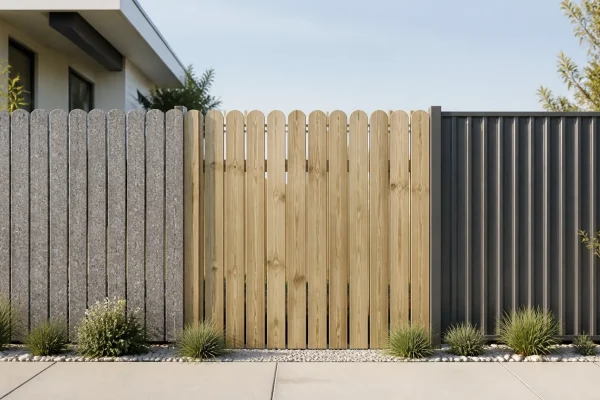
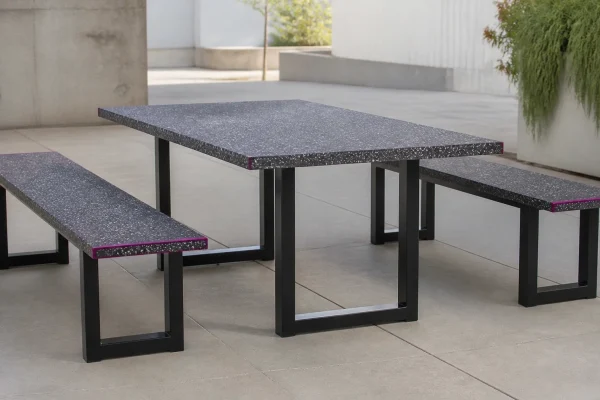
- Application: Construction, erosion control, noise barriers, retail displays, and bespoke commercial furniture.
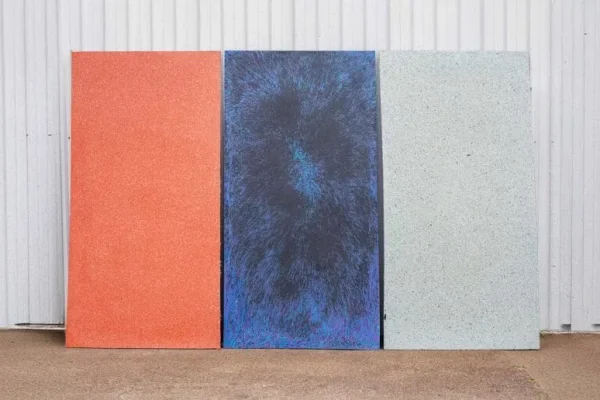
- Colours: 6 popular stock colours available immediately, with custom manufacturing for specific project requirements.
"The true future of waste is when we stop seeing it as waste and start seeing it as a raw material for our local industries. Onshore manufacturing is the bridge that gets us there." : Jess Hodge, Company Owner
How to Implement Circular Principles in Your Next Project
Transitioning to a circular model doesn't have to be complicated. If you are a builder, designer, or procurement officer, follow these steps to ensure your project aligns with the 2026 Australian standards:
- Prioritise Local Sourcing: Check that your recycled materials are not only "recycled" but manufactured in Australia. This drastically reduces your project's embodied carbon.
- Verify the Plastic Source: Ask for documentation confirming the material is 100% Australian waste. Avoid products with "virgin plastic" additives or veneers.
- Plan for End-of-Life: Ensure the manufacturer has a take-back scheme. Using a recyclable material is only half the battle; ensuring it actually gets recycled at the end of the project's life is the goal.
- Check Lead Times: Local manufacturers like Resourceful Living can often deliver custom orders in a fraction of the time required for imports, helping you avoid costly project delays.

Conclusion: The Path Forward
The future of the Australian circular economy is local, high-tech, and manufacturing-led. By moving away from the "export and forget" model, we are creating a more resilient, sustainable, and economically sound nation.
If you are looking to buy recycled plastic sheets in Australia or need a custom solution for your next sustainable project, contact us at Resourceful Living. Let's work together to close the loop on Australian plastic waste.