
By April 2026, the Australian construction and manufacturing landscape has shifted. We’re no longer just talking about "being green": we’re being audited on it. If you’re a project manager or a sustainability officer, you know the dread of a reporting deadline. Collecting data from dozen of suppliers, verifying "recycled content" claims, and trying to calculate your project's footprint can feel like a full-time job you didn't sign up for.
The reality is that embodied carbon reporting australia is no longer an optional "feel-good" metric. It’s a mandatory requirement for state-level tenders and high-tier commercial projects.
At Resourceful Living, we realized that our partners didn't just need recycled plastic panels; they needed a system that proved they were actually moving the needle. That’s why we developed the Closed-Loop ESG Partner Program. It’s designed to automate your sustainability reporting by turning your waste into your inventory, while we handle the data heavy lifting.
Why Traditional ESG Reporting is Breaking Your Project Timeline
Most ESG reporting is reactive. You finish a project, and then you spend weeks chasing invoices and certificates to prove you diverted waste from landfill. This manual process is prone to error and often results in "data gaps" that look terrible during a NABERS audit or a Green Star submission.
The problem isn't just the paperwork; it's the lack of traceability. When you buy generic "recycled" materials, where do they actually come from? If they’re imported from overseas, the carbon footprint of the shipping might actually negate the environmental benefit of the material itself.
By moving to a closed-loop system, you transition from "guessing" to "knowing." You aren't just buying a product; you're entering a measurable ecosystem.
The Mechanics of a 'Closed-Loop' System
A "closed-loop" isn't just a buzzword. In the context of Resourceful Living, it means a circular path where material never reaches the landfill. It looks like this:
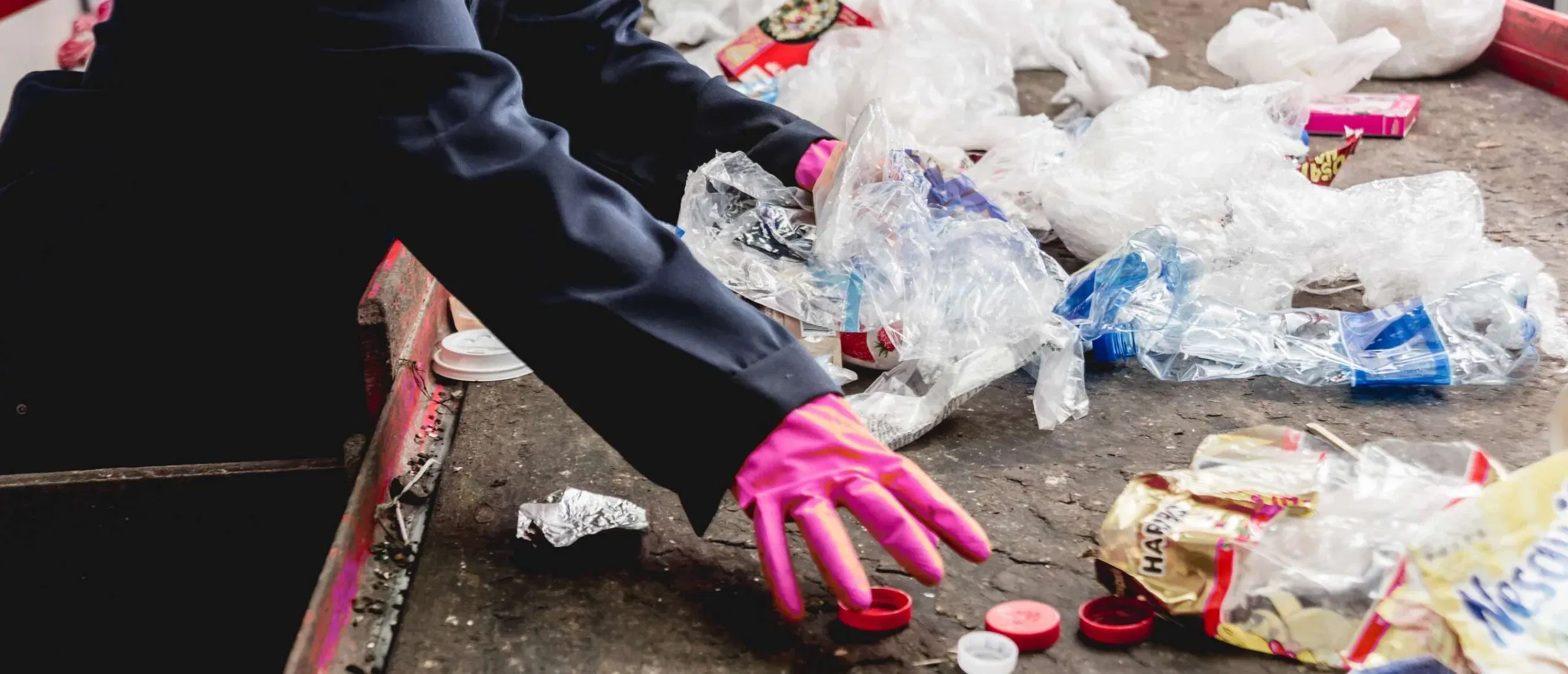
- Collection: We take your site waste: HDPE drums, pallets, or even old fit-out materials.
- Processing: We shred and wash the material in our Australian facility.
- Manufacturing: We press that exact waste into high-performance panels.
- Reporting: We provide a digital "Material Passport" for every sheet.
- Take-Back: When that project reaches its end-of-life in 10 or 20 years, we take the panels back and do it all over again.
This cycle is the cornerstone of circular construction. By keeping the material in the loop, you effectively "freeze" the embodied carbon within the material, preventing the emissions associated with decomposition in a landfill.
Solving the 'Embodied Carbon' Equation
For those managing large-scale builds, embodied carbon reporting australia is the metric that determines if you win the next contract. Traditional materials like concrete and timber have high upfront carbon costs or complex end-of-life disposal issues.
When you use our recycled plastic panels, your carbon accounting becomes significantly simpler. Because we use 100% Australian plastic waste, our manufacturing procedure avoids the high-heat, high-emission processes of virgin plastic production.
Key Metrics We Track for Our Partners:
- Landfill Diversion (Tonnes): The exact weight of plastic redirected from Australian tips.
- Virgin Material Displacement: The amount of new plastic (and the oil required to make it) you’ve saved.
- Carbon Sequestration Data: We provide the data required to show how much CO2e was avoided by choosing recycled over virgin materials.
This data is crucial for getting your project NABERS-ready. Instead of you trying to calculate the impact, we provide a verified certificate for every order.
The Take-Back Program: Your Waste is Your Future Inventory
The most innovative part of our ESG Partner Program is the Take-Back Guarantee. Most "sustainable" products are still linear: they're better for the planet today, but they still end up in a skip bin in ten years.
Our program changes the financial incentive. When you partner with us, we offer a guaranteed buy-back or take-back on the panels we sell you.
- Avoid Landfill Levies: With landfill costs in Australia exceeding $140/tonne in many areas, simply throwing away old fit-outs is a massive financial leak.
- Future-Proof Assets: By specifying materials that have a guaranteed "re-processing" path, you’re essentially creating a future asset rather than a future liability.
- Automated Logistics: We manage the collection and transport, feeding that material back into our shredders to create the next generation of products.
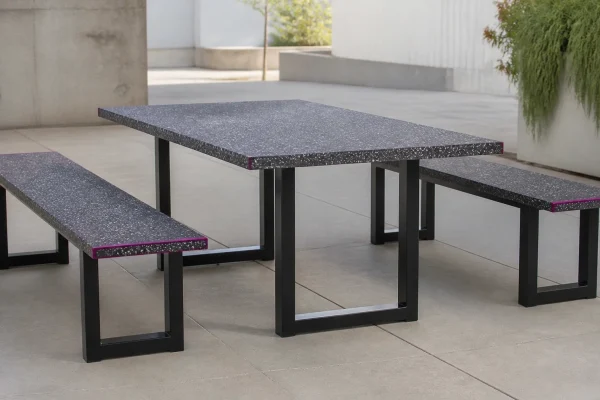
This is particularly useful for commercial fit-outs where branding changes every few years. Why pay to dump your old tables and wall cladding when you can have them remade into new ones?
Automating the Paperwork (The ESG Portal)
The "automation" part of our program isn't just about the physical recycling; it's about the data integration. We know that the person buying the panels is often different from the person writing the ESG report.
When you join the partner program, you gain access to our simplified reporting suite. For every project, you receive:
- Direct Tonnage Reporting: Instantly see how many kilos of HDPE, LDPE, or PP you’ve diverted.
- Local Impact Metrics: Proof that the waste was sourced and processed within Australia, satisfying local buy requirements.
- End-of-Life Certification: A signed guarantee that the materials are 100% recyclable and eligible for our take-back scheme.
"The biggest barrier to circularity isn't the technology: it's the data. If you can't prove it, the auditors won't count it. Our goal is to make the proof as easy as the purchase." : Jess Hodge, Resourceful Living.

How to Get Your Data NABERS-Ready
To successfully navigate embodied carbon reporting australia, you need more than just a receipt. You need a Life Cycle Assessment (LCA) mindset. Our ESG Partner Program aligns with the "If Not, Why Not" procurement policies used in NSW and other states.
By providing detailed data on the material's origin and its recyclability, we help you clear the hurdles of government tenders with zero extra effort on your part. You simply point the auditor to your Resourceful Living Material Certificate, and the job is done.
5 Steps to Implement the Program Today
Ready to smash your sustainability targets without adding hours to your work week? Here’s the roadmap:
- Conduct a Waste Audit: Look at what you’re currently sending to the skip. If it’s HDPE (milk bottles, detergent drums) or LDPE, it’s a candidate for our program.
- Specify the Sheets: Replace plywood, MDF, or virgin plastic in your next project with our recycled HDPE panels.
- Register Your Project: Let us know it’s a "Closed-Loop" project. We’ll begin tracking the weights and carbon metrics from day one.
- Include the 'Take-Back' in Your ESG Report: Claim the future landfill diversion today by citing our guaranteed take-back program.
- Review the ROI: Compare the cost of our panels against the combined cost of "cheap" materials plus the future landfill fees and reporting hours. You’ll find the ROI of circularity is consistently higher.
The Bottom Line
Sustainability shouldn't be a burden. If your ESG reporting feels like a manual grind, you're doing it the old way. The Closed-Loop ESG Partner Program is designed to take the guesswork out of the circular economy.
We provide the materials, we provide the data, and we provide the end-of-life solution. All you have to do is choose to build better.
Want to see how we can automate your next project's reporting? Book a quick strategy session or download our 2026 Price and Impact Guide to get started.