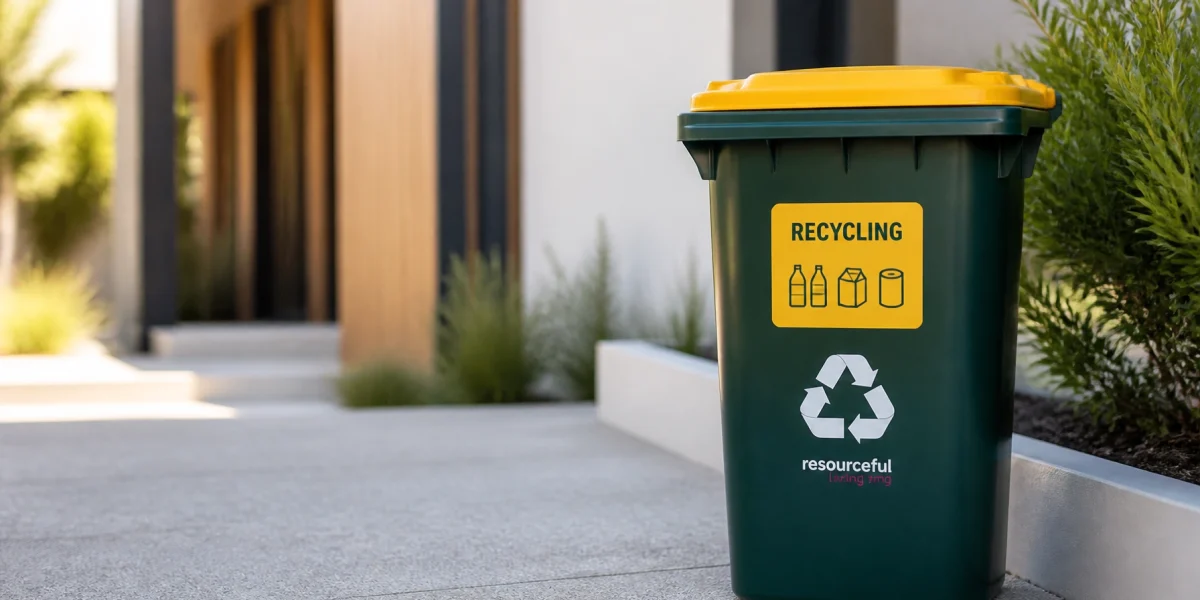
Every week, millions of Australians wheel their yellow-lid bins to the kerb, performing a small act of environmental stewardship. But for most, the journey of that plastic bottle ends the moment the truck disappears around the corner.
In 2026, the Australian waste landscape has undergone a massive shift. With National Packaging Reform now in full swing and mandatory recycled content standards being enforced, the "mystery" of recycling is finally being solved by data and technology. However, despite these advancements, the national plastics recovery rate still sits at approximately 14%.
This guide breaks down exactly what happens to your plastic waste in 2026, the high-tech sorting process keeping it out of landfill, and how Resourceful Living transforms that very same waste into high-performance building materials.
1. The 2026 Yellow Bin: What’s Actually Recyclable?
The "if in doubt, throw it out" rule has never been more relevant. While sorting technology has improved, contamination remains the biggest hurdle to a functional circular economy. In 2026, Australian kerbside systems primarily focus on high-value, rigid polymers that can be mechanically processed.
The "Big Three" Recyclable Plastics
If you want your recycling to actually be repurposed, focus on these three categories:
- PET (Polyethylene Terephthalate): Clear drink bottles and fruit punnets. These are highly sought after for food-grade packaging.
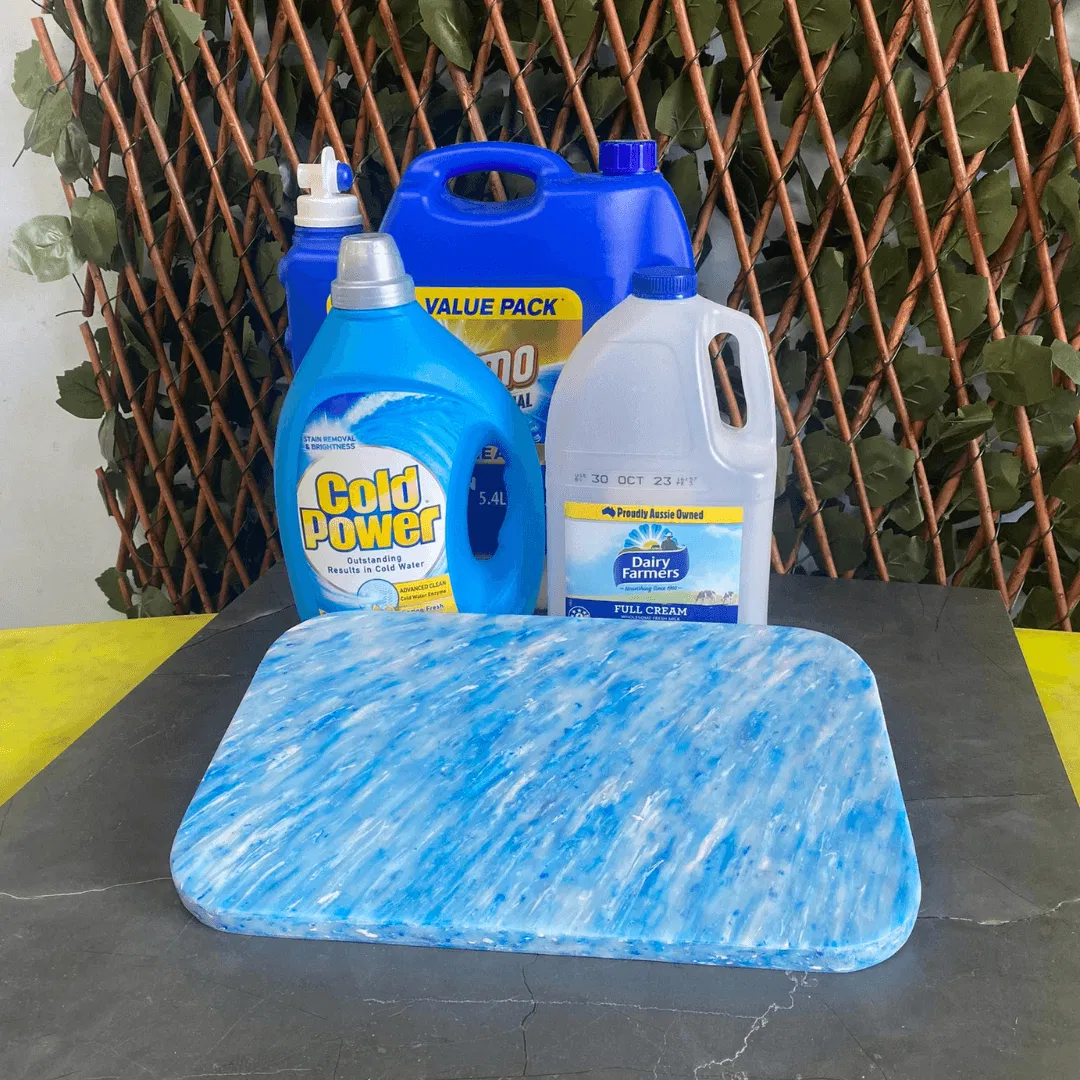
- HDPE (High-Density Polyethylene): Milk bottles, shampoo containers, and detergent jugs. This is our primary feedstock at Resourceful Living because of its incredible durability.
- PP (Polypropylene): Yoghurt tubs, ice cream containers, and some takeaway trays.
The "No-Go" Zone
Plastics that still cause chaos in the sorting line include soft plastics (bags and wraps), polystyrene foam, and multi-layer laminates (like some coffee bags). These items often tangle in machinery, leading to expensive downtime at Materials Recovery Facilities (MRFs).
"The quality of the end product is dictated by the purity of the source. When households sort correctly, they aren't just 'recycling': they are providing the raw materials for the next generation of Australian manufacturing." : Jess Hodge, Resourceful Living
2. Behind the Scenes: The MRF Sorting Revolution
Once the truck collects your bin, it heads to a Materials Recovery Facility (MRF). In 2026, these facilities look more like high-tech laboratories than waste plants.
Step 1: Pre-Sorting & Ballistics
Materials are tipped onto a floor where large contaminants are manually removed. Then, ballistic separators use vibration and incline to separate flat items (paper/cardboard) from 3D items (containers).
Step 2: Optical Sorting (NIR Technology)
This is where the magic happens. Near-Infrared (NIR) sensors scan the containers as they fly down a conveyor belt. The sensors identify the specific polymer (e.g., HDPE vs. PET) in milliseconds.
Step 3: AI and Air Jets
Once a polymer is identified, a precise blast of air shoots the item into the correct bin. In 2026, AI-powered robotic arms have been integrated to perform final quality checks, removing mis-sorted items with 99% accuracy.
3. The Gap: Why Australia’s Recycling Rate is Still 14%
Despite the tech, there is a market failure in the Australian waste sector. A recent 2026 industry survey found that domestic plastic recycling capacity is only being utilised at 53%.
Why the disconnect?
- Cost of Virgin Plastic: Imported virgin (new) plastic is often cheaper than domestic recycled resin.
- Supply Chain Friction: Many manufacturers aren't equipped to handle recycled feedstock.
- Traceability Issues: Until recently, it was difficult for businesses to prove their material was truly Australian-made from 100% waste.
This is where Resourceful Living bridges the gap. We don't just "recycle"; we manufacture. By transforming raw HDPE waste into 100% recycled plastic panels, we create a direct demand for the material sitting in those yellow bins.
4. From Waste to Architecture: The Transformation Process
When high-quality HDPE (like your old milk bottles) leaves the MRF, it is baled and sent to reprocessors. We take that material and put it through a rigorous transformation process to ensure it meets the standards required for the built environment.
How We Build a Sustainable Panel
- Shredding: The plastic is broken down into small, colourful flakes.
- Cleaning: Intensive washing removes any remaining labels or organic residue.
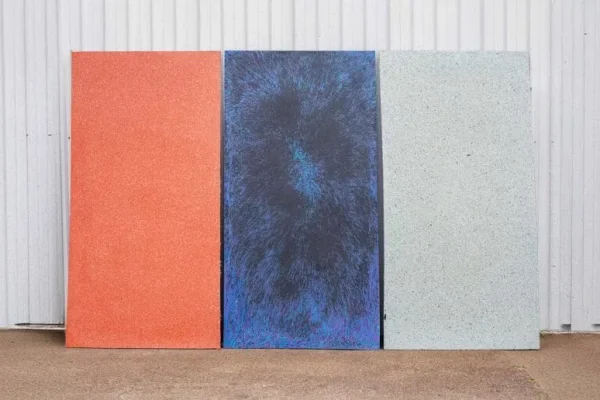
- Heat & Pressure: We use a proprietary process to compress these flakes into solid, 2400mm x 1200mm sheets. No adhesives, no resins, and no veneers are added.
- Testing: Every batch is tested for strength and weather resistance, ensuring it outperforms traditional materials in harsh Australian conditions.

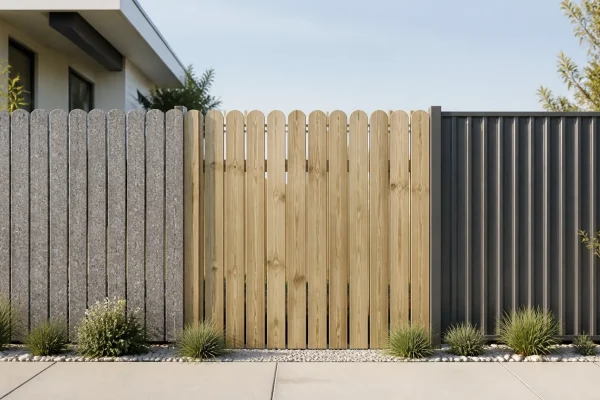
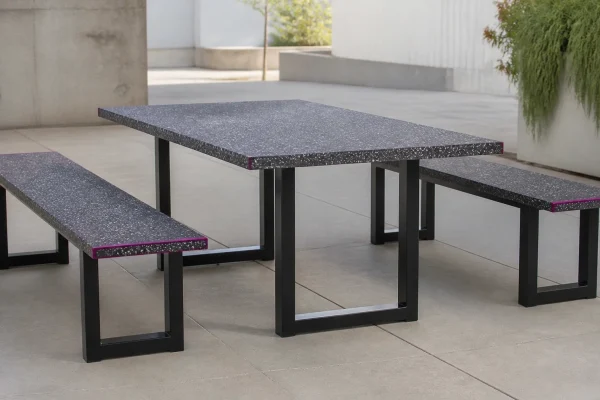
These panels are now being used across Australia for sustainable building projects, retail fit-outs, and even erosion control.
5. Comparison: Recycled Plastic vs. Traditional Materials
In 2026, builders and architects are moving away from timber and concrete for non-structural applications due to maintenance costs and carbon reporting requirements.
| Feature | 100% Recycled Plastic (HDPE) | Traditional Timber (Treated) | Concrete (Pre-cast) |
|---|---|---|---|
| Moisture Resistance | 100% Waterproof | High Risk of Rot | Porous (can crack) |
| Maintenance | Zero (no oiling/painting) | High (annual treatment) | Moderate (cleaning/sealing) |
| Carbon Footprint | Low (diverts waste) | Moderate (harvesting/transport) | Very High (calcination) |
| End-of-Life | 100% Recyclable (Take-back) | Landfill (if treated) | Landfill / Crushed Rubble |
Choosing the right material is critical. Avoid common sustainable material mistakes by ensuring your supplier offers a guaranteed end-of-life solution.
6. The Circular Economy: Your Take-Back Guarantee
The most important part of the 2026 recycling guide isn't just what goes into the bin, but what happens when a product reaches the end of its life.
At Resourceful Living, we operate a Take-Back Program. If you purchase a bespoke recycled plastic product or sheet from us, we will collect it at the end of its life: free of charge: to be shredded and turned back into new panels.
This is the definition of a closed loop. We aren't just delaying the plastic's trip to the landfill; we are eliminating it entirely.
7. How to Optimise Your Recycling Habits
To support the Australian circular economy, follow this 2026 Recycling Checklist:
- ✅ Empty & Rinse: You don't need it "dishwasher clean," but removing food scraps prevents an entire batch from being rejected.
- ✅ Lids On or Off? Check your local council. Most modern MRFs prefer lids on if they are the same material as the bottle.
- ✅ Don't Bag It: Loose items only. Bagged recycling is often sent straight to landfill because staff cannot safely open bags on the line.
- ✅ Support Local Markets: Buy products made from 100% Australian recycled plastic. This creates the financial demand that keeps our recycling centres running.
Your Next Project: Switching to Sustainable Materials
Understanding the journey of your waste is the first step. The second is choosing to use that waste as a resource in your next renovation or commercial build.
Whether you're looking for recycled plastic sheet pricing for a retail display or need custom furniture for a public space, we are here to help you close the loop.

Ready to see how our materials fit your specs? Contact our team today to discuss your project requirements or request a sample of our 100% recycled Australian panels.