In the high-stakes world of Australian hospitality, every square metre of floor space must earn its keep. Business owners agonise over coffee bean origins, staff ratios, and lease negotiations, yet many remain blind to a recurring "lazy tax" hidden in plain sight: their furniture.
For decades, timber has been the industry default for cafe table tops. It looks "natural," it feels "warm," and the upfront cost seems reasonable. But for a high-traffic venue, timber is not an asset; it is a financial liability.
Between the relentless cycle of oiling, the labour costs of sanding, and the inevitable structural failure caused by industrial cleaners and spilled lattes, timber is quietly bleeding your bottom line. At Resourceful Living, we’ve crunched the numbers, and the data is clear: switching to 100% recycled plastic panels isn't just a sustainability win: it’s a calculated financial pivot that is 80% cheaper over a 50-year lifecycle.
The Timber Maintenance Trap: A Recurring Penalty
When you purchase a timber table, you aren't just buying furniture; you’re signing a long-term maintenance contract. In the harsh Australian climate: and the even harsher environment of a busy espresso bar: timber undergoes a predictable and expensive decline.
The Lifecycle of a Timber Table:
- Year 1: Installation looks great. First round of sealing and oiling complete.
- Year 2: Micro-scratches from ceramic cups allow moisture to penetrate the grain.
- Year 3: Labour-intensive maintenance begins. Tables must be moved after hours for cleaning, light sanding, and re-oiling.
- Year 5: Significant wear. Deep stains from tannins or red wine require professional refinishing.
- Year 7-10: Full replacement. The core has often softened or warped from repeated exposure to commercial-grade sanitisers.
"Maintenance shouldn't be a recurring line item in your budget. If you're replacing timber every three to seven years, you're not just wasting money: you're wasting time. Choosing a moisture-proof alternative is the only logical move for high-traffic zones."

The Financial Reality: A 50-Year Comparison
To understand why timber is a liability, you have to look at the Total Cost of Ownership (TCO). Most operators only look at the invoice price, but the "hidden" costs of timber (OpEx) eventually dwarf the initial capital expenditure (CapEx).
| Cost Factor | Traditional Timber (Solid Hardwood) | Resourceful Living 100% Recycled Plastic |
|---|---|---|
| Upfront Cost | ~$250 – $400 per table | ~$350 – $500 per table |
| Annual Maintenance | $50 – $120 (Labour + Materials) | $0 (Wipe clean only) |
| Moisture Resistance | Poor (leads to warping/rot) | 100% Waterproof |
| Chemical Resistance | Low (Sanitisers strip the finish) | High (Bleach and industrial cleaners) |
| Replacement Cycle | Every 7–10 years | 50+ Years |
| 50-Year Total Cost | $100,000+ (per project scale) | ~$18,000 |
By eliminating the maintenance cycle, a cafe with 20 tables can save upwards of $1,500 per year in labour and materials alone. Over the life of the business, those savings represent a significant boost to your margins. You can read more about how this TCO formula changes the game for commercial fit-outs.
Why 100% Recycled Plastic is the "Fit and Forget" Solution
Our panels are manufactured from 100% Australian post-consumer plastic waste. Unlike timber, which is a biological sponge, our material is inert and hydrophobic. It doesn't just "resist" water; it ignores it.
🛡️ Chemical & Heat Resilience
In a post-COVID world, hygiene is non-negotiable. Timber surfaces are porous, providing a breeding ground for bacteria once the top seal is compromised. Resourceful Living panels are non-porous, meaning they can handle the most aggressive commercial-grade disinfectants without discolouring, peeling, or warping.
☀️ UV Stability for Outdoor Dining
The Australian sun is brutal on organic materials. While timber greys and splinters, our materials are engineered with integrated UV stabilisers. Whether your tables are on a coastal deck or a sun-drenched sidewalk, they maintain their structural integrity and vibrant colour for decades.

Turning Your Furniture into a Marketing Asset
Beyond the balance sheet, there is a powerful branding opportunity. Modern diners: particularly the eco-conscious Gen Z and Millennial demographics: value authentic sustainability.
When you choose Resourceful Living, you aren't just buying "plastic tables." You are telling a story:
- 100% Australian Made: Every table top is made from local waste, supporting the local economy.
- Fully Traceable: We manage the end-to-end cycle, allowing you to tell customers exactly where their table came from (likely their own recycled milk bottles).
- The Circular Loop: When you finally decide to renovate in 20 years, we offer a free take-back program. We collect the old tables and remanufacture them into new products.
This is the essence of circular construction, and it gives your venue a "green story" that timber simply cannot match: especially when that timber is often treated with toxic chemicals to prevent rot.

Implementation Guide: Making the Switch
Ready to stop paying the "timber tax"? Here is how to transition your hospitality venue to a maintenance-free future:
- Audit Your Current Spend: Review your last three years of maintenance records. How much have you spent on oils, sanders, and staff hours for "table refresh" nights?
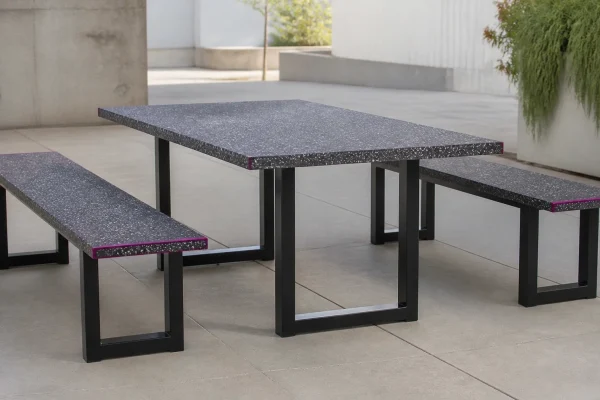
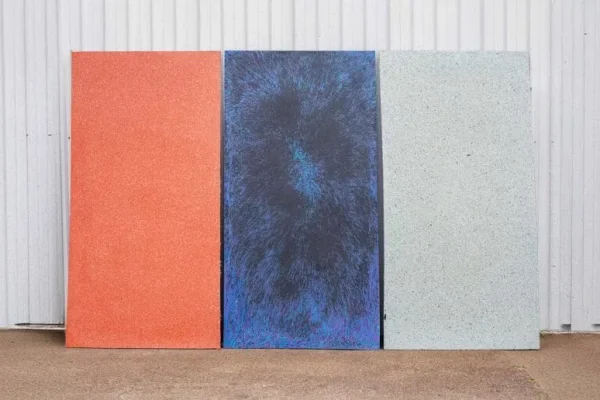
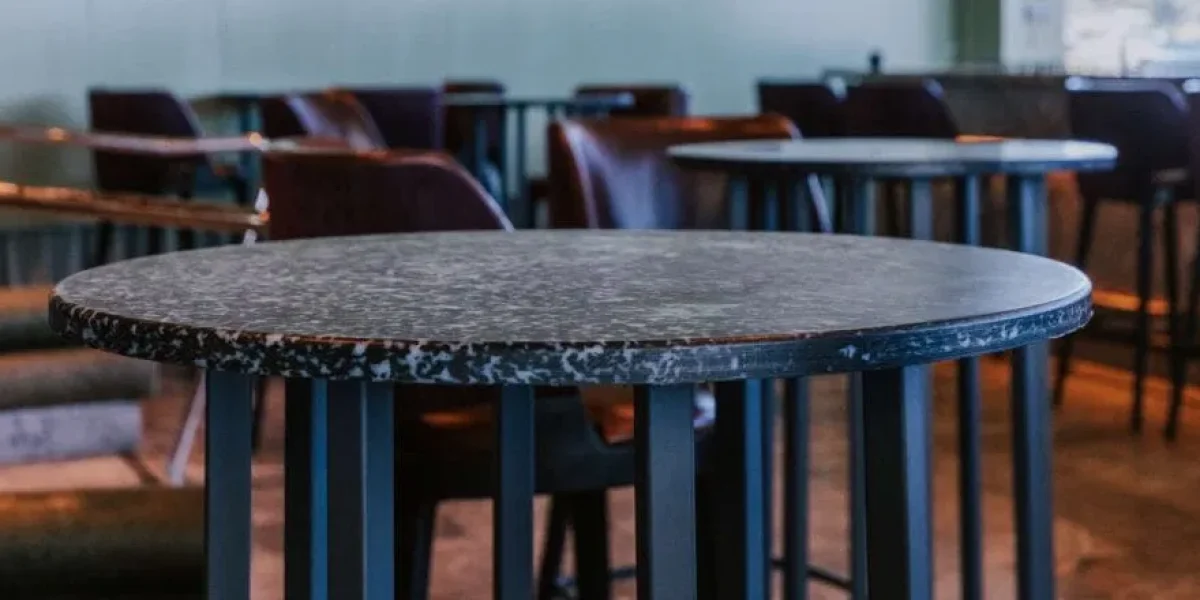
- Request a Material Sample: See the "marbled" and "terrazzo" finishes for yourself. Our panels don't look like "recycled trash": they look like high-end stone or bespoke resin. Order your samples here.
- Custom Sizing: We manufacture seven days a week. Whether you need standard 600mm rounds or a 4-metre communal bar top, we can cut to your exact specifications.
- Fit and Forget: Once installed, your only instruction to staff is "wipe it down with a cloth." No oiling, no sanding, no worrying about the rain.
The Verdict: Protect Your Profitability
In an industry with razor-thin margins, efficiency is king. Choosing a material that lasts 5x longer than timber and requires 0% of the maintenance is no longer just an "eco-friendly" choice: it’s a fundamental business requirement for the modern Australian cafe.
Stop maintaining your tables and start growing your business.