The landscape of Australian interior design and commercial construction has undergone a radical transformation over the last few years. If you’re a kitchen designer, commercial renovator, or business owner, you’ve likely felt the pressure of shifting regulations surrounding engineered stone.
By 2026, the industry has reached a tipping point. The health risks associated with crystalline silica have moved from a "safety concern" to a major regulatory hurdle, leaving many specifiers searching for a viable, high-performance alternative. Enter recycled plastic benchtops.
At Resourceful Living, we’ve seen a massive surge in demand for our rHDPE (Recycled High-Density Polyethylene) surfaces. It’s not just about being "eco-friendly" anymore: it's about safety, speed of installation, and significant cost savings. Here is why recycled plastic is officially outperforming stone in the modern commercial landscape.
1. The Silica-Free Advantage: Health is the New Luxury
The most significant driver behind this shift is the elimination of crystalline silica. Traditional engineered stone can contain up to 90% silica. When cut, sanded, or drilled, it releases fine dust that causes silicosis: a permanent and often fatal lung disease.
Choosing a silica-free stone alternative isn't just a moral choice; it’s a logistical one. Our recycled plastic panels are 100% silica-free.
What this means for your job site:
- Standard Tools: You don't need a specialist stone mason or wet-cutting equipment. You can cut, drill, and sand our panels using standard woodworking tools.
- Reduced PPE Costs: While basic dust masks are always recommended for any workshop, you don’t need the high-level, specialized respiratory protection required for silica-heavy materials.
- On-Site Flexibility: If a measurement is slightly off or a new tap-hole needs to be drilled on-site, your carpenter can handle it immediately. No more waiting two weeks for the mason to come back.

2. Slashing the "Hidden Costs" of Weight
One of the most overlooked expenses in kitchen and commercial fit-outs is the structural requirement of the cabinetry. Natural and engineered stone are incredibly heavy, typically weighing between 50kg and 60kg per square metre.
In contrast, Resourceful Living’s recycled plastic panels weigh only 15kg to 18kg per square metre. That is roughly 1/3 of the weight of stone.
Why Weight Matters for Your Bottom Line:
- No Reinforced Cabinetry: You don’t need to specify heavy-duty carcasses or reinforced floor structures to support the benchtop.
- One-Person Installs: In many cases, a single tradesperson can handle the installation, drastically reducing labour costs.
- Freight Savings: Shipping heavy stone across Australia is expensive. Lightweight panels reduce your carbon footprint and your transport bill simultaneously.
"We're seeing architects move away from stone not just for the 'green' credentials, but because the total cost of ownership: from transport to structural support: is simply lower with recycled polymers." : Jess Hodge, Resourceful Living.
3. Durability That Survives the "Real World"
While stone is hard, it is also brittle. One dropped heavy pot or a hammer during a renovation can result in a chip that is nearly impossible to hide.
Recycled plastic is impact-resistant. It has a level of "give" that makes it virtually impossible to chip or crack under normal (and even abnormal) use. Furthermore, our material is chemically inert.
Whether it’s a busy cafe or a high-traffic commercial office, you can stop worrying about:
- Red wine or vinegar stains: The non-porous surface means liquids sit on top and wipe away.
- Commercial cleaning agents: It won’t "etch" or lose its finish when exposed to standard disinfectants.
- Moisture damage: Unlike timber or some low-grade laminates, recycled plastic is 100% waterproof. It will never swell or rot.

4. Circularity: The 2026 Standard for Tenders
In 2026, "sustainable" is no longer a buzzword; it’s a requirement. Government and large-scale commercial tenders now frequently require embodied carbon reporting and proof of circularity.
By specifying Resourceful Living panels, you are using 100% Australian-made materials sourced from local waste streams. We provide a closed-loop program that allows you to automate your sustainability reporting.
The Take-Back Guarantee:
Unlike engineered stone, which ends up in a landfill at the end of its life, our panels are 100% recyclable. If you decide to renovate in 10 years, we will take the material back and turn it into something new. This is the definition of circular construction.
5. Aesthetics: Stories You Can See
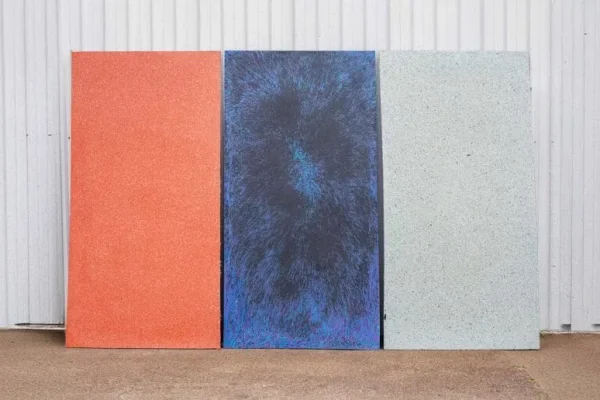
Designers are moving away from the "sterile" look of mass-produced quartz. They want materials with a story. Our most popular finishes, like "Navy Marble" and "White Confetti," offer a unique, high-end aesthetic that serves as a conversation starter.
- Navy Marble: A deep, sophisticated swirl that mimics natural stone but with the warmth of a polymer.
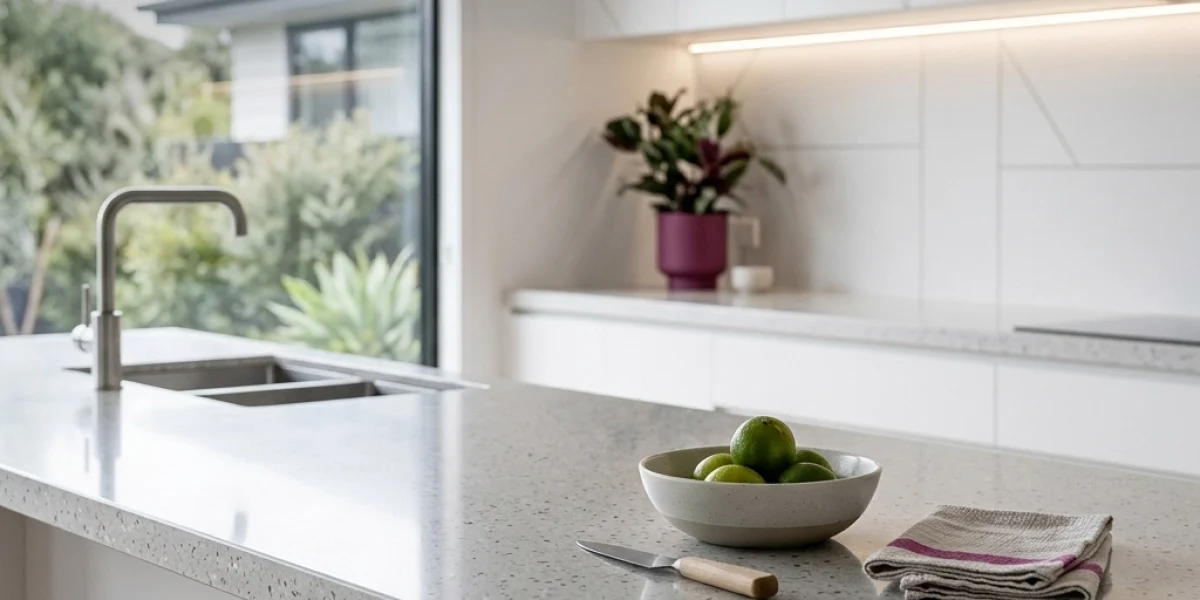
- White Confetti: A bright, modern "terrazzo" style that clearly shows its recycled origins through subtle flecks of colour.
Every sheet is unique. When you specify these materials, you aren't just buying a benchtop; you're buying a piece of traceable Australian recycling history.

Comparison: Engineered Stone vs. Recycled Plastic (2026)
| Feature | Engineered Stone | Recycled Plastic (rHDPE) |
|---|---|---|
| Silica Content | High (50% – 90%) | 0% (Silica-Free) |
| Weight | 50-60 kg/m2 | 15-18 kg/m2 |
| Installation | Specialist Mason Required | Standard Carpentry Tools |
| Impact Resistance | Brittle (Can chip) | High (Shatter-proof) |
| End of Life | Landfill | 100% Recyclable (Take-back) |
| Stain Resistance | High (if sealed) | Excellent (Naturally inert) |
How to Make the Switch in Your Next Project
If you are ready to move away from the risks and costs of engineered stone, the transition is simpler than you think.
- Check the Spec: Download our Technical Guide to Recycled Plastic Sheets to understand spans and thickness requirements.
- Audit Your Cabinetry: Realise that you can likely reduce the cost of your carcasses because you no longer need to support the weight of stone.
- Leverage the Marketing: Use your choice of material to help win your next government tender. Mention the 100% Australian-made status and the silica-free safety profile.
Ready to get a sample for your next project?
Choosing sustainable building materials in Australia shouldn't be a compromise. By switching to recycled plastic benchtops, you’re choosing a product that is safer for your trades, easier on your budget, and better for the planet.
Stop managing silica risk and start building for the future.
Check out our full range of recycled plastic sheets and see how we can help you lower your project costs while hitting your ESG targets.