Let’s be honest: when you’re looking at a quote for a new project, whether it’s a public park bench, a commercial deck, or a backyard renovation, timber always looks like the budget-friendly winner on day one. It’s familiar, it’s "natural," and the upfront price tag is usually lower.
But here’s the thing we often ignore in the construction and design world: the "Timber Tax."
The Timber Tax isn’t an official government levy. It’s the hidden, compounding cost of keeping wood looking good (and structurally sound) in the harsh Australian climate. Over a 10-year period, that "cheap" timber choice often ends up costing you three times more than a high-quality recycled plastic alternative.
If you’re managing a budget for a decade-long project, you need to look past the purchase price. Today, we’re breaking down the 10-year maintenance schedule of timber versus 100% recycled plastic to see which one actually leaves your wallet heavier.
The 10-Year Maintenance Face-Off
To understand the cost difference, we have to look at what happens after the installation. Australia’s UV levels, humidity, and erratic weather patterns are essentially a high-speed torture test for building materials.
The Timber Maintenance Schedule (The "High-Touch" Road)
If you choose timber, your maintenance calendar is going to be a very busy place. To prevent rot, splintering, and grey-out, a standard hardwood or treated softwood typically requires:
- Year 1-2: Initial weathering check and the first round of deep cleaning and oiling/staining.
- Year 4: High-pressure cleaning, sanding back rough spots or splinters, and a full re-application of protective coats.
- Year 6: This is the "danger zone." In coastal or humid areas, you’ll likely see the first signs of board warping or rot. You’ll be replacing fixings and potentially swapping out a few compromised boards. Another full sand and seal is mandatory.
- Year 8: Deep scrub, chemical cleaning to remove mould, and another round of heavy oiling.
- Year 10: Major assessment. By now, the structural integrity of timber in outdoor settings is often starting to decline. You’re looking at significant board replacements or a full sand-back to keep it functional.
"The reality of timber isn't just the cost of the oil; it's the labour. Sanding and staining a 30m² deck takes days of professional work, and you're repeating that process at least four times over a decade."
The Recycled Plastic Schedule (The "Set and Forget" Road)
Now, let’s look at the schedule for 100% recycled plastic panels like those we manufacture here at Resourceful Living.
- Year 1-10: Occasional wash with soap and water if it gets dusty or someone spills a coffee on it. That’s it.
There is no oiling. There is no sanding. There is no chemical treatment. Because the material is solid plastic all the way through, it doesn't rot, it doesn't host termites, and it doesn't splinter. It’s built to survive the Aussie sun without a protective "skin" that needs constant renewal.

Breaking Down the Dollars: Upfront vs. Total Cost of Ownership (TCO)
Let’s talk numbers. Based on Australian industry averages for a standard 30m² outdoor structure, the financial trajectory looks something like this:
1. The Initial Investment
- Timber: Expect to pay between $5,400 – $11,400 for materials and installation.
- Recycled Plastic: Expect to pay between $6,900 – $12,900.
Yes, the recycled plastic has a higher entry price. You’re paying for a sophisticated manufacturing process that transforms local Australian waste into a high-performance material. But look at what happens next.
2. The 10-Year Maintenance Bill
- Timber Maintenance: Between professional labour, high-quality oils, sanding equipment, and replacement boards, you can expect to spend $3,000 – $8,000 over 10 years.
- Recycled Plastic Maintenance: Effectively $0 (maybe $100 in soap and water if you're being thorough).
3. The 10-Year Total
- Timber Total: ~$8,400 – $19,400
- Recycled Plastic Total: ~$6,900 – $13,400
By Year 5 or 6, the recycled plastic has usually "paid for itself." By Year 10, you are significantly ahead. This is why we often say cheap plywood is bleeding your business dry, the short-term saving is a long-term trap.
Why Timber Fails (And Plastic Thrives) in Australia
It’s not that timber is a "bad" material; it’s just that it’s organic. In a controlled, indoor environment, it’s great. But outdoors? It’s constantly trying to return to the earth.
UV Degradation and "Grey-Out"
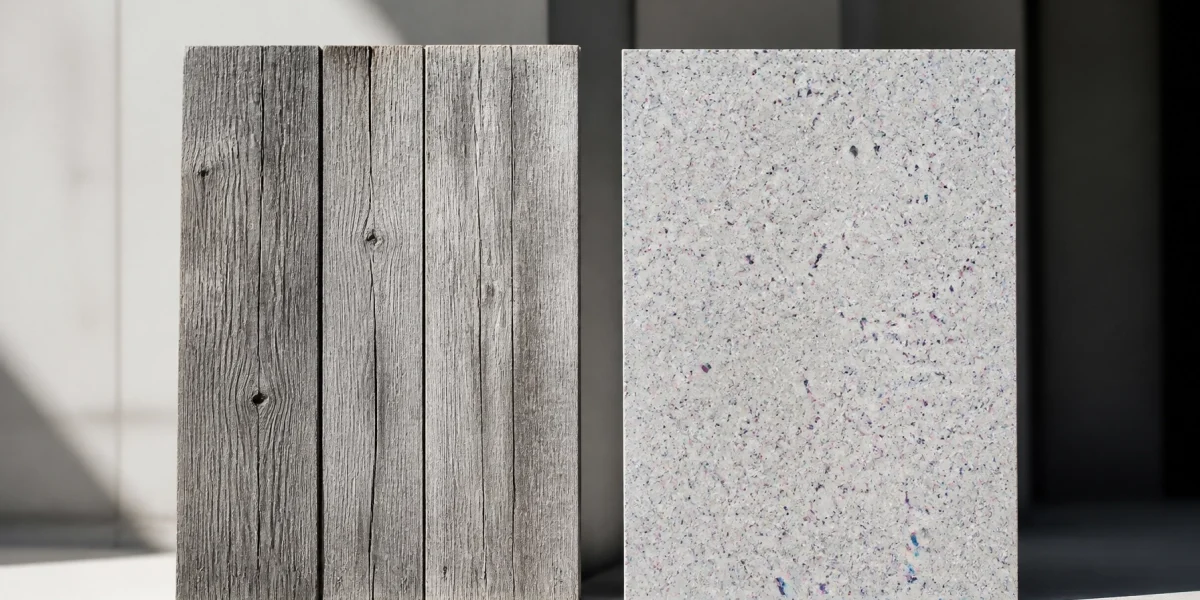
Timber is held together by lignin, which breaks down under UV light. This causes the wood to turn grey and become brittle. Recycled plastic, specifically the HDPE and LDPE we use, is UV-stabilised during our evolution process. It holds its colour and structural integrity far longer.
The Rot Factor
If you’ve ever had to replace a rotted deck joist, you know the pain. Moisture gets into the grain, fungi move in, and suddenly you have a structural hazard. Recycled plastic is 100% moisture-proof. This makes it the superior choice for coastal areas, poolside furniture, and ground-contact applications like garden beds or erosion control.

Termites and Insects
Timber is a buffet for termites. Recycled plastic is… well, plastic. It has zero nutritional value for pests. For commercial projects or infrastructure where safety and longevity are non-negotiable, removing the risk of insect damage is a massive win for the maintenance budget.
Aesthetic Versatility: You’re Not Sacrificing Style
One of the biggest myths is that choosing recycled plastic means choosing a "cheap plastic look." At Resourceful Living, we’ve moved way beyond the old-school green park benches of the 90s.
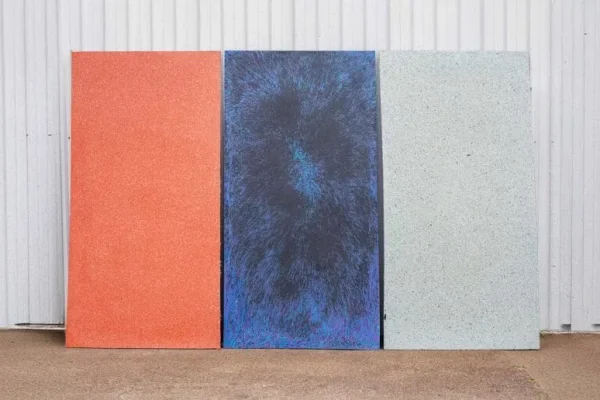
Our panels come in 6 popular colours, ranging from earthy terracotta to marbled midnight blue. They have a unique, speckled texture that tells a story of the Australian waste they were saved from. Whether you're building a sleek coffee table or a massive commercial display, the finish is sophisticated and modern.

The Circular Advantage: Environmental ROI
While we're focusing on the budget, we can't ignore the environmental return. Every tonne of plastic we manufacture at Resourceful Living is one tonne of Australian waste diverted from landfill.
When you choose recycled plastic over timber, you aren't just saving on maintenance; you are:
- Saving Trees: Reducing the demand for logging.
- Reducing Emissions: Our panels have significantly lower carbon emissions compared to traditional virgin materials.
- Ensuring a Take-Back: At the end of its (very long) life, we will take our material back for free to remanufacture it again. Timber usually ends up in a skip bin once it rots.
Choosing the best sustainable building materials in Australia isn't just a "green" move: it's a smart business move that aligns your project with the circular economy goals of 2026.

Final Verdict: Which One Should You Buy?
If your project is temporary (lasting less than 3 years) and you have a rock-bottom upfront budget, timber might be the answer.
But if you are planning for the next decade? Recycled plastic is the clear winner.
By choosing a material that requires zero maintenance, you free up your budget and your time. No more weekend sanding sessions. No more $200 tins of oil every two years. Just a durable, beautiful product that looks as good in Year 10 as it did on Day 1.
Ready to see how recycled plastic can fit into your next project? Check out our 10-year TCO breakdown or get in touch for a custom quote.