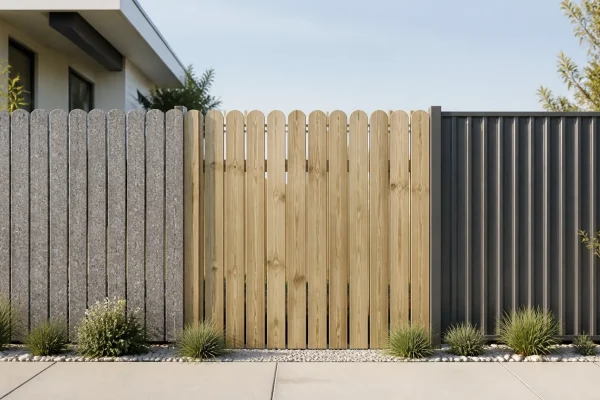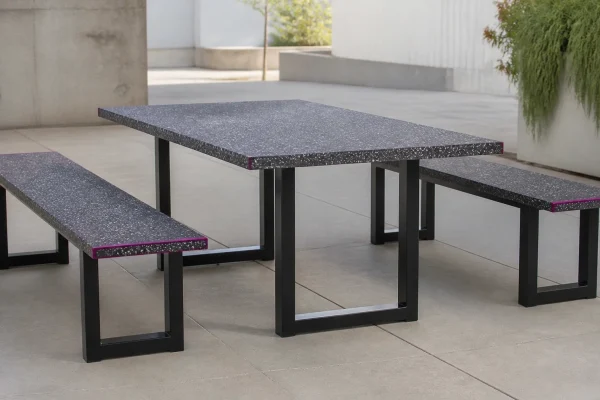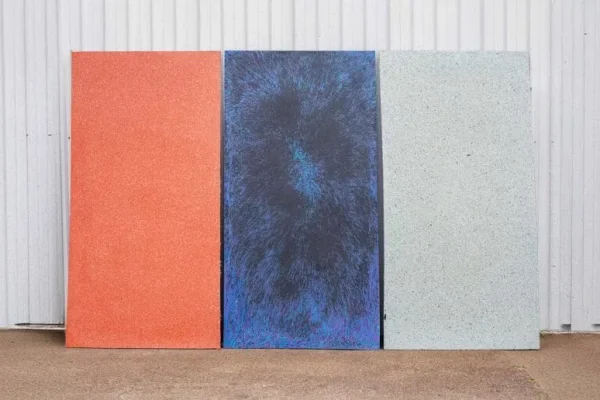
When you’re managing long-term assets: whether it’s a commercial fit-out, public infrastructure, or a multi-residential development: the initial purchase price is rarely the most important number. Yet, in the Australian building sector, upfront costs often dictate material selection, leading to a "cheap to build, expensive to own" cycle.
Timber has long been the default choice for its familiarity and low initial price point. However, as we move into an era defined by circular economy principles and strict embodied carbon reporting, the 50-year outlook for timber is increasingly problematic.
At Resourceful Living, we see this play out constantly. While our 100% recycled plastic sheets and products carry a roughly 1.8x price premium at the point of purchase, they represent an 80% saving over a 50-year asset lifecycle. This isn't just a sustainability win; it’s a fundamental shift in asset management strategy.
The Math of Maintenance: Why Upfront Cost is a Distraction
The biggest hurdle for project managers is the "sticker shock." If a timber panel costs $100 and a 100% recycled plastic panel costs $180, the timber looks like the winner on a spreadsheet.
This is a short-term trap.
To understand the real value, you must apply the Total Cost of Ownership (TCO) formula:
TCO = (Initial Purchase + Installation) + (Annual Maintenance × Years) + (Replacement Cost × Cycles)
For timber in the harsh Australian climate, that formula is punishing. External timber structures typically require significant maintenance every 24 months: oiling, staining, or sanding: to prevent rot and UV degradation. Over 50 years, those labour and material costs alone can exceed the original purchase price by three or four times.
Timber’s Hidden Liability: The Decay Cycle
In Australian conditions, timber is a biological material operating in a non-biological world. It is susceptible to:
- Rot and Mould: Moisture ingress leads to structural failure.
- Termite Damage: Requiring expensive chemical treatments.
- Splintering and Warping: Creating safety hazards and aesthetic decline.
Data suggests that for external or high-moisture applications, timber often requires full replacement every 7 to 12 years. In a 50-year strategy, that means you are buying, installing, and disposing of the same asset five times.
Compare this to Resourceful Living’s recycled plastic sheets. Our materials are solid blocks of 100% recycled plastic with no additives or veneers. They are naturally waterproof, chemically resistant, and require zero maintenance. No oiling. No staining. No sanding.

50-Year Cost Breakdown: Recycled Plastic vs. Timber
Let’s look at the numbers for a hypothetical $10,000 timber project versus its recycled plastic equivalent.
| Metric | Timber (Treated Hardwood) | Recycled Plastic (Resourceful Living) |
|---|---|---|
| Initial Cost | $10,000 | $18,000 |
| Annual Maintenance | $750 (Avg) | $0 |
| Replacement Cycles (50 yrs) | 4 Cycles | 0 Cycles |
| Replacement Cost (Total) | $40,000 | $0 |
| 50-Year Total Expenditure | $87,500+ | $18,000 |
The Result: Despite being 80% more expensive on day one, the recycled plastic solution is roughly 80% cheaper over the life of the asset.
Engineering for 50 Years: The Recycled Plastic Advantage
What makes our material capable of surviving 50 years without a maintenance budget? It comes down to the source and the manufacturing process. We transform 100% Australian plastic waste into high-density panels that are tested for:
- UV Stability: Designed to withstand the intense Australian sun without losing structural integrity.
- Structural Density: Unlike composite products that use wood-flour fillers, our panels are 100% plastic, meaning there is nothing to rot.
- Low Carbon Emissions: Compared to traditional materials that require repeated manufacturing and transport, a one-time installation of recycled plastic significantly lowers a project's long-term embodied carbon.

Environmental ROI: Carbon and Circularity
In 2026, building materials are no longer judged solely on cost. Circular construction is the new standard. When you choose timber, you are often choosing a material that: once treated with chemicals for durability: is difficult to recycle at its end-of-life.
Resourceful Living operates a take-back program. Because our products are 100% recycled plastic with no additives, we can collect them at the end of their 50-year life and remanufacture them again. This creates a closed-loop system that helps your business meet strict sustainability targets and Green Star ratings.
Implementation: How to Specify for Your Next Project
If you’re looking to transition your asset strategy from timber to recycled plastic, follow these three steps:
1. Identify "High-Friction" Zones
Look for areas where timber is currently failing or requires high maintenance. This includes retail displays, kitchen/bathroom carcass materials, noise barriers, and signage. These are the areas where the ROI of recycled plastic is most immediate.
2. Standardise for Efficiency
Our standard panel size is 2400mm x 1200mm, with thicknesses ranging from 3mm to 40mm. By designing around these dimensions, you reduce waste and speed up the construction phase. We manufacture 1 tonne of plastic per day, ensuring faster turnaround times than many imported timber or composite alternatives.
3. Leverage Local Sourcing
Using Australian-made materials isn't just about the "warm fuzzies." It’s about supply chain security. By sourcing from our Newcastle-based facility, you avoid the volatility of international shipping and ensure you are using 100% Australian plastic waste, directly benefiting our local environment.

The Verdict: Long-Term Value Always Wins
While timber will always have its place in specific aesthetic applications, it is no longer the logical choice for long-term asset management in the built environment. The "maintenance-free" nature of recycled plastic turns a depreciating asset into a stable, 50-year investment.
If you are ready to stop the cycle of repair and replacement, it’s time to look at sustainable building materials through a different lens.
Stop looking at the price tag for today. Start looking at the budget for 2076.
Implementation Checklist for Asset Managers:
- Calculate the 10-year maintenance cost of your current timber specs.
- Compare against the one-time cost of 100% recycled plastic panels.
- Verify the recycled content percentage (ensure it’s 100% to avoid contamination issues).
- Review end-of-life disposal costs for treated timber vs. the free take-back program for recycled plastic.