For decades, the Australian construction industry has relied on timber and plywood as the "default" building blocks. They are familiar, relatively cheap upfront, and easy to source. However, as we move into 2026, the Total Cost of Ownership (TCO) and Embodied Carbon requirements are forcing a massive rethink of material selection.
If you are a builder, architect, or facility manager, you've likely seen the failure of timber firsthand: the warped boardwalk, the delaminated vanity, or the rotted retaining wall. When we compare recycled plastic vs. timber, the data reveals that the "cheaper" option is actually the most expensive mistake you can make over the life of a project.
In this guide, we’ll break down the technical data on durability, maintenance costs over a 50-year horizon, and why 100% recycled plastic is the only logical choice for high-moisture Australian builds.
1. Waterproof Qualities: Porous vs. Hydrophobic
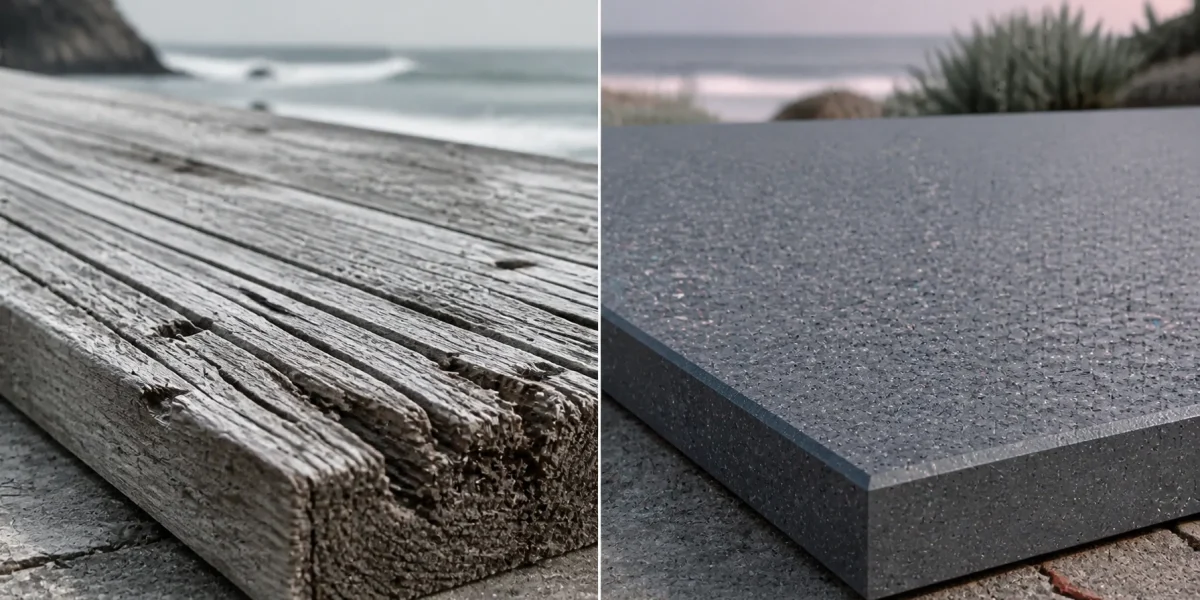
The single biggest enemy of timber is moisture. Even treated timber and marine-grade plywood are inherently porous. They act like a sponge, drawing in water through capillary action. This leads to swelling, warping, and eventually, the structural breakdown of the wood fibres.
In contrast, our 100% recycled HDPE panels are hydrophobic. They don’t just resist water; they are completely immune to it.
| Feature | Treated Timber / Plywood | Resourceful Living Recycled Plastic |
|---|---|---|
| Water Absorption Rate | 10% – 50% (Depending on sealing) | <0.01% (Non-porous) |
| Moisture Response | Swelling, warping, delamination | Zero change in dimensions |
| Saltwater Impact | Salt crystallisation breaks fibres | Chemically inert / No effect |
| Mould & Fungi | Primary food source for rot | Non-organic / Cannot support growth |
Because our panels are solid blocks of 100% recycled plastic with no additives or veneers, they cannot delaminate. This makes them the superior choice for wet area fit-outs like kitchens and laundries, where standard MDF or plywood carcasses often fail within 5–7 years due to humidity.
2. The 50-Year Maintenance Roadmap: A Labor Crisis Solution
In 2026, the cost of labor in Australia is at an all-time high. Specifying a material that requires annual "babysitting" is no longer viable for commercial or public infrastructure.
Timber requires a relentless maintenance schedule to prevent it from becoming a safety hazard (splinters) or an eyesore (greying/rot). Recycled plastic, however, is a "set and forget" material.

Timber Maintenance Schedule (The "Money Pit")
- Annual: Inspection for rot, termites, and fastener "pop-outs" caused by wood movement.
- Every 2 Years: Power wash and re-application of protective oils or stains.
- Every 5 Years: Deep sanding to remove splinters and structural checking.
- Every 10–12 Years: Total replacement of boards or panels in high-moisture areas.
Recycled Plastic Maintenance Schedule (The Resourceful Way)
- Annual: A quick high-pressure hose-down to remove surface dust or salt spray.
- That’s it.
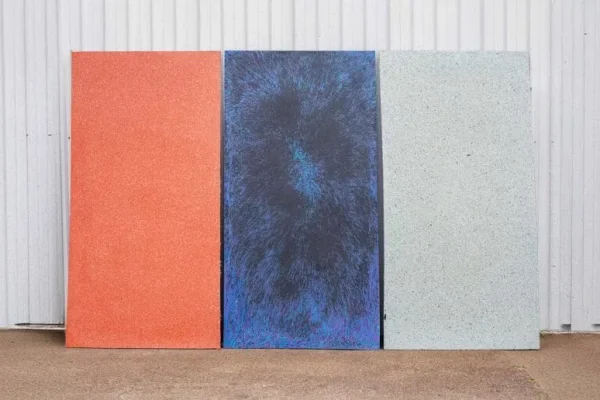
Because the colour is consistent throughout the entire thickness of the sheet (3mm to 40mm), there is no paint to flake off. If the surface gets scratched, the material underneath is the exact same colour. For councils and mining sites, this reduction in ongoing operational expenditure (OPEX) is the primary driver for the switch to recycled plastic infrastructure.
3. Financial Breakdown: The ROI of Switching
Many procurement teams get stuck on the upfront cost (CAPEX). Yes, a 100% recycled plastic panel has a higher initial price tag than a sheet of structural plywood. But when you look at a 50-year asset life, the ROI is staggering.
"When you factor in the replacement costs of timber: including labour, new materials, and the rising cost of landfill disposal for treated wood: recycled plastic pays for itself by the second replacement cycle." : Jess Hodge, Company Owner.
50-Year Cost Projection (100m² Project)
| Expense Item | Treated Timber (Plywood) | Resourceful Living Recycled Plastic |
|---|---|---|
| Initial Material Cost | $5,500 | $7,500 |
| Initial Installation | $4,000 | $4,000 |
| Maintenance (50 years) | $12,500 (Oiling, sanding, labour) | $0 |
| Replacement Cycles | 3 – 4 Cycles | 0 Cycles |
| Replacement Costs | $38,000 (Materials + Labour + Disposal) | $0 |
| Total 50-Year Cost | $60,000+ | $11,500 |
By choosing a material that is tested for 5x the lifespan of timber, you are essentially saving $48,500 on every 100 square metres of infrastructure over its life.

4. Circular Construction and 2026 Compliance
Beyond the financial and physical benefits, we have to talk about Embodied Carbon. In 2026, reporting is no longer optional for major projects in Australia. Materials are now being scrutinised for their entire lifecycle under NABERS and Green Star v1.1 standards.
The Problem with Timber in 2026:
- Chemical Leaching: Treated timber (CCA or ACQ) is often classed as hazardous waste at the end of its life, making disposal expensive and environmentally damaging.
- Import Emissions: A significant portion of "cheap" timber is imported, carrying a high carbon footprint from transport.
The Resourceful Living Advantage:
- 100% Australian Waste: We use only local plastic waste, meaning your project directly supports the Australian circular economy.
- Traceability: Because we manage the end-to-end manufacturing cycle, we provide the data you need for your embodied carbon reporting.
- Take-Back Program: At the end of its (very long) life, we collect our products for free to remanufacture them back into new panels. This ensures zero waste to landfill.

5. How to Work with Recycled Plastic (Spoiler: It’s Easy)
A common myth is that recycled plastic requires specialized tooling. This is false. You can work our 100% recycled plastic sheets exactly like timber:
- Cutting: Use standard circular saws or track saws.
- Drilling: Standard HSS bits work perfectly.
- Fastening: Screw directly into the material (it has excellent screw-holding strength) or use timber-style joinery.
- Routing: Our solid blocks are perfect for CNC routing, creating clean, decorative edges without the need for edge banding.
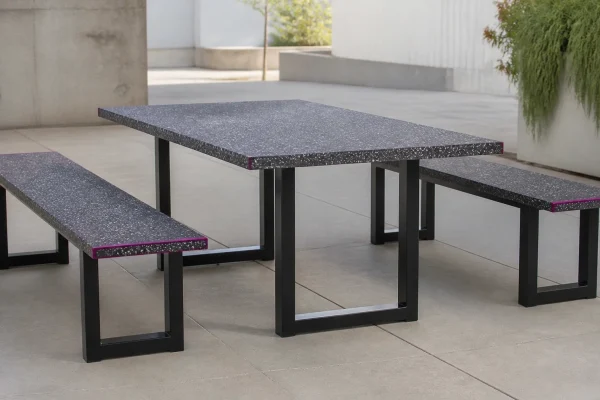
Whether you are building custom furniture for a commercial fit-out or heavy-duty noise barriers for a road project, the "workability" remains the same as wood, but the performance is in a different league.

Conclusion: Making the Resourceful Choice
The comparison is clear. While timber may win on the very first day of a project due to lower upfront material costs, it loses every single day after that.
If your project is located in a high-moisture area, a coastal environment, or a high-traffic public space, timber is a liability. Recycled plastic is an asset. It is 100% waterproof, requires zero maintenance, and allows you to hit the most stringent sustainability targets for 2026 and beyond.
Ready to stop the rot?
- Order Samples: Feel the density and see the unique colour patterns of our recycled plastic sheets.
- Request a Quote: Send us your project dimensions for a custom manufacturing quote.
- Download Technical Data: Get the specs you need to win your next government tender.
Stop building for today and start building for the next 50 years. Choose Resourceful Living.