If you’re managing civil projects or local council assets in Australia, you’ve probably noticed a recurring theme: the line item for "maintenance" is ballooning.
For decades, concrete has been the default setting for everything from retaining walls to noise barriers. It’s heavy, it’s permanent, and it’s "cheap" to buy: or so the logic goes. But in the current climate of Circular Construction 2026, that logic is falling apart. Between the rising cost of carbon offsets and the inevitable "concrete cancer" that plagues coastal infrastructure, the traditional grey block is becoming a financial liability.
At Resourceful Living, we’re seeing a massive shift. Specifiers are moving away from heavy, high-maintenance materials and towards high-density polyethylene (rHDPE). When you compare recycled plastic vs concrete structural performance in secondary infrastructure, the numbers don’t just lean towards plastic: they sprint there.
Here is why your traditional infrastructure is costing you too much and how switching to sustainable building materials in Australia can slash your Opex for the next 50 years.
1. The Logistics Tax: 1/3 the Weight, 1/10 the Hassle
One of the biggest hidden costs of concrete isn't the material itself; it’s the machinery required to move it. Concrete is notoriously heavy. To install concrete noise barriers or retaining wall sleepers, you’re looking at:
- Heavy-duty cranes and специализирован transport.
- Large crews for safety and spotting.
- Complex site access requirements.
Recycled plastic sheets in Australia change the logistics game entirely. Our rHDPE panels are roughly 1/3 the weight of concrete.
This means a smaller team can handle the installation using standard site machinery: sometimes even just a two-man crew and a ute. You aren’t just saving on fuel; you’re saving on the total hours billed to the project. If you want to dive deeper into how this impacts your bottom line, check out the ROI of recycled plastic.
2. Speed of Installation: Mechanical vs. Curing
Time is money, especially in civil works where road closures or site access windows are tight.
Concrete requires curing time. Even pre-cast options often require heavy footings and wet-pour components that tie up a site for days or weeks.
With recycled plastic vs concrete structural applications like erosion control or boardwalks, we use mechanical fixings. You can cut, drill, and bolt rHDPE just like timber, but without the rot.
- Zero wait time: Once it’s bolted, it’s structural.
- Smaller crews: No specialized concrete finishers required.
- All-weather installation: You can’t pour concrete in a downpour, but you can certainly install plastic panels.
3. The End of "Concrete Cancer" and Maintenance Cycles
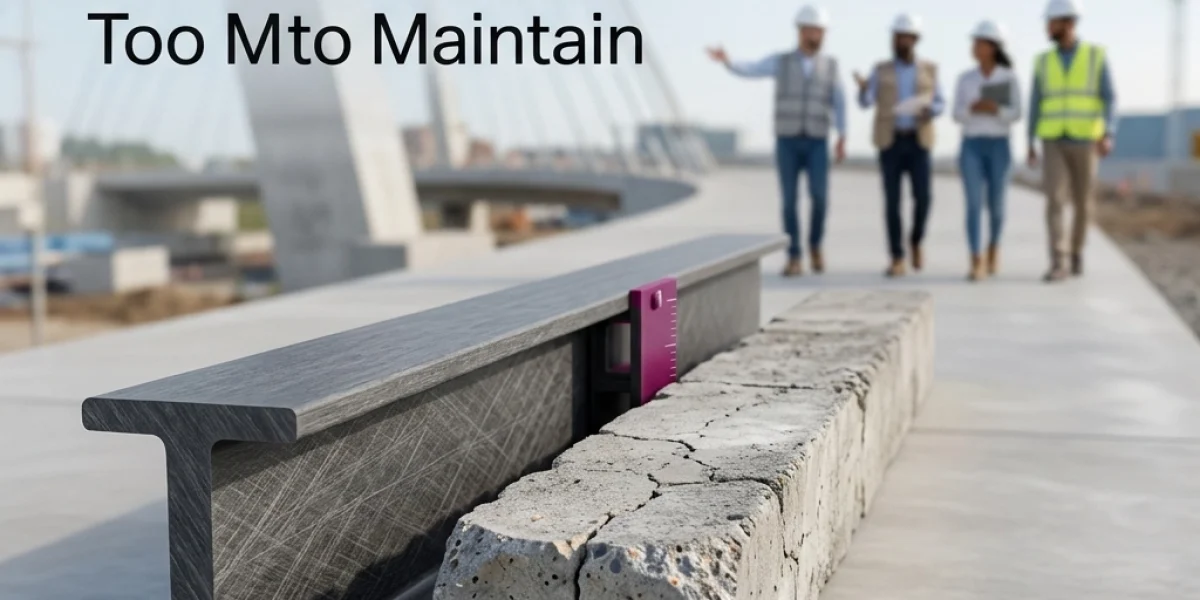
Concrete is porous. Over time, salt and moisture penetrate the surface, reaching the steel reinforcement inside. This leads to oxidation, expansion, and eventually, the dreaded concrete cancer (spalling).
In coastal Australian environments, a concrete retaining wall or noise barrier has a ticking clock on it from day one. You’ll be paying for:
- Patching and crack injection.
- Anti-graffiti coatings (that need reapplication).
- Structural inspections every 5 years.
Recycled plastic is chemically inert. It doesn’t absorb water, it doesn’t react to salt, and it won't crack during ground shifts because it has a degree of inherent flexibility. It is effectively zero maintenance. This is why we see so many councils moving Opex to Capex by choosing rHDPE for long-term assets.
4. Aesthetics, Vandalism, and the "Solid-Core" Advantage
Let’s be honest: concrete is a magnet for graffiti. Because it’s porous, paint soaks into the surface, making it nearly impossible to remove without high-pressure blasting that damages the substrate.
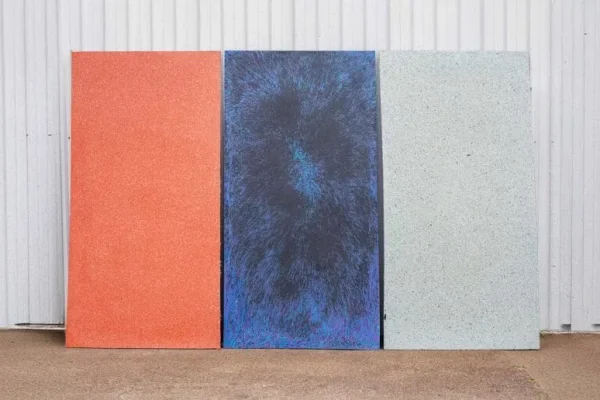
Resourceful Living panels feature a solid-core colour.
- Graffiti Resistance: Most spray paints can be wiped off rHDPE with a simple citrus-based cleaner or a light pressure wash.
- No Fading: The colour is mixed into the plastic, not painted on. Even if a panel gets scratched or chipped by a mower, the colour remains consistent throughout.
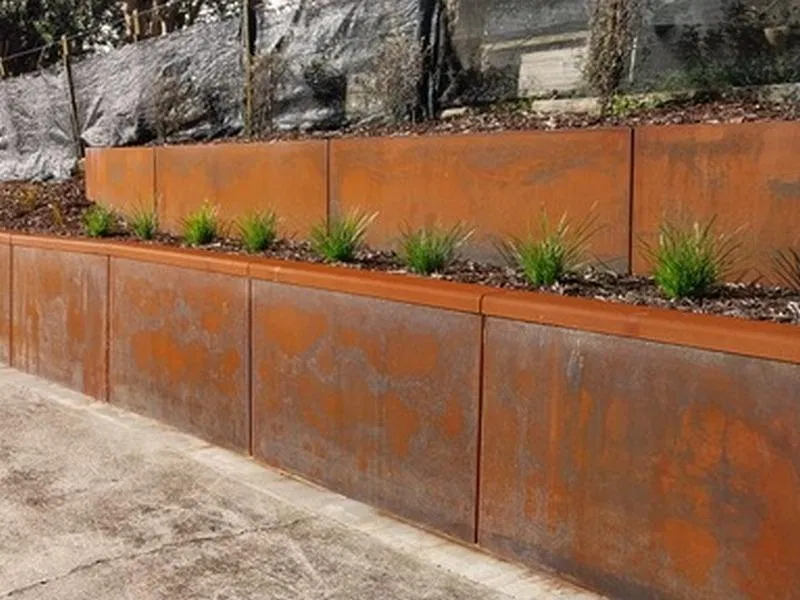
- Design Flexibility: We can create rust-effects, marble-finishes, or brand-specific colours that make infrastructure look like a design choice rather than a utility.
5. Meeting the ESG Mandate (Circular Construction 2026)
If you’re bidding for government work, you already know that "cheapest price" no longer wins tenders. Under the current Circular Construction 2026 frameworks, you are being judged on your embodied carbon.
Cement production is responsible for roughly 8% of global CO2 emissions. It is one of the "dirtiest" materials in the construction supply chain.
By choosing recycled plastic, you are:
- Diverting waste from landfill: Every tonne of rHDPE we produce is a tonne of Australian plastic that didn't go into a hole in the ground.
- Lowering Embodied Carbon: The energy required to recycle plastic is a fraction of what’s needed to produce cement and steel.
- Ensuring Circularity: Our Closed-Loop ESG Partner Program ensures that at the end of the asset's life (decades from now), we will take the material back and recycle it again.
"The shift from linear 'take-make-waste' infrastructure to circular assets is the single biggest opportunity for civil contractors to gain a competitive edge in 2026."
6. Performance in Harsh Environments
For erosion control and secondary structural walls, concrete often fails because it’s too rigid. As the ground moves or water pressure builds up, concrete cracks.
Recycled plastic has high impact resilience. It can take a hit from site machinery or debris during a flood without shattering. It’s also completely resistant to:
- Termites and pests (unlike timber).
- Acidic soils and chemicals (which degrade concrete).
- UV degradation (our sheets are UV-stabilised for the Australian sun).
For more on technical specifications, see our Specifiers Technical Guide.
How to Make the Switch: A Guide for Councils and Civil Contractors
Transitioning from concrete to sustainable building materials in Australia doesn't have to be a risk. We recommend a phased approach:
- Audit Your Maintenance Costs: Identify your highest-maintenance assets (e.g., coastal boardwalks or urban noise barriers).
- Specify for rHDPE: Update your "If Not, Why Not" documentation. If you aren't using recycled content, you need to justify why.
- Leverage Local Buy: We are a pre-qualified supplier. This simplifies the procurement process for councils, allowing you to bypass some of the traditional red tape.

Comparison Table: Recycled Plastic vs. Concrete
| Feature | Recycled Plastic (rHDPE) | Traditional Concrete |
|---|---|---|
| Maintenance | Zero (no rot/cancer) | High (patching, cleaning) |
| Installation | Fast (mechanical fixings) | Slow (curing/heavy lift) |
| Weight | Lightweight (approx 950kg/m3) | Heavy (approx 2400kg/m3) |
| ESG Impact | Carbon Positive / Circular | High Embodied Carbon (8% CO2) |
| Vandalism | Easy-clean / Solid core | Porous / High-cost removal |
| End of Life | 100% Recyclable (Take-back) | Landfill / Downcycled Rubble |
The Verdict
The era of "install it and forget it" only exists if you choose the right material. Concrete requires a lifetime of "remembering" it through maintenance checks and repair bills.
By choosing recycled plastic vs concrete structural solutions for your next noise barrier, retaining wall, or erosion control project, you aren't just doing the right thing for the planet: you’re doing the right thing for your budget.
Ready to see how our 100% Australian recycled plastic panels can fit your next project? Let’s look at the specs together.