If you’ve been keeping an eye on the Australian construction landscape lately, you’ll know that the rules of the game have changed. We aren’t just talking about the price of timber or the availability of tradies anymore. As we move through 2026, the industry’s focus has shifted squarely onto upfront carbon targets and embodied carbon reporting.
For decades, concrete has been the default "tough guy" on site. It’s heavy, it’s permanent, and it’s what we know. But when it comes to non-structural applications, think landscaping, public furniture, and site infrastructure, the old-school heavyweight is starting to look a bit, well, sluggish.
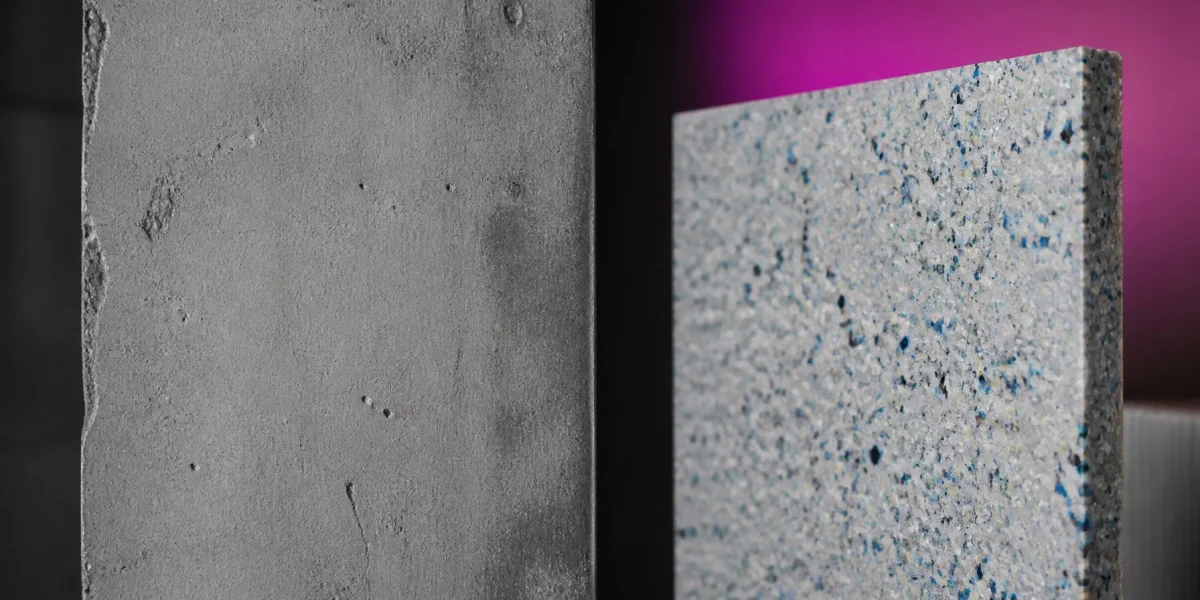
In the battle for sustainable building materials in Australia, the choice often boils down to a classic showdown: Recycled Plastic vs Concrete. So, if you’re trying to hit those aggressive 2026 sustainability targets without blowing your budget, which one actually delivers?
1. The Upfront Carbon Reality Check 📉
First, let’s define the beast. Upfront carbon refers to the emissions generated during the extraction, production, and transport of materials before a single person even steps foot on your finished project.
The Concrete Conundrum
Concrete is the second most used substance on Earth after water. It’s also one of the most carbon-intensive. The production of cement: the "glue" in concrete: is responsible for roughly 8% of global CO2 emissions. It requires massive kilns heated to over 1,400°C, fueled mostly by coal or gas.
Even when we talk about recycled plastic vs concrete structural performance, concrete wins on sheer load-bearing capacity, but its "carbon debt" is enormous. For every tonne of traditional cement produced, roughly one tonne of CO2 is released into the atmosphere.
The Recycled Plastic Revolution
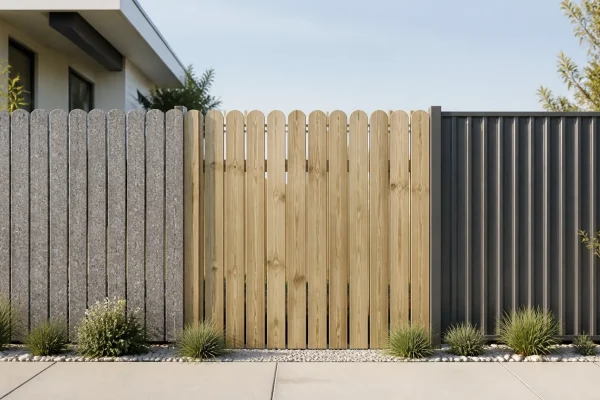
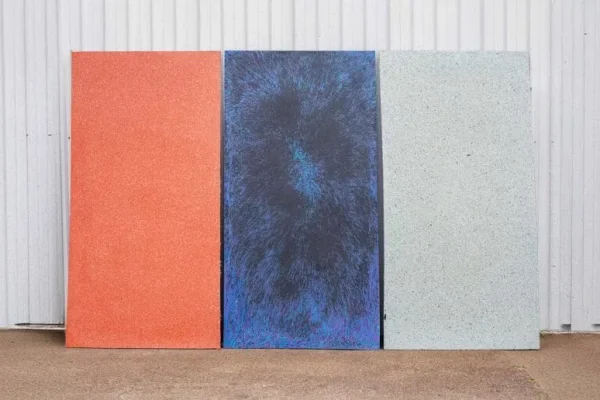
At Resourceful Living, our 100% recycled plastic panels are built differently. We take post-consumer Australian plastic waste: the stuff that would otherwise be off-gassing in a landfill: and lock it into solid, functional sheets.
- Zero Virgin Extraction: We don't mine for new minerals.
- Low Energy Manufacturing: Creating a recycled HDPE panel uses significantly less energy than firing a cement kiln.
- Carbon Sequestration: By choosing recycled plastic, you are effectively "burying" carbon waste in a functional form, preventing it from entering the waste stream.
"For non-structural landscaping and furniture, switching from concrete to 100% recycled plastic can reduce a project’s upfront carbon footprint by up to 60%."
2. Weight and the "Last Mile" Emissions 🚚
One of the biggest hidden costs in your carbon budget is transport. This is where the density of your materials really starts to bite.
Concrete is heavy. Really heavy. At approximately 2,400 kg per cubic metre, moving concrete requires heavy-duty trucks, massive fuel consumption, and often, expensive cranes for installation on site.
In contrast, our recycled plastic panels are roughly one-third the weight of concrete.
Why Weight Matters for Your Target:
- Fewer Deliveries: You can fit more material on a single truck, slashing the number of trips to the site.
- Lower Fuel Burn: Lighter loads mean better fuel efficiency for your logistics partners.
- Manual Handling: Many of our products can be handled by a two-person crew without the need for carbon-belching heavy machinery or cranes.
If you’re looking to meet 2026 recycled content targets, reducing the sheer mass of material you move is one of the easiest wins on the board.

3. Durability vs. Degradation: The Landscaping Focus 🌿
When it comes to landscaping and furniture, durability isn't just about how long something stays standing: it’s about how much maintenance (and extra carbon) it requires over its life.
Concrete's Vulnerabilities
While concrete feels "permanent," it’s actually quite temperamental in the Australian sun.
- Cracking: Thermal expansion and ground movement lead to cracks.
- Spalling: In coastal areas, salt air penetrates concrete, rusting the internal steel (concrete cancer).
- Maintenance: Once it cracks or stains, it requires patching, sealing, or high-pressure cleaning: all of which have their own environmental costs.
The Recycled Plastic Edge
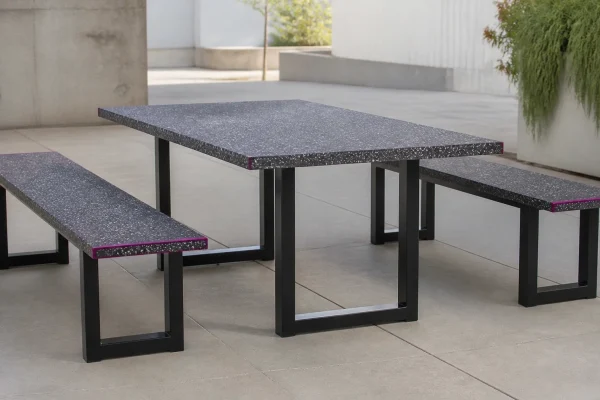
Our recycled plastic furniture and landscaping panels are essentially inert.
- Impervious to Moisture: They won't rot, swell, or absorb water.
- UV Stabilised: Designed to sit in the 40°C Australian sun without becoming brittle or fading.
- Zero Maintenance: No painting, no sealing, and no chemical treatments required.
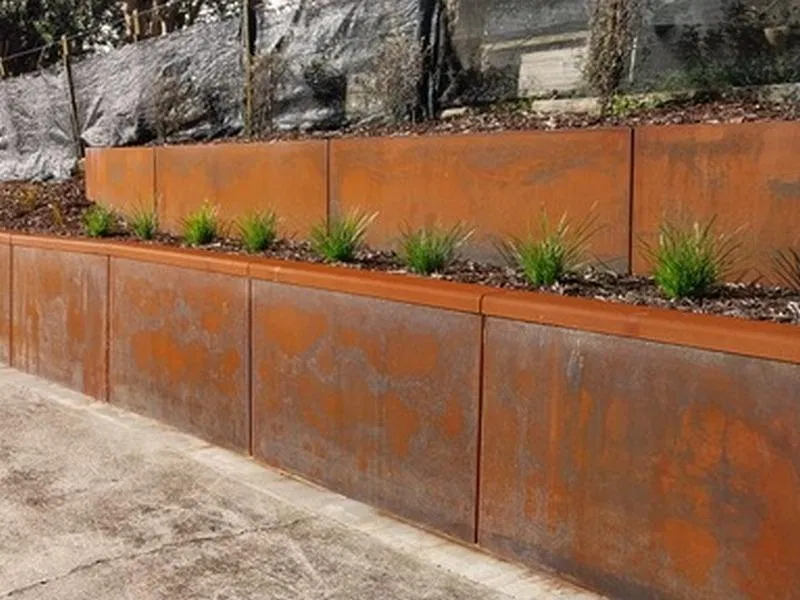
For applications like retaining walls or park benches, the "install and forget" nature of recycled plastic makes it the superior choice for long-term value.
4. Recyclability: Landfill vs. The Circular Loop ♻️
In circular construction, the end of a product’s life is just as important as the beginning. This is where the recycled plastic vs concrete comparison gets truly lopsided.
When a concrete structure is demolished, it usually ends up as rubble. While some can be crushed for low-value road base, the energy and carbon used to create the original cement are gone forever. It’s a "downcycling" process at best.
At Resourceful Living, we operate a strict take-back program.
When our panels or furniture reach the end of their life: whether that’s in 10 years or 50: we take them back for free. We shred them, melt them down, and turn them into brand-new products. It’s a 100% closed-loop system.
By choosing materials that are already part of a circular economy, you aren't just meeting a target; you’re future-proofing your project against future waste levies and carbon taxes.

5. The Verdict: Which Material Should You Specify? 🏆
Let’s be realistic: if you’re building the foundations for a 40-storey tower, you’re going to need concrete. But for almost everything else in the built environment, there’s a better way.
Choose Concrete if:
- You require high compressive strength for primary structural foundations.
- The application is a heavy-duty highway bridge or high-rise core.
Choose Recycled Plastic if:
- You are building retaining walls, boardwalks, or acoustic barriers.
- You are specifying outdoor furniture, planter boxes, or site hoarding.
- Your project has strict upfront carbon targets or Green Star requirements.
- You want a maintenance-free solution that handles the Australian climate.
- You need to demonstrate local material traceability in your tender.
Summary Comparison Table
| Feature | Concrete | Recycled Plastic (rHDPE) |
|---|---|---|
| Upfront Carbon | High (Cement-heavy) | Low (Waste-derived) |
| Transport Emissions | High (2400kg/m³) | Low (~1/3 the weight) |
| Installation | Heavy machinery required | Lightweight / Manual |
| Moisture Resistance | Porous / Prone to cracking | 100% Waterproof |
| End-of-Life | Downcycled to rubble | 100% Circular / Take-back |
Ready to Nail Your 2026 Carbon Targets? 🚀
The shift toward sustainable building materials in Australia isn't coming; it’s already here. Whether you're a builder, a council procurement officer, or a landscape designer, the materials you choose today will define your project's environmental legacy.
Don't let your upfront carbon target be the thing that sinks your next tender. Switch the "default" from concrete to circular.
👉 Explore our range of 100% Recycled Plastic Panels or Contact Jess and the team to discuss your next project.