In the Australian construction landscape of 2026, the status quo is being dismantled. For decades, concrete has been the unchallenged heavyweight of structural infrastructure. It’s the default, the "safe bet," and the backbone of our cities. However, as embodied carbon reporting becomes a mandatory hurdle for government tenders and private developments alike, builders are asking a critical question: Is concrete always the right tool for the job?
The rise of Recycled High-Density Polyethylene (rHDPE) as a structural alternative isn't just a win for the environment: it’s a tactical shift in engineering. When we compare recycled plastic vs. concrete structural performance, we aren't just looking at strength; we’re looking at lifespan, logistics, and the true cost of maintenance in Australia’s notoriously harsh conditions.
The Structural Reality: Compressive Strength vs. Impact Toughness
To understand which material is "better," we first have to define the job. If you’re pouring the foundations for a 50-storey skyscraper, concrete is irreplaceable. Its high compressive strength is designed to handle immense vertical loads. But infrastructure isn't just about skyscrapers.
Where Concrete Fails
Concrete is inherently brittle. It has excellent strength under pressure but almost zero flexibility. In Australian environments: where soil shifts, temperatures fluctuate wildly, and coastal salt air is constant: concrete eventually cracks. Once a hairline fracture appears, moisture penetrates to the internal steel reinforcement, causing concrete cancer (spalling).
Where Recycled Plastic Wins
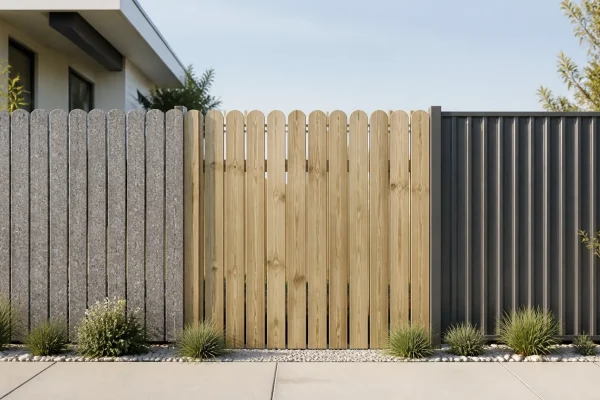
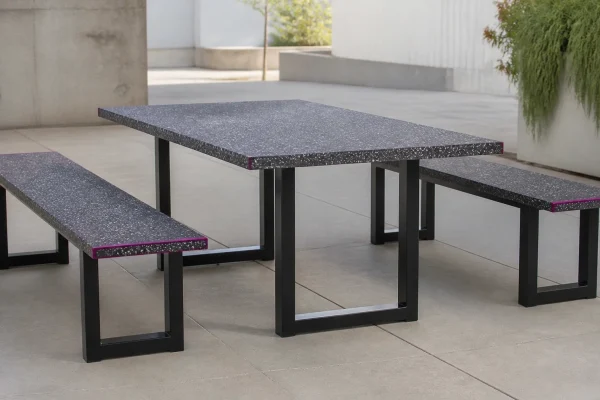
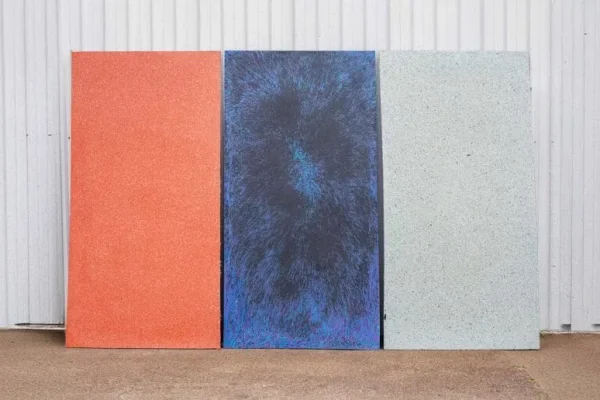
Conversely, rHDPE is a thermoplastic. It doesn't "break"; it deforms under extreme stress rather than shattering. For "human-scale" infrastructure like retaining walls, boardwalks, and acoustic barriers, this flexibility is a massive advantage. Our 100% recycled plastic panels are tested for high impact resistance, meaning they absorb shocks that would chip or shatter a pre-cast concrete block.
"Concrete fails through cracking; HDPE fails through resilience. In high-moisture or shifting environments, that flexibility is what guarantees a 50-year maintenance-free lifecycle." : Resourceful Living Technical Team

Longevity in the Australian Climate: The Corrosion Factor
Australia is a coastal nation, and salt is the enemy of traditional building materials.
- Concrete's Porosity: Standard concrete has a water absorption rate of 3% to 10%. This makes it susceptible to salt damp, chemical erosion, and mould growth.
- The Plastic Advantage: Recycled HDPE is 100% waterproof and chemically inert. It possesses a 0% water absorption rate.
Whether it's a modular retaining wall in a salt-sprayed coastal park or a noise barrier next to a heavy-traffic highway, recycled plastic will not rot, rust, or harbour termites. While concrete structures often require periodic sealing and patching, rHDPE is essentially "set and forget."
The Embodied Carbon Battle: Meeting 2026 Standards
If you're bidding for work today, you've likely seen the shift toward NABERS embodied carbon ratings. The environmental delta between these two materials is staggering:
- Concrete’s Carbon Debt: Cement production is responsible for roughly 8% of global CO2 emissions. It is energy-intensive and relies on the extraction of non-renewable sand and stone.
- The rHDPE Circular Loop: At Resourceful Living, we manufacture 1 tonne of plastic per day using 100% Australian waste. Switching from concrete to recycled plastic for non-primary structural elements can slash your project's emissions by up to 60%.
By using materials that are 100% traceable and locally sourced, builders can hit their Green Star v1.1 targets without the premium cost of "green concrete" additives that often compromise setting times.
Installation Efficiency: Weight and Logistics
One of the most overlooked costs in any infrastructure project is logistics. Concrete is heavy (~2,400 kg/m³), requiring heavy machinery, crane hire, and significant site preparation.
Recycled plastic panels are roughly one-third the weight of concrete.
- Reduced Labour Costs: Panels can often be handled by smaller crews without the need for specialised lifting equipment.
- Faster Turnaround: There is no curing time. Unlike concrete, which takes weeks to reach full strength, an rHDPE structure is structurally sound the moment the last bolt is tightened.
- Lower Transport Emissions: You can fit three times as much material on a single truck, dramatically reducing the "scope 3" emissions of your site logistics.

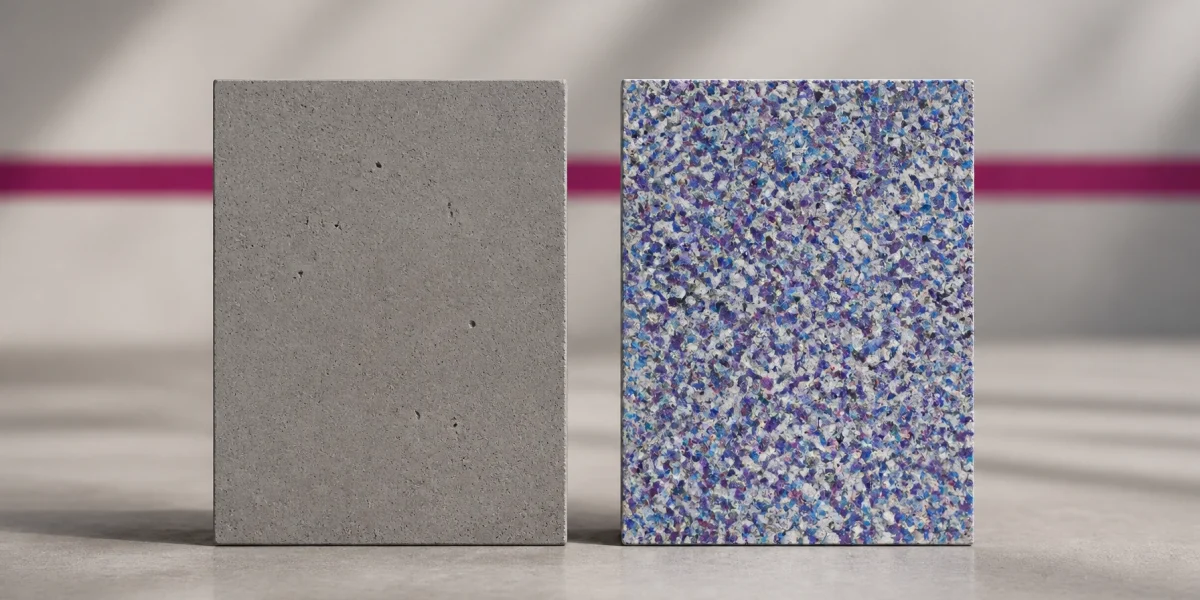
Technical Comparison: Recycled Plastic vs. Concrete
| Feature | Recycled Plastic (rHDPE) | Standard Concrete |
|---|---|---|
| Weight | ~960 kg/m³ (Lightweight) | ~2,400 kg/m³ (Extremely Heavy) |
| Water Absorption | 0% (Inert) | 3% – 10% (Porous) |
| Cracking Risk | Extremely Low (Flexible) | High (Brittle) |
| Maintenance | Zero (No sealing required) | High (Requires regular repair) |
| CO2 Impact | 60% Lower (Uses 100% waste) | High (8% of global emissions) |
| End of Life | 100% Recyclable (Take-back) | Downcycled to Rubble/Landfill |
The Verdict: When to Switch?
We aren't suggesting you build a skyscraper out of plastic. However, the 2026 circular construction pivot is about material optimization.
You should choose recycled plastic over concrete for:
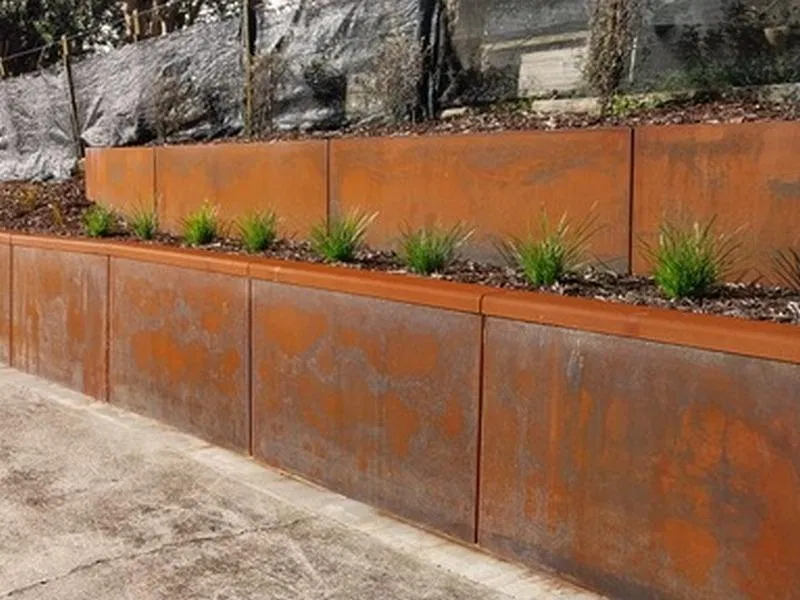
- Retaining Walls: Where soil movement causes concrete to crack.
- Public Infrastructure: Such as boardwalks, stairs, and bollards that face high UV and salt exposure.
- Acoustic Barriers: Where weight reduction on bridges or overpasses is critical.
- Site Hoarding & Formwork: Where durability and reusability outlast traditional timber or heavy pre-cast slabs.

Take Control of Your 2026 Tender Requirements
The "concrete-only" mindset is a 20th-century relic. To stay competitive in a market that values traceability and carbon efficiency, you need materials that perform.
At Resourceful Living, we don't just provide panels; we provide a closed-loop ESG partnership. Our materials are 100% Australian-made, 100% recycled, and come with a guaranteed take-back program at the end of their life.
Ready to swap out heavy, high-carbon concrete for a smarter alternative?
Contact our team today to request a sample pack or a technical data sheet for your next project.