If you're managing a major build in 2026, the material selection process has changed. It’s no longer just about the initial price per cubic metre; it’s about embodied carbon reporting, material traceability, and meeting the tightening NABERS and Green Star standards.
For decades, concrete was the default heavyweight for everything from high-rises to garden retaining walls. But as we pivot toward circular construction strategies, recycled plastic: specifically High-Density Polyethylene (HDPE): is challenging the status quo.
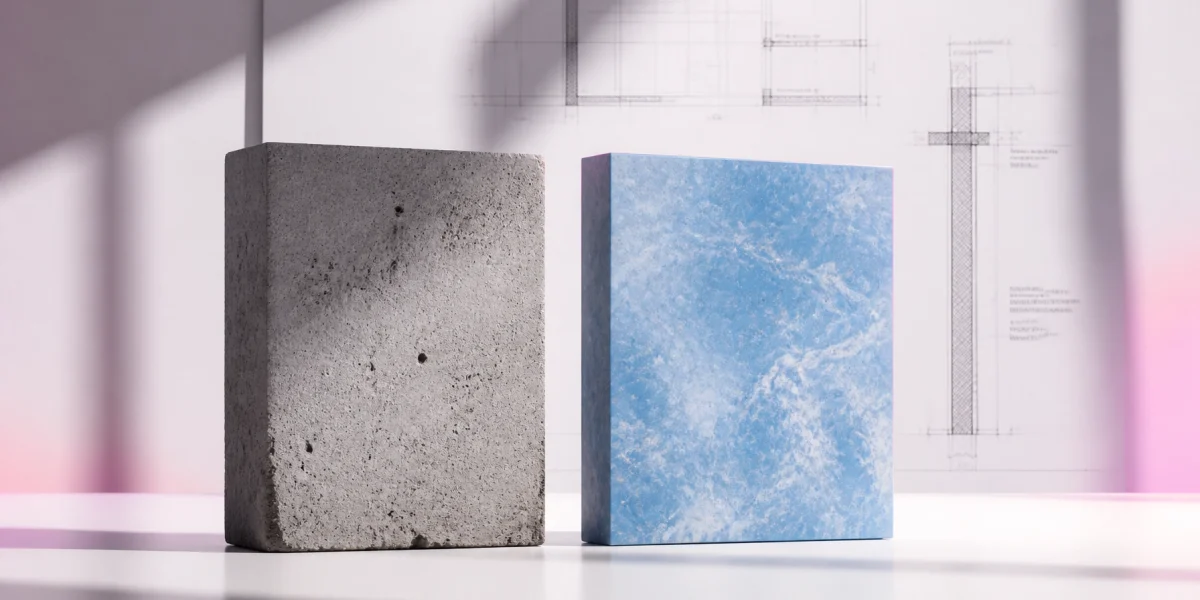
So, which is actually better? The answer depends on your structural requirements, but the data shows that for "human-scale" infrastructure, recycled plastic is winning on almost every metric.
Quick Comparison: Recycled Plastic vs. Concrete
| Feature | Concrete (Cast-in-Place) | Recycled Plastic (HDPE Panels) |
|---|---|---|
| Weight | ~2,400 kg/m³ (Heavy) | ~950 kg/m³ (Lightweight) |
| Installation Time | Weeks (Curing required) | Days (Prefabricated/Fastened) |
| Embodied Carbon | High (Cement production) | Low (Waste sequestration) |
| Maintenance | High (Cracking/Spalling) | Zero (Inert/Moisture-proof) |
| End-of-Life | Landfill/Down-cycling | 100% Recyclable (Take-back) |
1. The Weight Problem: Logistics and Site Safety
The most immediate difference you’ll notice on-site is the density. Concrete is heavy, unforgiving, and expensive to transport.
- Concrete: Requires heavy machinery for even small-scale installations. This leads to higher fuel costs, increased site traffic, and a significant risk of manual handling injuries.
- Recycled Plastic: Our panels at Resourceful Living are roughly 60% lighter than concrete.
Because rHDPE is significantly less dense, a smaller crew can handle the material without needing a crane for every placement. This isn't just a convenience; it's a massive win for installation efficiency. When you reduce material weight, you slash transport emissions and labour costs in one go.

2. Installation Time: Prefab vs. Curing
In infrastructure, time is quite literally money. The difference in project timelines between these two materials is staggering.
Concrete: The Slow Road
Traditional cast-in-place concrete requires a multi-step sequence:
- Excavation and base preparation.
- Formwork and rebar installation.
- The "pour" day (highly weather-dependent).
- Curing time (often 7 to 28 days before full strength is reached).
Recycled Plastic: The Fast Track
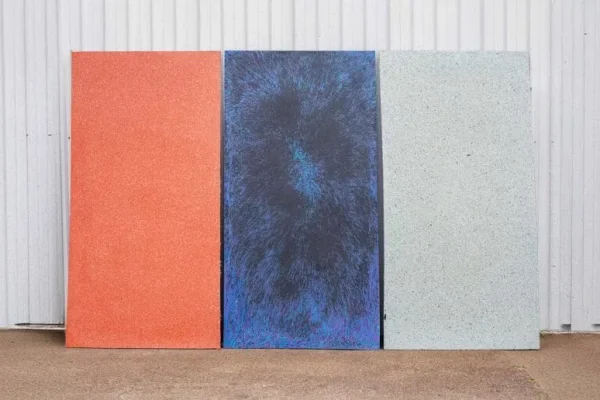
Recycled plastic panels, like our standard 2400mm x 1200mm sheets, arrive at your site ready to go. They are mechanically fastened or bolted into place. There is zero curing time.
"In high-impact environments or areas with shifting soil, the flexibility of recycled plastic is actually its greatest structural asset. While concrete fails through cracking, HDPE adapts through slight deformation, maintaining its integrity over decades." : Jess Hodge, Resourceful Living
3. The Carbon Footprint: Meeting 2026 Targets
If you've seen the latest embodied carbon reporting rules, you know concrete is under heavy scrutiny. Cement production alone accounts for roughly 8% of global CO2 emissions.
Choosing recycled plastic is a double win for your sustainability audit:
- Waste Sequestration: You are locking away Australian plastic waste that would otherwise end up in landfill.
- Low Energy Manufacturing: Producing a recycled HDPE panel uses significantly less water and energy than the chemical reactions and high-heat kilns required for cement.
By swapping non-primary structural concrete (like cladding, retaining walls, or boardwalks) for rHDPE, you can dramatically improve your NABERS embodied carbon rating and secure more Tier 1 government contracts.

4. Durability and "Concrete Cancer"
In the harsh Australian climate, especially near the coast, concrete has a shelf life. It is porous. Over time, salt and moisture penetrate the surface, causing the steel reinforcement to rust and expand. This lead to "concrete cancer" (spalling), which is notoriously difficult and expensive to fix.
Recycled plastic is impervious to moisture. It won't rot, it won't rust, and it doesn't absorb water. Our panels are UV-stabilised to ensure they don't become brittle under the Australian sun. This makes them the "install and forget" choice for:
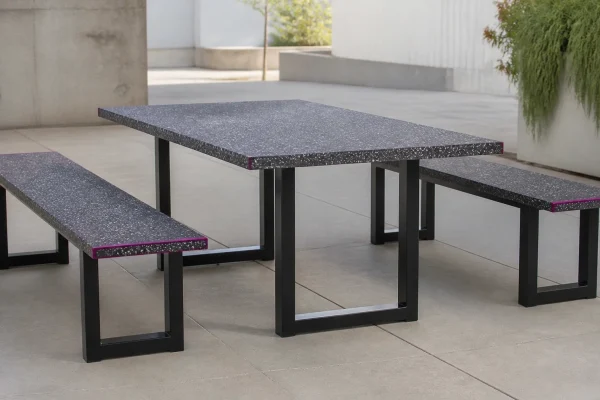
- Public boardwalks and stairs.
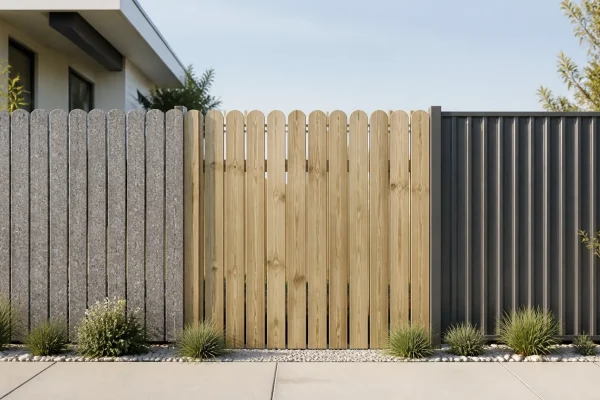
- Retaining walls and garden edging.
- Acoustic barriers and cladding.
- Marine-grade infrastructure.
5. Circularity: The Take-Back Advantage
When a concrete structure reaches the end of its life, it’s usually demolished into rubble. While some can be crushed for road base, much of it ends up as landfill.
At Resourceful Living, we offer a Closed-Loop Take-Back Program. If your project is ever decommissioned, we will collect our panels free of charge and recycle them back into our manufacturing line to create new products. This level of material traceability and product stewardship is a core requirement for modern ESG reporting.

The Verdict: Which Should You Choose?
Let’s be realistic: Recycled plastic is not a 1:1 replacement for concrete in every scenario.
If you are pouring the foundation for a 40-storey residential tower or a heavy-duty highway bridge, concrete’s compressive strength is essential. However, for almost every other type of "human-scale" infrastructure, recycled plastic is the superior choice.
Use Concrete when:
✅ You need extreme compressive strength for primary load-bearing foundations.
✅ The project involves high-heat environments where non-combustibility is the primary constraint.
Use Recycled Plastic when:
✅ You need to reduce installation time and labour costs.
✅ You are working in high-moisture or coastal environments.
✅ You need to hit strict embodied carbon targets to win a tender.
✅ You want a maintenance-free solution that won't crack or rot.
Ready to transition your next project to circular materials?
Whether you're a developer, a council planner, or a builder, the shift to 100% Australian recycled materials is the smartest move you can make in 2026.
Get a quote for your structural project today or download our Product Guide to see the full range of thicknesses and finishes available.