In 2026, the Australian construction landscape has shifted. We aren't just looking at the "now" cost; we’re looking at the whole-life carbon cost. While concrete has been the undisputed king of structural integrity for decades, a new contender has emerged for everything else: 100% recycled plastic sheets.
When it comes to non-structural applications: like modular wall systems, external noise barriers, and protective cladding: the comparison between recycled plastic and concrete is no longer a contest. It’s a revolution.
As an industry, we’re moving toward embodied carbon reporting as a mandatory requirement for every tender. If you’re still using heavy pre-cast concrete for non-load-bearing elements, you’re likely blowing your carbon budget before the first brick is even laid.
The Weight War: 950kg/m³ vs. 2,400kg/m³
The most immediate physical advantage of recycled plastic over concrete is density. Traditional concrete sits at approximately 2,400kg per cubic metre. In contrast, our 100% recycled HDPE and PP panels sit between 950kg and 980kg per cubic metre.
Why does this matter for your next project?
- Reduced Transport Emissions: You can move more than double the volume of material on a single truck. This directly slashes your Scope 3 transport emissions.
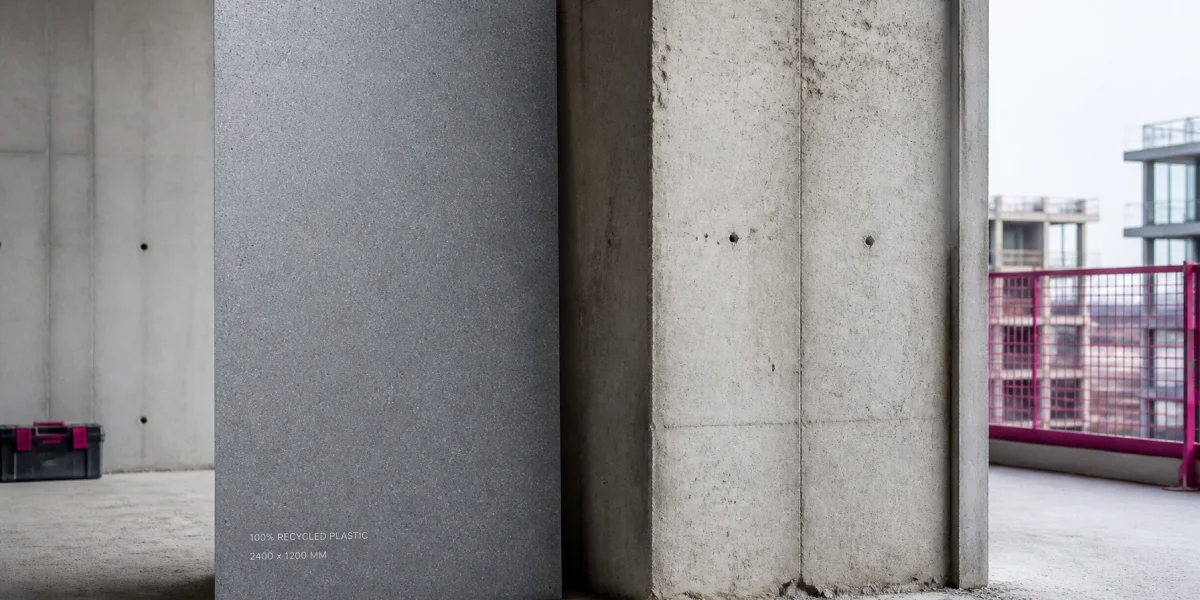
- Easier Manual Handling: A standard 2400mm x 1200mm sheet can be handled by a smaller crew without the constant need for heavy-duty cranes or specialised lifting equipment.
- Modular Speed: Lightweight materials allow for rapid assembly of modular units. While concrete requires "curing time" and massive structural support, plastic panels are ready to install the moment they leave our Newcastle facility.
"The efficiency of modular construction isn't just about how fast you build, but how little energy you waste moving heavy, unnecessary mass." : Industry Insight, 2026.

The Embodied Carbon Winner
Let’s talk hard data. Concrete’s carbon footprint is notoriously high, primarily due to the energy-intensive process of cement production. Even "green" concrete mixes only provide a marginal reduction in the core emissions associated with the chemical reaction of calcination.
Recycled plastic, specifically when sourced from 100% Australian waste, offers a dramatically different profile. By diverting plastic from local landfills, we are "locking away" carbon that would otherwise contribute to environmental degradation.
- Concrete: High embodied carbon, roughly 0.1 to 0.2 tonnes of CO2 per tonne of concrete (depending on the mix).
- Resourceful Living Recycled Plastic: Approximately 0.38kg CO2e per kg when produced with renewable energy: but with the added massive benefit of waste diversion.
When you calculate embodied carbon for your 2026 tender, substituting non-structural concrete with recycled plastic panels can reduce the global warming potential (GWP) of a modular build by up to 30%.
Speed of Installation: No Curing, No Waiting
In construction, time is quite literally money. Concrete is a "slow" material. It requires formwork, pouring, and: most frustratingly: curing times that can stall a project for days or weeks.
Resourceful Living panels are manufactured at a rate of 1 tonne of plastic per day, seven days a week. Our standard 2400mm x 1200mm sheets are:
- Solid blocks of 100% recycled plastic (no veneers or additives).
- Pre-finished: No need for painting, sealing, or anti-corrosion treatments.
- Workable: You can cut, drill, and fasten them with standard woodworking tools.
For external barriers or modular wall linings, this means you can go from delivery to a finished installation in a fraction of the time it takes to set up a pre-cast concrete equivalent.
Durability: Beyond the Cracks
Concrete is strong in compression but brittle. It cracks under thermal expansion and requires reinforcing steel to handle any tension. In aggressive environments: think salt spray, acidic soils, or high-moisture zones: concrete can suffer from "concrete cancer" or sulfate attack.
Recycled plastic is chemically inert.
✅ 100% Waterproof: It will never rot, swell, or support mould growth.
✅ UV Resistant: Engineered to withstand the harsh Australian sun.
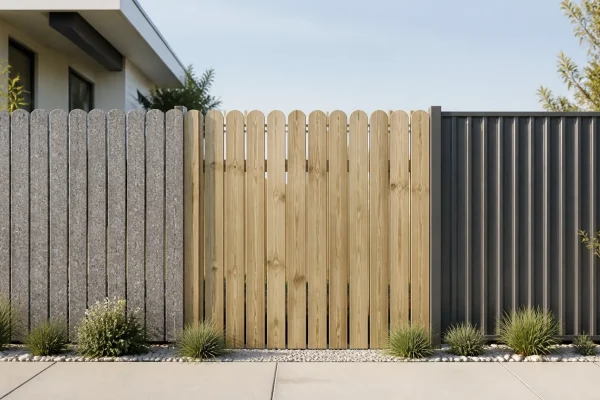
✅ Impact Resistant: Unlike concrete, which can chip or shatter, plastic panels absorb energy. This makes them the superior choice for noise walls and external protection barriers.
If you're comparing materials for long-term infrastructure, check out our durability data comparison to see how plastic outlasts almost every traditional material.

The 2026 Circular Mandate
The real "structural" difference isn't in the material strength, but in the lifecycle. Concrete, once demolished, is typically "downcycled" into low-grade road base. It rarely returns to its original form.
Resourceful Living operates on a Closed-Loop System.
- Traceability: We manage the end-to-end recycling and manufacturing cycle. You know exactly where your material came from.
- Take-Back Program: At the end of a project’s life (or if a modular unit is decommissioned), we collect our products free of charge to remanufacture them into new sheets.
This level of circularity is what separates a "sustainable" project from a truly "circular" one. When sourcing your materials, ensure you are looking for 100% traceable Australian recycled plastic.
Applications: Where to Swap Concrete for Plastic
While we don't recommend recycled plastic for primary load-bearing columns (yet!), there are several areas where it is the clear superior choice:
| Application | Concrete Challenge | Recycled Plastic Advantage |
|---|---|---|
| Noise Barriers | Heavy, prone to cracking, high transport cost. | Lightweight, impact-absorbent, easy to replace panels. |
| Modular Wall Linings | Adds significant weight to the module, slow to set. | Rapid installation, adds minimal weight, durable finish. |
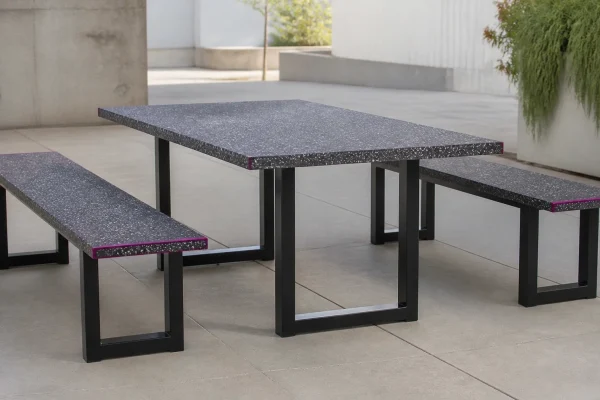
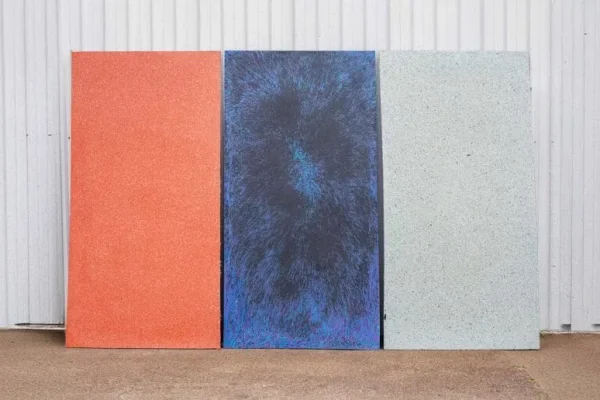
| External Protective Cladding | Needs painting/sealing, heavy installation. | Maintenance-free, vibrant colours available, rot-proof. |
| Service Enclosures | Difficult to modify on-site, heavy. | Easy to drill/cut for pipes/wires, easily moved. |
Summary Checklist for your 2026 Tenders
If you are currently drafting a proposal and considering "recycled plastic vs concrete structural" alternatives for non-load-bearing elements, use this checklist:
- Weight Check: Does the lighter weight of plastic panels allow for a lighter primary structure or smaller foundations?
- Carbon Check: Have you included the embodied carbon savings from diverting local Australian waste?
- Maintenance Check: Can you eliminate the cost of future painting, sealing, or anti-graffiti coatings by using solid-colour plastic?
- Circular Check: Does the supplier offer a guaranteed take-back program?
Final Thoughts
The decision to use recycled plastic over concrete for non-structural elements isn't just an environmental choice: it’s a logistical and financial win. By reducing weight, increasing installation speed, and eliminating maintenance, you are building smarter, faster, and more responsibly for the Australian environment.
Ready to see the material in person? Our Newcastle facility is manufacturing 24/7. Whether you need custom sizes or our standard 2400x1200mm panels, we are here to help you meet your sustainability targets.