For Australian councils, schools, and hospitality venues, the traditional approach to outdoor furniture is failing. Timber rot, rusted metal, and the constant cycle of sanding and staining are no longer just maintenance headaches: they are budget-draining liabilities.
As we move into 2026, the shift toward circular economy procurement has moved from a "nice-to-have" to a commercial necessity. Specifiers are now prioritising materials that offer a 20-year lifespan with zero maintenance.
Recycled plastic furniture has emerged as the definitive solution for high-traffic environments. By choosing 100% Australian recycled HDPE, businesses and government bodies aren't just buying a bench; they are investing in a durable, weather-proof asset that actively solves the local plastic waste crisis.
The Maintenance Crisis: Why Timber is a Liability in 2026
For decades, timber was the standard for park benches and school seating. However, in the Australian climate, wood requires annual maintenance to prevent splintering, warping, and rot.
- Timber Maintenance Costs: Annual oiling or staining can cost upwards of $150–$300 per unit in labour and materials.
- Safety Hazards: Splintering wood is a major liability in primary schools and public playgrounds.
- Replacement Cycles: Traditional timber furniture often requires replacement every 5–7 years in exposed coastal or high-UV environments.
In contrast, recycled plastic outdoor furniture is structurally inert. It does not absorb moisture, meaning it cannot rot or host mould. For a deep dive on these costs, see our Recycled Plastic vs. Timber Durability Comparison.
"The true cost of outdoor furniture isn't the purchase price: it's the maintenance budget for the decade following installation. Switching to recycled plastic effectively zeroes out that line item." : Jess Hodge, Resourceful Living.
Why Commercial Specifiers are Switching to Recycled HDPE
Recycled plastic furniture is manufactured from High-Density Polyethylene (HDPE), the same material used in heavy-duty industrial containers. When processed correctly, it becomes a solid, high-performance material that outperforms traditional alternatives in three key areas:
1. Superior Weather Resistance ☀️
Australia’s UV index is notoriously harsh on furniture. Our recycled plastic is UV-stabilised, ensuring that the colour remains consistent even after years of exposure to the midday sun. It is also completely salt-proof, making it the ideal choice for coastal councils and beachside cafes.
2. Vandal and Graffiti Resistance 🖊️
Public spaces are prone to wear and tear. Because our material is solid and non-porous, graffiti can often be removed with simple pressure washing or mild solvents without damaging the surface. Unlike timber, it is nearly impossible to "carve" into, discouraging vandalism in school settings.
3. Hygiene and Food Safety ☕
For the hospitality sector, hygiene is paramount. Recycled plastic is non-porous, meaning it does not harbour bacteria or viruses. This makes it an excellent choice for cafe tables and school lunch areas where food spills are frequent.

Sector-Specific Applications: Where Performance Matters
Different commercial environments have unique requirements. Here is how recycled plastic outdoor furniture meets the specific needs of various Australian sectors:
Education: Schools and Universities
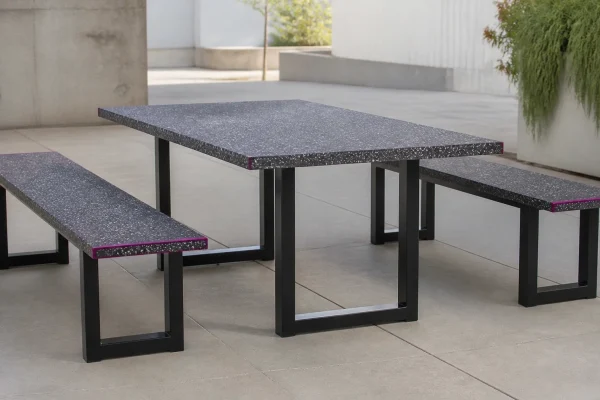
Schools require furniture that can withstand the energy of hundreds of students. Recycled plastic benches and tables are heavy enough to prevent tipping but designed with rounded edges to ensure safety.
✅ Benefit: No splinters, no sharp metal edges, and a "cool-to-the-touch" surface even in summer.
Hospitality: Cafes and Restaurants
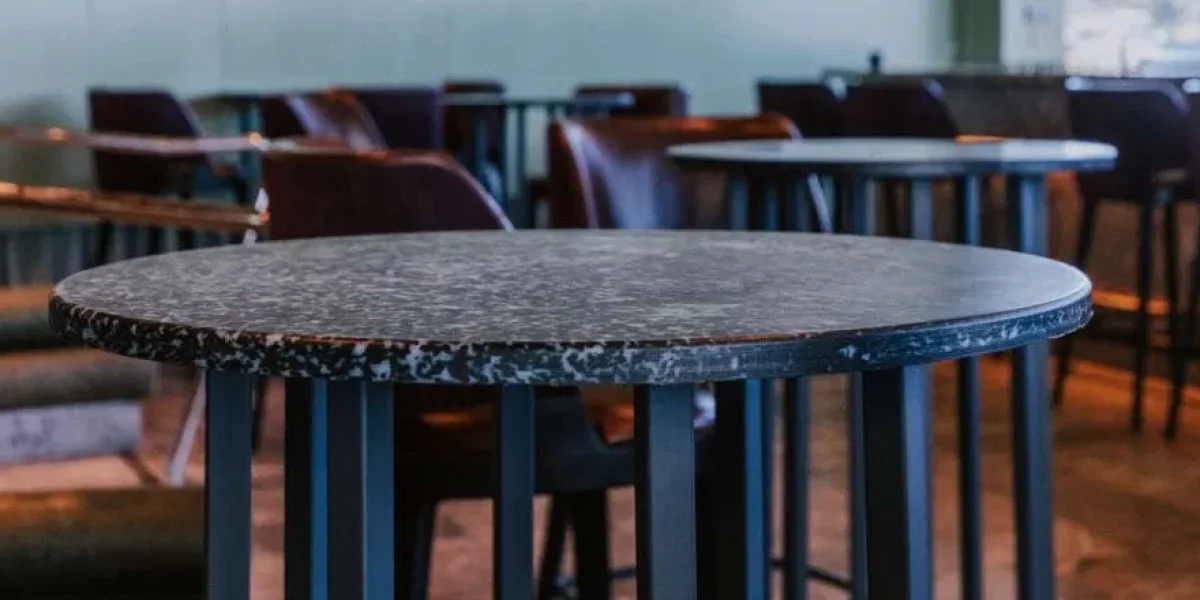
Cafes need to balance aesthetics with durability. Our recycled plastic cafe tables offer a modern, terrazzo-style finish that signals a commitment to sustainability to every customer.
✅ Benefit: Easy to wipe down, stain-resistant, and can be left outdoors overnight without fear of weather damage.
Public Infrastructure: Councils and Parks
Councils are under increasing pressure to meet Sustainable Procurement Guidelines. Using 100% Australian recycled plastic allows councils to demonstrate a closed-loop system where local household waste is returned to the community as a functional asset.
✅ Benefit: Helps meet Net Zero 2030 targets and qualifies for "Buy Recycled" government grants.
Comparison: Recycled Plastic vs. Traditional Materials
| Feature | 100% Recycled Plastic | Treated Timber | Powder-Coated Metal |
|---|---|---|---|
| Maintenance | Zero (Wash only) | High (Oiling/Sanding) | Moderate (Touch-ups) |
| Lifespan | 20+ Years | 5–10 Years | 10–15 Years |
| Rot/Rust | Fully Immune | High Risk | High Risk (Coastal) |
| UV Resistance | Excellent | Poor (Fades/Cracks) | Moderate |
| Sustainability | 100% Recycled | Low (Trees/Chemicals) | High Energy Content |
The Resourceful Living Difference: 100% Australian Traceability
Not all "recycled" furniture is created equal. Many imported products contain "mixed plastics" or fillers that can compromise structural integrity.
At Resourceful Living, we manage the entire lifecycle. We collect Australian plastic waste, process it in our Newcastle facility, and manufacture the final product. This allows us to provide clients with a traceability report, proving exactly how many tonnes of plastic were diverted from landfill for their project.
We also offer a unique Take-Back Program. At the end of the furniture's life: decades from now: we will collect the product free of charge and recycle it back into our manufacturing line to create new items. This is the definition of a circular construction economy.

Implementation Guide: Specifying for Your Next Project
If you are a project manager or architect looking to integrate recycled plastic outdoor furniture into your 2026 plans, follow these steps:
- Audit Your High-Traffic Zones: Identify areas where current furniture is failing or requiring high maintenance.
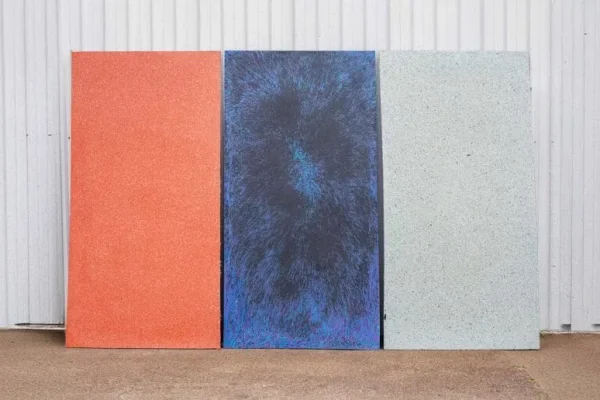
- Define Your Colour Story: We offer 6 popular colours, ranging from subtle greys to bold "Ocean Blue" and "Muted Pink". Custom colours are available for larger orders.
- Calculate the Carbon Offset: Use our data to include embodied carbon savings in your project’s sustainability report.
- Verify Local Content: Ensure your supplier is using 100% Australian waste to avoid the high carbon footprint of imported "eco" products.
Conclusion: Future-Proofing Australian Spaces
Choosing recycled plastic furniture is no longer a compromise on style or budget. It is a strategic decision to invest in materials that are built for the harsh Australian environment while supporting local industry.
Whether you are refurbishing a local park, upgrading a school courtyard, or outfitting a new espresso bar, our commercial-grade solutions offer the durability your project demands and the sustainability the planet requires.
Ready to specify recycled plastic for your next commercial project?
Contact Resourceful Living today to request a material sample or a custom quote for your 2026 furniture requirements.