In the hospitality industry, your surfaces are your first line of defence. Whether it's a cafe table, a prep bench, or a bar top, the material you choose dictates more than just the "vibe" of your venue, it dictates your hygiene standards and your compliance with Australian food safety laws.
For years, timber has been the default choice for its warmth and "natural" aesthetic. But from a food safety perspective, timber is a liability. It’s porous, it’s prone to warping, and it creates the perfect environment for bacteria to hide.
Enter 100% recycled HDPE (High-Density Polyethylene). At Resourceful Living, we’re seeing a massive shift in the hospitality sector as owners realise that recycled plastic isn't just a win for the planet, it’s a hygienic powerhouse that outperforms traditional materials in every metric that matters to a busy venue.
The Porosity Problem: Why Timber is a Bacterial Hotel
Timber might look great in photos, but under a microscope, it's a different story. Wood is naturally porous and absorbent. Every time a drink is spilled or a surface is wiped with a damp cloth, moisture, food particles, and grease can penetrate below the surface.
Once bacteria enter these microscopic pores, they are incredibly difficult to reach with standard sanitisers. Over time, frequent cleaning actually makes the problem worse. The water causes the wood grain to lift, creating cracks and crevices where pathogens thrive.
"Standard 3.2.3 of the FSANZ Food Standards Code requires food-contact surfaces to be smooth and free of cracks and crevices. Timber often fails this test the moment it begins to age or warp under commercial cleaning pressure."
The "Danger Zone" of Aging Materials
As timber surfaces age, they require constant maintenance, sanding, resealing, and oiling. These chemicals can themselves become a contamination risk if they aren't food-grade or haven't cured properly. If you aren’t sanding your tables every few months, you’re likely operating on a surface that is harbouring years of microscopic food residue.
The HDPE Advantage: Science-Backed Food Safety
The recycled plastic panels we manufacture at Resourceful Living are made from 100% Australian post-consumer plastic waste, primarily HDPE. This material is inherently non-porous and impervious to liquids.

Here is why HDPE is winning the food safety game:
- Zero Absorption: HDPE does not absorb water, blood, oils, or fats. This means bacteria stay on the surface where they can be easily killed by sanitisers.
- Chemical Resistance: Commercial kitchens use harsh cleaning agents. Unlike timber, which degrades, or some metals that can corrode, our recycled plastic panels are chemically inert. They won't pit or react with industrial-grade sanitisers. ✅
- Bacteria-Resistant by Design: Because the material is a solid block of 100% recycled plastic with no additives or veneers, there are no layers to peel or trap contaminants. 🛡️
- Rust-Proof & Rot-Proof: Even in the most humid cafe environments or near coastal salt air, these panels will never rust, rot, or swell.
Navigating FSANZ Compliance with Ease
When an Environmental Health Officer (EHO) walks into your venue, they are looking for cleanability. Under Standard 3.2.3 – Food Premises and Equipment, you must be able to demonstrate that your surfaces can be effectively cleaned and sanitised.
Using a non-absorbent material like HDPE makes this conversation significantly easier. A smooth, uniform surface allows for a visual inspection that is definitive. There are no "grey areas" or soft spots that might hide mould or bacteria. By choosing our 100% recycled plastic sheets, you are choosing a low-risk, high-compliance path for your fit-out.

Durability Meets Hygiene: No Warping, No Sanding
Hygiene is often compromised when a material fails physically. If a tabletop warps, it creates a gap between the frame and the surface where food crumbs collect. If a benchtop splinters, it becomes impossible to wipe clean properly.
Resourceful Living panels are tested for strength and durability. Because we manufacture 1 tonne of plastic per day, we ensure every sheet is a solid, high-density block.
- Heat Resistance: Designed to handle the hustle of a busy cafe.
- Impact Resistance: Won't chip like stone or crack like cheap laminates.
- UV Stability: Perfect for indoor-outdoor flow without the material breaking down or becoming "chalky" (which creates a new hygiene hazard).
Compared to timber, the maintenance schedule for our recycled plastic furniture is essentially zero. You save money on labour and materials while maintaining a higher hygiene standard. For a deeper look at the data, check out our Recycled Plastic vs. Timber Comparison.
Marketing Your "Clean" Story to the Modern Diner
Today’s diners: especially Gen Z and Millennials: are more hygiene-aware and eco-conscious than ever before. They want to know that the table they are eating off is clean, but they also care about where it came from.
By using our recycled building materials, you can tell a powerful dual story:
- "This table used to be 2,000 milk bottles."
- "This surface is 100% non-porous and sanitised for your safety."
It’s a rare win-win where the sustainable choice is also the most practical choice for day-to-day operations.

How to Transition Your Venue to Hygienic Recycled Plastic
If you're planning a renovation or a new fit-out, here is how to get started:
- Assess Your High-Touch Areas: Identify tables, bar tops, and prep areas that are currently timber or laminate.
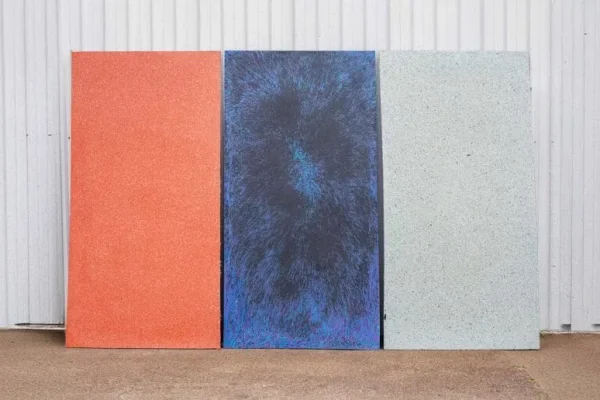
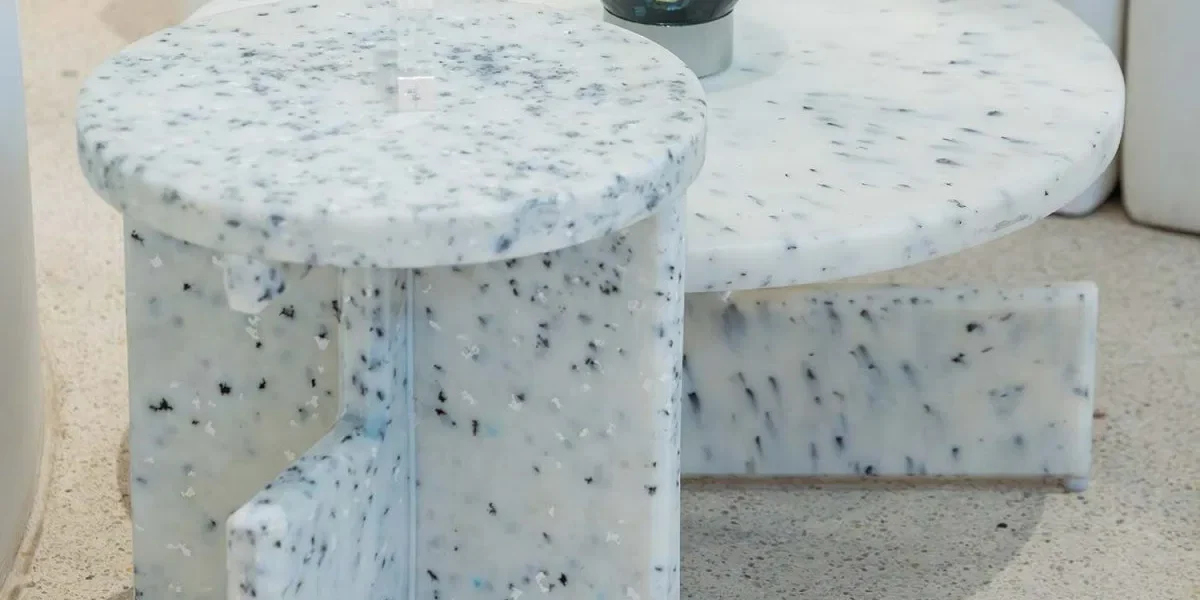
- Choose Your Aesthetic: We offer 6 popular colours readily available, from sleek "Snowflake" whites to "Ocean Blue" marbled designs. Custom colours are also available for larger projects.
- Specify the Thickness: We manufacture from 3mm up to 40mm, meaning you can use thinner sheets for wall cladding and thicker slabs for heavy-duty tabletops.
- Leverage Our Take-Back Program: When you eventually refresh your venue, we will collect our products free of charge to remanufacture them back into new sheets. It’s a truly circular economy.
Ready to upgrade your hygiene standards?
Whether you're a local cafe owner or a commercial developer, we can help you specify the right recycled plastic solution for your next project. Our 2400mm x 1200mm panels are ready to be transformed into the safest, most durable surfaces your venue has ever seen.
Contact Resourceful Living today to discuss your hospitality fit-out.