It’s May 2026, and the landscape of Australian government procurement has shifted permanently. If you’re still trying to win major contracts using the same "lowest cost" playbook from five years ago, you’ve probably noticed your win rate is tanking.
The "secret" isn't a secret anymore: Sustainability isn't a bonus; it’s a prerequisite.
With the full rollout of the Environmentally Sustainable Procurement (ESP) Policy and the highly discussed $1M furniture mandate, government departments are now legally and procedurally bound to favour suppliers who can prove they are contributing to a circular economy.
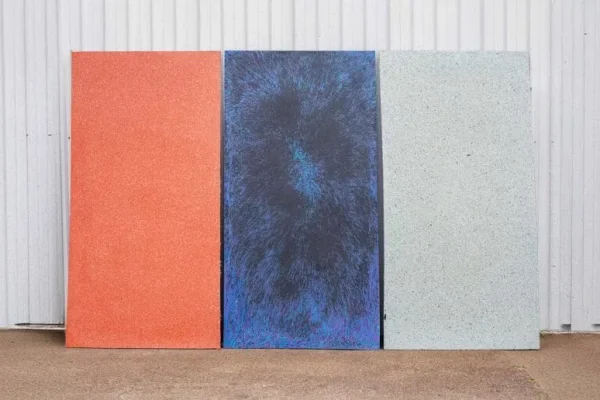
At Resourceful Living, we’ve seen first-hand how savvy contractors are using recycled plastic sheets in Australia to turn their tenders from "maybe" to "must-have." Here is how you can leverage recycled materials to dominate the procurement process in 2026.
1. Understanding the $1M Furniture Mandate
If you are bidding on a government project that includes a furniture fit-out valued at $1 million or more, the rules have changed. Under current regulations, these projects must demonstrate a significant percentage of recycled content.
This mandate was designed to stop the flow of virgin materials into government offices and schools. For builders and fit-out specialists, this means you can no longer spec standard laminate or virgin plastics and expect to pass the first round of evaluation.
By incorporating recycled plastic sheets into workstations, cabinetry, and wall linings, you aren’t just being "eco-friendly", you are ticking a mandatory compliance box that your competitors might be overlooking.
2. The Power of "Local Buy" Pre-Qualification
Government procurement officers are under immense pressure to reduce risk. They want to work with suppliers who have already been vetted. This is where the Local Buy status becomes your best friend.

Resourceful Living is a pre-qualified supplier. When you include our materials in your tender, you’re telling the procurement officer that the supply chain has already been audited for quality, safety, and reliability. It streamlines their due diligence process, making your bid the path of least resistance.
3. Verified Data: The "Embodied Carbon" Tie-Breaker
In 2026, embodied carbon reporting in Australia has become the standard metric for project success. It’s no longer enough to say a material is "green." You need to provide the hard data to back it up.
Most traditional building materials come with a heavy "carbon debt" from overseas shipping and energy-intensive manufacturing. In contrast, our panels offer:
- 100% Traceability: Every sheet can be traced back to Australian post-consumer waste.
- Low-Carbon Manufacturing: Because we process locally in NSW, the transport emissions are a fraction of imported alternatives.
- Verified Sustainability Plans: We provide the specific metrics you need to include in your Sustainability Plan, giving you a data-backed edge over competitors using vague "greenwashed" claims.
"The difference between winning and losing a Tier-1 government tender often comes down to the quality of your sustainability data. If you can’t measure the embodied carbon, you can’t manage the bid." , Jess Hodge, Sales at Resourceful Living.
For more on how to navigate these requirements, check out Winning Government Tenders in 2026: The Recycled Content Checklist.
4. Case Study: The 45% Recycled Content Win
Last year, a mid-sized construction firm was bidding on a federal departmental upgrade. On paper, their pricing was 4% higher than the lowest bidder.
However, they worked with us to swap out traditional MDF and plywood cabinetry for our recycled plastic sheets. By doing so, they achieved 45% recycled content across the entire internal fit-out.
Because the tender evaluation gave a 20% weighting to environmental outcomes under the ESP Policy, they won the project despite the higher upfront cost. The government valued the long-term durability and the circularity of the material more than the initial savings.

Caption: Custom terrazzo-style recycled plastic panels used in a high-traffic government office fit-out.
5. 100% Australian Sourced and Manufactured
Traceability is a major buzzword in circular construction 2026. With global supply chains remaining volatile, government buyers are prioritising sovereign capability.
Using materials that are 100% Australian sourced and manufactured provides two key advantages in a tender:
- Risk Mitigation: You aren't at the mercy of international shipping delays or Suez Canal blockages.
- Social Procurement: You are supporting Australian jobs and the local recycling industry, which often helps meet "Local Content" requirements within the tender.
Whether it’s wall linings for a public hospital or public amenities for a regional council, showing that your material started as Australian waste and was transformed in an Australian factory is a powerful narrative that procurement teams love.
6. Closing the Loop: The Free Take-Back Program
A true circular economy requires an end-of-life plan. One of the biggest hurdles in sustainable building materials in Australia is what happens when the fit-out is eventually decommissioned.
Resourceful Living offers a circular design with a free take-back program. When your project reaches the end of its life, whether that’s in 10 years or 30, we take the panels back and recycle them into new sheets.
Including this in your tender response demonstrates that you have considered the entire lifecycle of the project, effectively removing the "waste liability" from the government's books.
7. Practical Applications for Your Next Bid
Don't just mention recycled plastic; specify exactly where it replaces traditional, high-maintenance materials. This shows the procurement officer that you understand both sustainability and asset management.
- Wall Linings: High-impact areas in schools and hospitals where plasterboard fails.
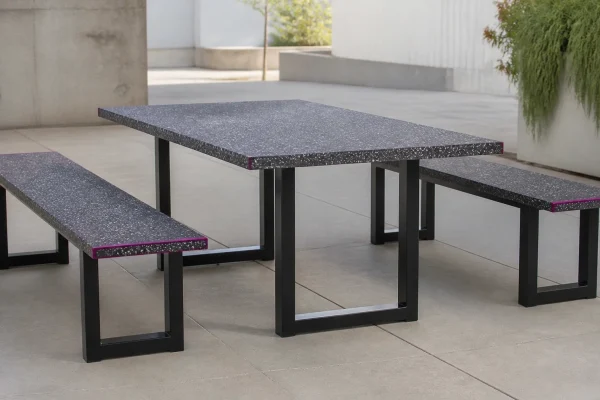
- Cabinetry & Workstations: Perfect for meeting the $1M furniture mandate.
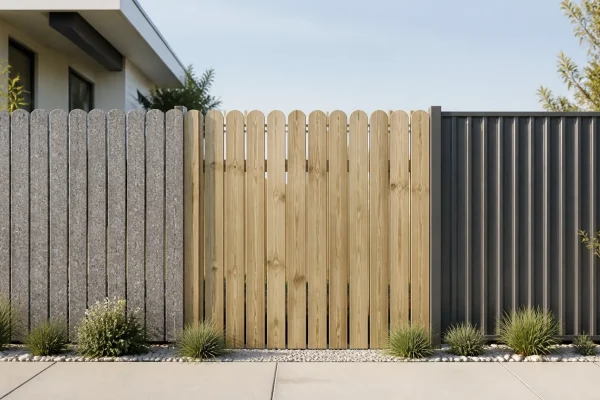
- Public Amenities: Use rHDPE for partitions and vanities that are 100% waterproof and graffiti-resistant.
- Acoustic Panelling: Utilising the natural dampening properties of recycled polymers.

For a deeper dive into the technical specs, see our Specifier’s Technical Guide to Recycled Plastic Sheets.
Checklist: How to Prep Your Tender with Recycled Materials
If you’re preparing a bid right now, use this quick checklist to ensure you’re hitting the marks government buyers are looking for:
- Identify the Mandates: Does the $1M furniture mandate apply? (If yes, you need recycled content).
- Request the Data: Contact us for the specific embodied carbon metrics for your chosen colour and thickness.
- Highlight Pre-Qualification: Explicitly state that your material supplier is a Local Buy pre-qualified vendor.
- Include the "Take-Back": Mention the end-of-life recycling guarantee to prove circularity.
- Audit the Supply Chain: Confirm 100% Australian origin to satisfy social procurement points.
Winning tenders in 2026 isn't about being the cheapest; it's about being the smartest. By positioning your project as a leader in circular construction, you aren't just helping the environment: you're securing your company’s future in the public sector.
Ready to boost your tender's sustainability score?
Discover how to win a $1M government tender using the recycled content lever here or contact Jess and the sales team today to get a quote for your next project.