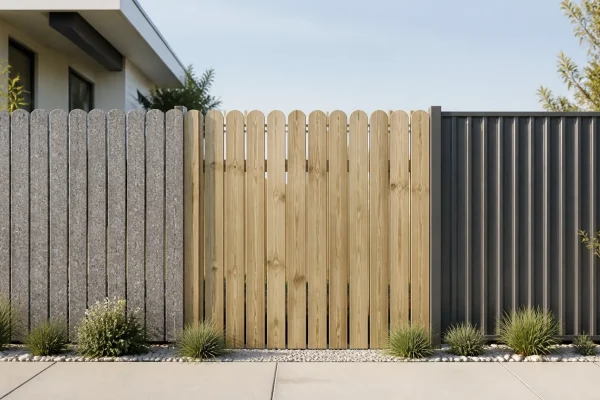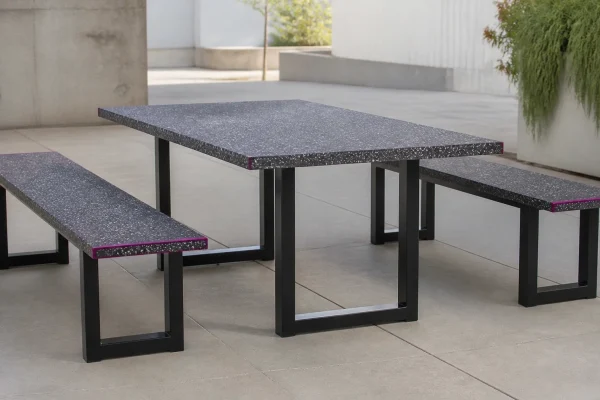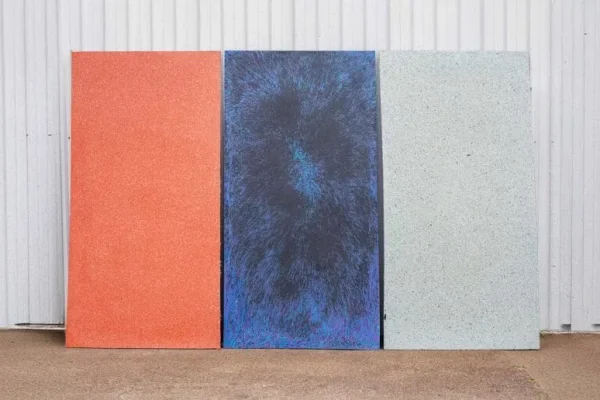

If you’re bidding for a government contract in Australia valued over $1 million, the game has fundamentally changed. Gone are the days when being the "lowest cost" bidder was enough to secure the win. Today, procurement officers are working under a strict mandate: the Environmentally Sustainable Procurement (ESP) Policy.
For project managers and estimators, this shift can feel like a hurdle. But for the savvy bidder, it’s actually the ultimate competitive lever. By strategically integrating recycled plastic sheets Australia into your bid, you aren't just checking a box: you’re providing the exact data points the government needs to justify choosing you over a cheaper, less sustainable competitor.
At Resourceful Living, we’ve seen how local manufacturing and traceable data can turn a standard bid into a winning tender. Here is how you use the "Recycled Content" lever to dominate the 2026 procurement landscape.
1. Understanding the $1M+ ESP Policy Mandate
Since late 2024 and through 2026, the Australian Government has doubled down on its commitment to a circular economy. For any construction or infrastructure project exceeding the $1 million threshold, bidders are now required to submit a Sustainability Plan.
This isn't a vague promise to "be green." It requires specific, measurable targets regarding:
- Recycled content (by weight or volume).
- Waste reduction strategies.
- Embodied carbon reporting.
When you specify sustainable building materials Australia in your tender, you are addressing the "Environmentally Sustainable" portion of the scorecard directly. If your competitor is using traditional timber or virgin plastics, and you are using our 100% recycled HDPE panels, you are already outperforming them on the ESP scorecard before the price is even compared.
2. Providing the "Verified Data Point"
The biggest headache for procurement officers is greenwashing. They are under immense pressure to ensure the materials used in public works are actually what they claim to be. If you tell a tender board that you are "using recycled materials," they will ask for proof.
This is where Resourceful Living becomes your secret weapon. We don’t just provide panels; we provide a verified data point.
Because we are a Pre-Qualified Supplier (Local Buy), we have already undergone the rigorous auditing required for government work. When you include our materials in your bid, you can cite:
- 100% Traceability: We know exactly where our plastic waste comes from (Australian post-industrial and post-consumer streams).
- Embodied Carbon Data: We provide the metrics needed for embodied carbon reporting in Australia, making your NABERS or Green Star submissions seamless.
3. The Local Sourcing Advantage: Why "Made in Australia" Wins
Supply chain resilience is a major priority for government tenders. Bidding with materials sourced from overseas carries a risk of delays, shipping costs, and ethical transparency issues.
By using recycled plastic sheets Australia, you are ticking the Local Industry Participation box. This is often a weighted criteria in state and federal tenders.
"Winning a government tender in 2026 requires more than a low price; it requires a transparent supply chain. If you can prove your materials supported local jobs and kept Australian plastic out of Australian landfills, you’ve already won the 'Social Value' section of the bid." : Industry Procurement Expert
Using locally manufactured materials reduces the "Scope 3" emissions associated with transport, further lowering the total carbon footprint of your project. This makes your bid significantly more attractive to departments aiming for Net Zero targets. You can read more about why local traceability is your best defense against greenwashing here.
4. Solving the End-of-Life Problem with "Take-Back" Programs
Government projects are increasingly focused on the Circular Economy. They don’t just want to know what a building is made of; they want to know what happens to it in 20 years.
Most construction materials: like treated timber or composite woods: end up in a landfill because they are too difficult to recycle. This represents a long-term liability for the government.
Resourceful Living offers a Product Take-Back Program. Because our panels are made from 100% HDPE without toxic resins or glues, they are 100% recyclable at the end of their life.
- Zero Landfill: We can take back off-cuts from your site or the entire product at the end of the project life.
- Risk Reversal: You can tell the tender board that your project has a "zero-waste-to-landfill" pathway for these materials.
This aligns perfectly with circular construction principles, moving your bid from "standard" to "industry-leading."
5. Performance That Justifies the Switch
Some procurement officers might worry that "recycled" means "inferior." You need to debunk this in your tender document.
Compared to traditional materials like plywood or concrete in non-structural applications, our recycled HDPE panels offer:
- Zero Maintenance: No painting, staining, or rot-prevention required.
- Chemical Resistance: Essential for public amenities, schools, and hospitals.
- Durability: They won't crack like concrete or splinter like wood.
When you present the ROI of circularity, you show the government that while the upfront cost might be comparable to premium timber, the maintenance savings over 10–20 years are massive. You are saving the taxpayer money in the long run: and that is music to a procurement officer's ears.
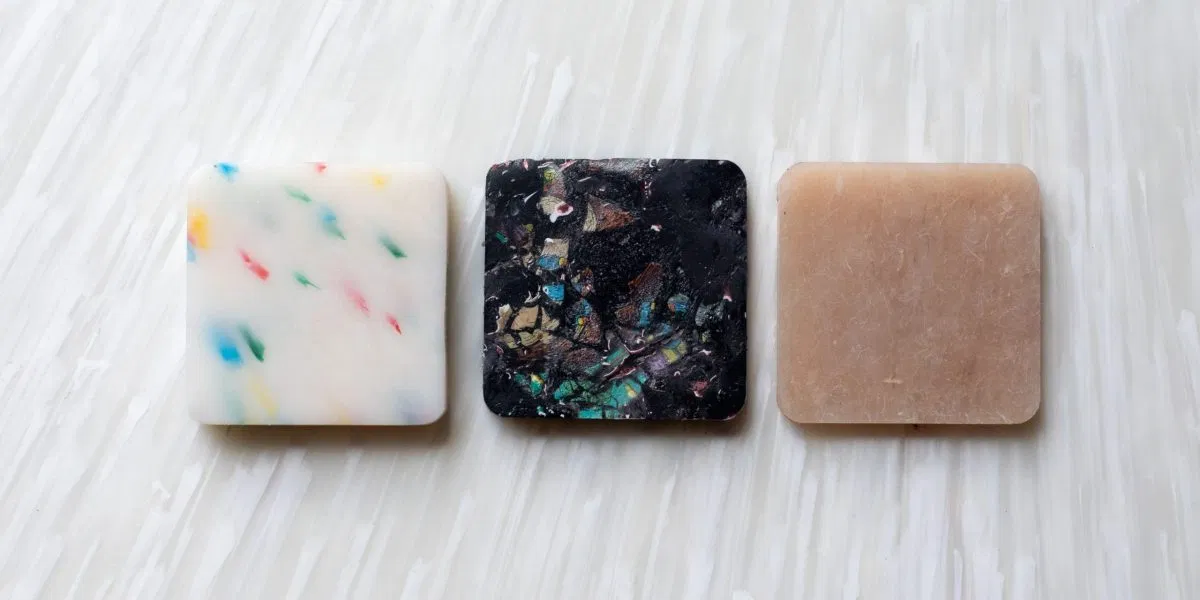
6. Your "Tender Cheat Sheet": How to Word Your Bid
When writing your next $1M+ submission, don't just list "Recycled Plastic Panels." Use this framework to maximise your points:
- Metric-Driven Sustainability: "Project X will utilise 100% recycled HDPE panels from Resourceful Living, diverting [X] tonnes of Australian plastic waste from landfill."
- Compliance Alignment: "This material choice directly supports the ESP Policy requirements for recycled content and provides a fully traceable data point for NABERS/Green Star reporting."
- Local Economic Impact: "Materials are manufactured in Regional NSW, supporting Australian manufacturing jobs and reducing transport-related carbon emissions by [X]% compared to imported alternatives."
- Circular End-of-Life: "All panels are subject to a manufacturer-led take-back program, ensuring 100% recyclability and zero landfill contribution at the end of the product lifecycle."
For a deeper dive into the procurement scripts that work, check out our guide on mastering "If Not, Why Not" procurement.
Summary: The Sales-Closer Checklist
Winning government tenders is about de-risking the decision for the procurement officer. By using Resourceful Living’s recycled plastic sheets, you remove the risk of:
- ❌ Non-compliance with the ESP Policy.
- ❌ Greenwashing accusations (thanks to full traceability).
- ❌ Supply chain delays (thanks to local manufacturing).
- ❌ Future maintenance blowouts.
Ready to secure your next $1M+ win? Don't leave your sustainability points to chance.

Contact Jess Hodge and the sales team today to get a custom data pack and samples for your next tender submission. Let’s build something that doesn't just look good on paper: but wins the job.