If you are a procurement officer or project manager in the Australian built environment, the landscape has shifted beneath your feet. It is no longer enough to look for “green” labels. By 2026, the focus has moved entirely toward circular procurement: a strategic approach where every material choice is evaluated based on its ability to stay out of the landfill forever.
Choosing sustainable building materials australia means navigating a complex web of embodied carbon reporting, local supply chain stability, and end-of-life guarantees. In this guide, we’ll break down how to compare materials and why recycled HDPE and LDPE are becoming the gold standard for circular infrastructure.
Why Circular Procurement is No Longer Optional
The Federal Government’s Environmentally Sustainable Procurement policy now mandates that construction contracts exceeding $7.5 million must prioritise products that minimize greenhouse gas emissions and retain their value for longer. This isn’t just a “nice to have” anymore; it’s a compliance requirement for major tenders.
The goal of circular procurement is to move away from the “take-make-waste” model. Instead, we look for materials that support:
- Dematerialisation: Using less material to achieve the same structural result.
- Design for Disassembly: Ensuring parts can be taken apart and reused.
- Remanufacturing: Choosing materials that can be processed back into the same high-quality product.
“Recycled plastic isn’t just a sustainable choice, it’s a smart investment. By transforming what was once discarded into durable, cost-effective materials, we’re proving that sustainability and high-end performance go hand-in-hand.” : Jess Hodge, Resourceful Living
Comparing the Contenders: Recycled Plastic vs. Traditional Materials
When you’re comparing sustainable building materials australia, you’re usually looking at three main categories: Timber, Concrete, and Recycled Polymers. Let’s look at how they stack up in a circular economy.
1. Timber (The Traditional Renewable)
Timber is often the go-to for low embodied carbon. However, in the Australian climate, timber has significant drawbacks in high-moisture or high-traffic areas.
- Pros: Low carbon footprint, natural aesthetic.
- Cons: High maintenance, prone to rot/termites, and often ends up in a landfill at end-of-life because treated timber cannot be easily recycled.
2. Low-Carbon Concrete
Concrete is a staple, but even “green” concrete has high embodied energy compared to recycled alternatives.
- Pros: Structural integrity, familiar to installers.
- Cons: Massive carbon footprint in production, difficult to “recycle” into anything other than road base (which is a form of downcycling).
3. Recycled HDPE/LDPE (The Circular Champion)
High-Density Polyethylene (HDPE) and Low-Density Polyethylene (LDPE) panels represent the pinnacle of circularity.
- Pros: 100% moisture-proof, zero maintenance, and fully recyclable.
- Cons: Higher initial material cost compared to basic timber, though much lower total cost of ownership (TCO).
The Deep Dive: Why Recycled HDPE/LDPE Wins for 2026 Tenders
For project managers, the technical specs of HDPE/LDPE are hard to beat. Because these materials are non-porous, they don’t absorb water, swell, or harbour mould. This makes them ideal for hospital fit-outs, public amenities, and coastal infrastructure where salt spray ruins traditional materials.
Technical Performance Metrics
| Feature | Traditional Timber | Recycled HDPE/LDPE |
|---|---|---|
| Moisture Absorption | High (5-20%) | 0% (Impermeable) |
| Maintenance Required | Sanding/Oiling every 2 years | Zero |
| End-of-Life Path | Landfill or Incineration | 100% Remanufacturing |
| Durability | 5-10 Years (External) | 25+ Years |
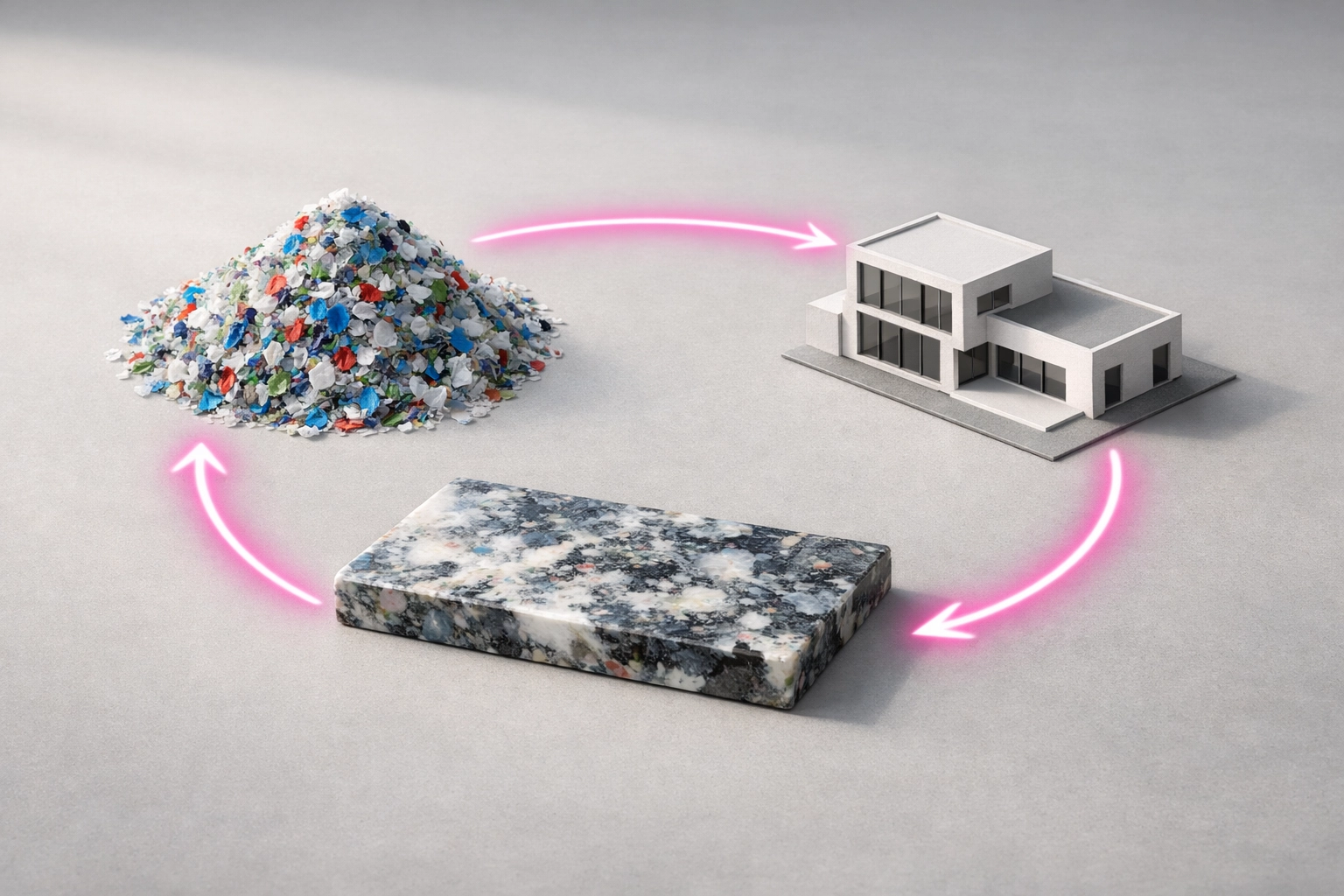
Suggested Image: An infographic or 3D render showing the circular lifecycle of a recycled plastic panel from waste collection to manufacturing to building site and back to manufacturing.
The Resourceful Living Difference: 100% Australian Circularity
When sourcing sustainable building materials australia, traceability is king. Many “recycled” products on the market are actually imported from overseas, which adds massive transport emissions to your project’s carbon log.
At Resourceful Living, we’ve built our entire business model around solving the local waste crisis:
- 100% Australian Waste: Every panel we produce is made from plastic discarded by Australian households and businesses.
- Local Environment Impact: By choosing us, you are directly reducing the pressure on Australian landfills.
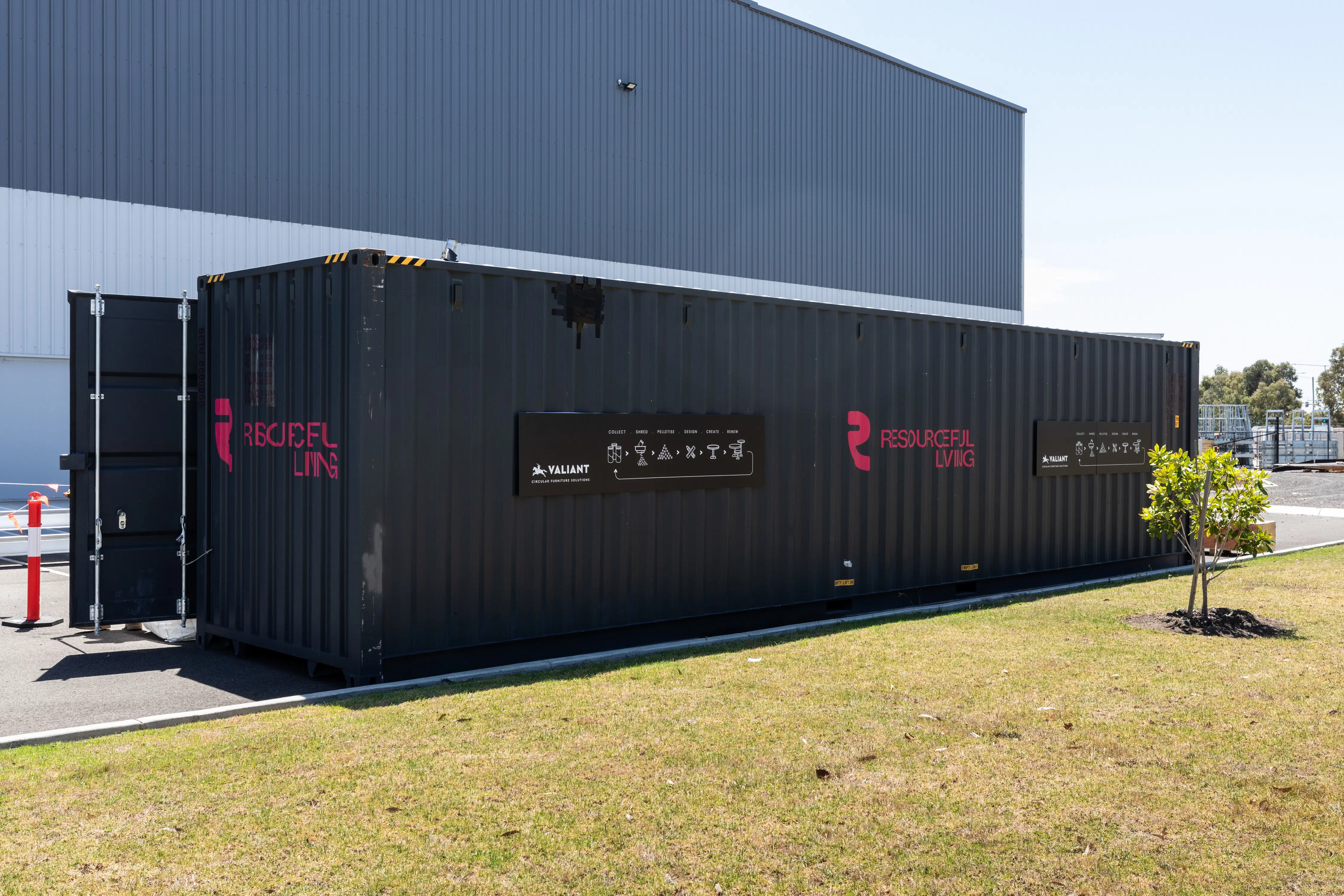
- End-to-End Management: We don’t just sell you a sheet of plastic. We manage the collection, the washing, the shredding, and the manufacturing.
Custom Manufacturing 7 Days a Week
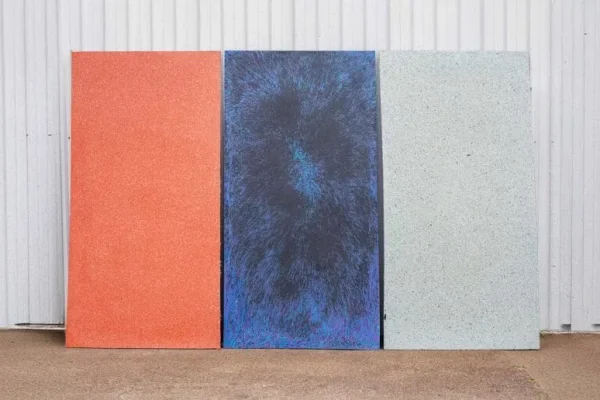
In the construction industry, timelines are everything. We understand that waiting six weeks for a custom panel can kill a project. That’s why we operate our manufacturing facility 7 days a week. Whether you need a bespoke ‘N70 White Confetti’ finish or a structural navy marbled panel, we can produce and deliver with industry-leading lead times.
Checklist: How to Vet Your Sustainable Material Suppliers
Before you sign off on your next Bill of Quantities (BoQ), ask your suppliers these four critical questions:
- ✅ Where is the raw material sourced? If it’s not 100% Australian waste, your project is essentially “exporting” its environmental responsibility.
- ✅ Is there a Take-Back Program? A truly circular material must have a guaranteed path back to the manufacturer at the end of its life.
- ✅ Is it a composite? Be careful of “WPC” (Wood Plastic Composites). These often cannot be recycled because the wood and plastic are permanently fused. Stick to mono-materials like pure HDPE.
- ✅ Can you provide embodied carbon data? You’ll need this for your embodied carbon reporting.
Closing the Loop: Our Take-Back Guarantee
The biggest mistake project managers make in circular construction is forgetting about the year 2046. What happens when that fit-out needs to be replaced?
At Resourceful Living, we offer a free take-back program for all our products. When your project reaches its end of life, don’t bin it: bring it home to us. We’ll shred those panels and turn them directly back into brand-new materials for the next generation of Australian buildings. This ensures your project maintains a zero-waste footprint long after the initial ribbon-cutting.
Ready to Specify for Your Next Project?
Choosing the right sustainable building materials australia is about balancing performance, aesthetics, and long-term circularity. If you’re looking to move away from “disposable” construction and toward a truly circular model, we’re here to help.
Whether you are looking for recycled plastic sheets for retail or high-durability panels for structural infrastructure, our team can provide the data and the material you need to ace your next tender.
Next Steps for Procurement Officers:
- Download our technical data sheets to compare HDPE performance against your current timber or stone specs.
- Request a sample pack to see the aesthetic quality of 100% Australian recycled plastic.
- Consult on custom sizes: Our 7-day manufacturing cycle means we can accommodate bespoke project requirements that others can’t.
Don’t just build for today: build for the loop. Reach out to the team at Resourceful Living and let’s make your next project a landmark in Australian circularity.