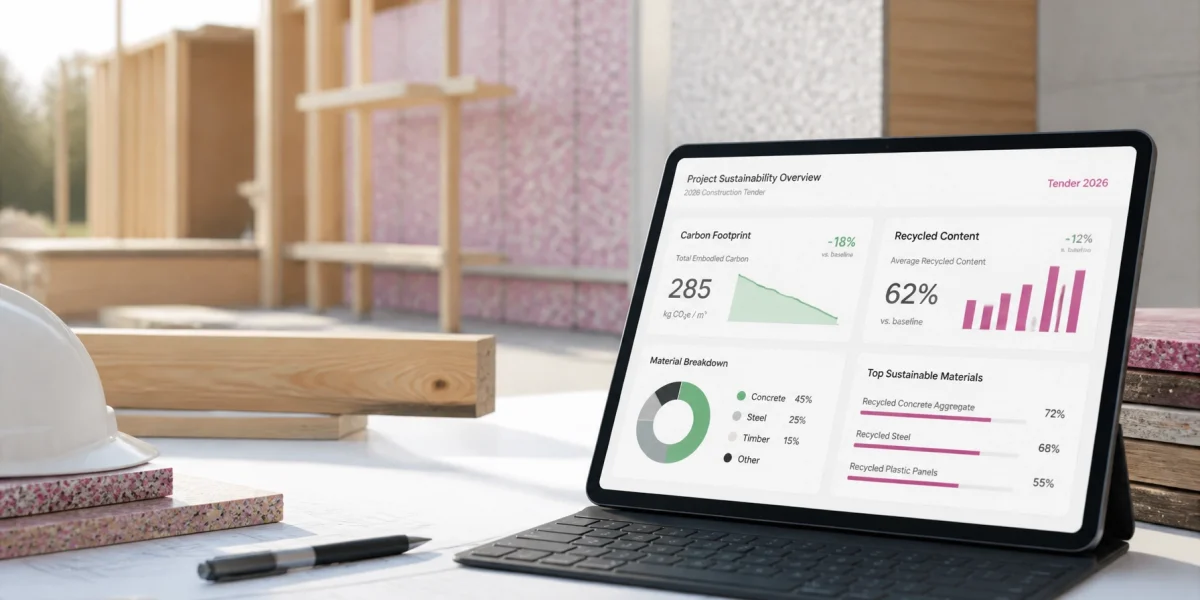
If you're bidding for a Tier 1 or government project in Australia right now, you’ve probably noticed the goalposts have moved. The days when "sustainability" was a three-paragraph section about site recycling are officially over. As of June 2026, embodied carbon reporting in Australia has transitioned from a niche luxury to a mandatory procurement gatekeeper.
With the update to the National Construction Code (NCC) 2025 taking full effect, and the Environmentally Sustainable Procurement (ESP) Policy tightening its grip on government tenders, builders who can’t calculate their carbon numbers simply won't make the shortlist.
But here’s the good news: you don’t need a PhD in climate science to nail your reporting. This guide breaks down exactly how to calculate embodied carbon for your next tender, step-by-step, using the frameworks that Australian assessors actually care about.
Why 2026 is the "Carbon Cliff" for Australian Builders
Historically, our industry obsessed over operational carbon: the energy used to keep the lights on and the AC running. But as Australia’s grid becomes greener with renewables, that slice of the pie is shrinking.
In 2026, the spotlight is on upfront carbon. This is the greenhouse gas debt you "run up" before the keys are even handed over. It’s the carbon emitted during the extraction, manufacturing, and transport of your materials.
"By 2050, it is projected that embodied carbon will account for roughly 85% of a building's lifetime emissions. In 2026, it already accounts for about 10% of Australia's national emissions total." : Industry Insight
If you want to understand the broader shift, check out our 2026 Circular Construction Guide.
The 5-Step Guide to Calculating Embodied Carbon
Calculating embodied carbon isn’t about guesswork; it’s about traceability and verified data. Follow these five steps to ensure your tender submission is compliant and competitive.
Step 1: Define Your Scope (A1–A5)
In Australian tenders, embodied carbon is usually measured using EN 15804 life-cycle modules. Most 2026 tenders will ask for "Upfront Carbon," which covers modules A1 through A5:
- A1–A3 (The Product Stage): Extraction of raw materials, transport to the factory, and manufacturing.
- A4 (Transport): Moving the materials from the factory to your construction site.
- A5 (Construction): Emissions from site energy use and construction waste.
Action Item: Check your tender documents. Does the client want upfront carbon (A1-A5) or a Whole-of-Life assessment (including end-of-life disposal, C1-C4)? Being clear on this prevents over-reporting or missing critical data.

Step 2: Build a Material Inventory
You cannot manage what you do not measure. You need a complete Bill of Quantities (BoQ) for every material entering the site. This includes:
- Concrete: Volume (m³) and strength grade.
- Steel: Weight (tonnes) and type (reinforcement vs. structural).
- Internal Fit-outs: Area (m²) of panels, flooring, and ceilings.
In 2026, the NABERS Embodied Carbon Rules have made it clear that internal fit-outs can no longer be ignored. This is often where builders find the most "easy wins" for carbon reduction. Using recycled plastic sheets for your fit-outs can significantly lower these numbers compared to traditional plywood or virgin plastics.
Step 3: Source Verified Data (The EPD)
This is where many contractors get stuck. To calculate carbon, you need an Environmental Product Declaration (EPD) for each major material.
An EPD is a third-party verified document that tells you exactly how much Global Warming Potential (GWP) a product has, usually measured in kg CO2-e per unit.
The Data Hierarchy:
- Product-Specific EPD (Best): Data directly from the manufacturer for that specific product (e.g., Resourceful Living’s 100% recycled panels).
- Industry Average EPD (Good): An average for a material type in a specific region.
- Generic Databases (Basic): National LCA datasets used when no specific data exists.
Pro Tip: If your supplier can't provide an EPD or a traceability report, you’re taking a massive risk. Leading builders now use material traceability as a key selection criteria for their subcontractors.
Step 4: The Calculation Equation
Once you have your quantities and your EPD factors, the math is straightforward:
Total Carbon (kg CO2-e) = Quantity x Emission Factor
For example:
If you are using 500m² of hoarding and you choose a material with an emission factor of 5.2 kg CO2-e/m², your total for that line item is 2,600 kg CO2-e.
Don't forget to add A4 Transport emissions. If you're sourcing materials from overseas, your A4 numbers will skyrocket. This is why sourcing Australian-made materials is the fastest way to slash your tender’s carbon footprint.
Step 5: Report and Optimise
Tender evaluators aren't just looking for a single number; they're looking for a reduction strategy.
Most 2026 tenders follow the "If Not, Why Not?" framework. If you choose a high-carbon material (like traditional concrete or virgin plastic) when a low-carbon alternative exists, you must justify that choice. By presenting a baseline and then showing an "Optimised Scenario" (e.g., "By swapping plywood for 100% recycled plastic sheets, we reduced upfront carbon by 15%"), you demonstrate proactivity that wins contracts.
The Secret Weapon: Strategic Material Swaps
The easiest way to hit your carbon targets without redesigning the entire structure is to look at non-structural elements.
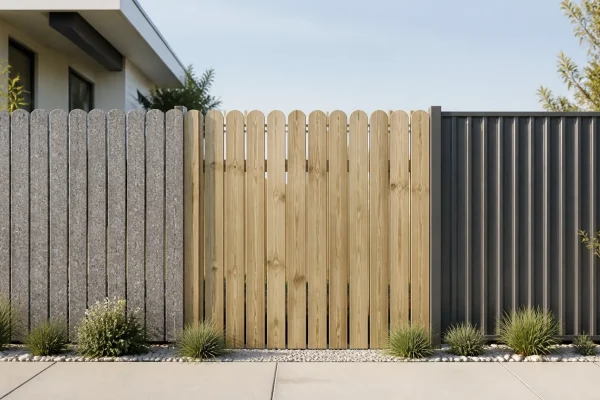
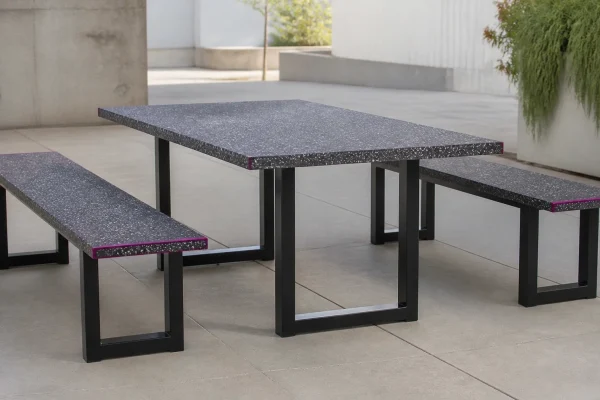
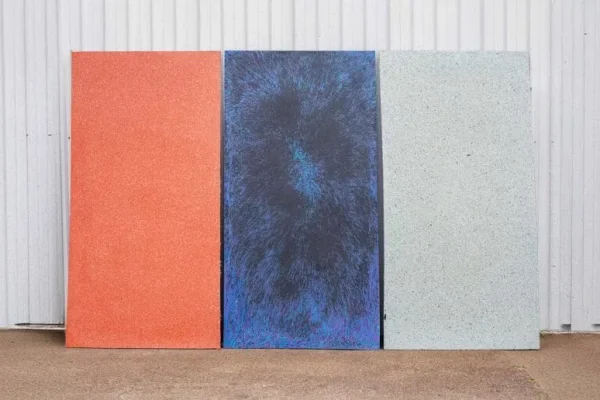
At Resourceful Living, we manufacture 100% recycled and recyclable plastic panels right here in Australia. Because we use 100% local waste, our "A1-A3" manufacturing emissions are significantly lower than virgin materials.

Why recycled plastic wins in your 2026 tender:
- ✅ Zero Virgin Extraction: No oil is drilled to make our sheets.
- ✅ Low Transport (A4): We manufacture in NSW, meaning minimal transport emissions compared to imported goods.
- ✅ Circular Credits: Our take-back program allows you to claim end-of-life credits (C-modules) because the material never hits a landfill.
Why Traceability is the New "Pass/Fail"
In 2026, "greenwashing" is a legal risk. If you claim a carbon reduction in your tender, you need to prove it. This is why we focus so heavily on the sorting and manufacturing process. We can tell you exactly where your material came from: whether it was last month's milk bottles or industrial soft plastic waste.
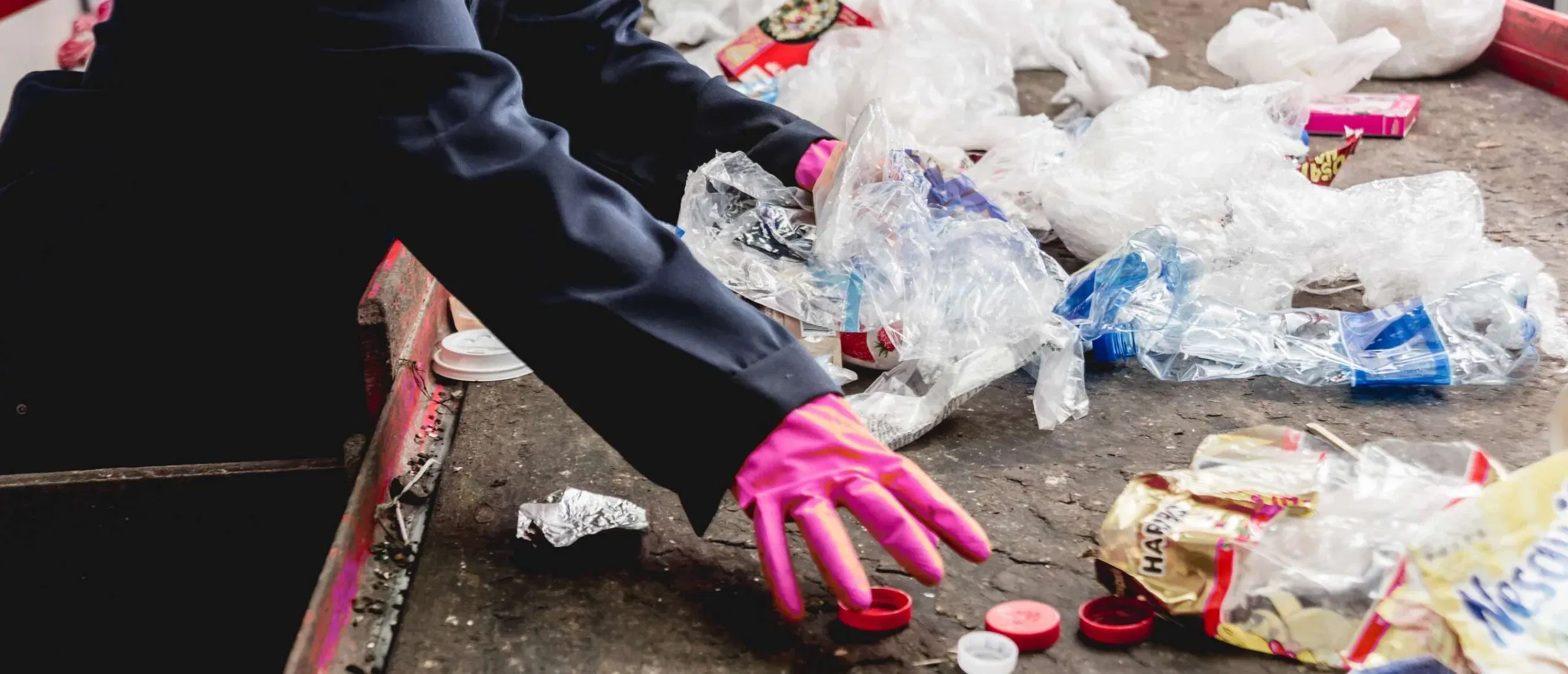
When you include Resourceful Living materials in your BoQ, you aren’t just adding a product; you’re adding a traceable data point that makes your assessor’s job easier.
Your Tender-Ready Checklist
Before you hit "submit" on your 2026 construction tender, ensure you have ticked these boxes:
- Defined Scope: Is it A1-A5 or whole-of-life?
- EPD Verification: Do you have verified data for your top 5 high-impact materials?
- Local Sourcing: Have you minimised A4 transport emissions by choosing Australian-made?
- The "Swap" Strategy: Have you identified at least three areas where low-carbon materials (like recycled plastic) can replace traditional ones?
- End-of-Life: Does your tender include a plan for material recovery (Circular Economy)?
Ready to Win Your Next Tender?
Embodied carbon reporting doesn't have to be a headache. It's an opportunity to differentiate your business as a leader in the new Australian economy.
If you’re looking for high-performance, 100% recycled building materials that come with the data you need to satisfy NABERS or Green Star requirements, we’re here to help.

Contact Resourceful Living today to request material data sheets or to discuss how our ESG Partner Program can help you hit your 2026 sustainability targets. Let’s build something that lasts( without the carbon debt.)