If you’re specifying for a commercial fit-out, public infrastructure project, or a high-end residential build in 2026, you’re no longer just looking for "sustainable" materials. You’re looking for high-performance assets that tick the ESG reporting boxes while surviving the harsh Australian elements.
At Resourceful Living, we’ve seen a massive shift in how architects and builders approach recycled plastic sheets in Australia. It’s no longer about a "green" alternative that might work; it’s about a technical powerhouse that often outperforms traditional timber and plywood.
But how do you choose the right thickness? How does it react to the UV in Western Sydney vs. the humidity in Queensland? This guide is designed to help you 'cut and paste' the technical specs you need directly into your project plans.
Understanding the Material: 100% Recycled HDPE
Our panels are manufactured using 100% recycled High-Density Polyethylene (HDPE). Unlike composite materials that mix wood fibres with plastic (making them impossible to recycle again), our sheets are a mono-polymer. This means they are fully circular and eligible for our take-back programs at the end of their life cycle.
The manufacturing process involves sorting, washing, and shredding post-consumer and post-industrial waste: think milk bottles, bottle caps, and bulky industrial containers: before heat-pressing them into solid, high-performance sheets.

(Suggested: A visual showing the high-density nature of the sheets or the raw material transformation)
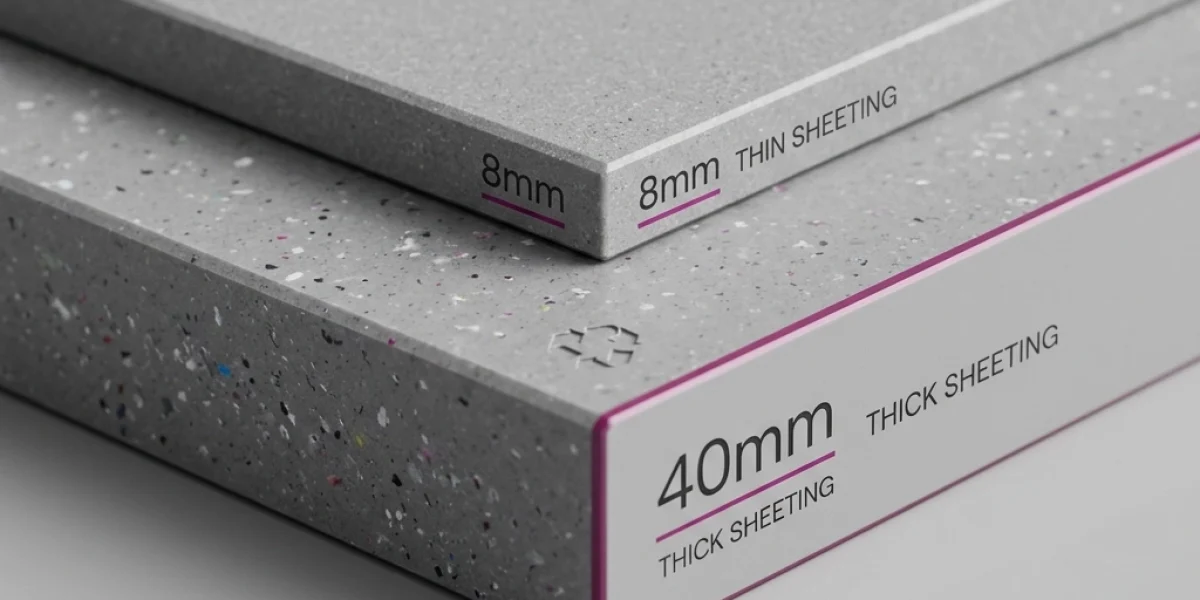
The Thickness Spectrum: From 8mm to 40mm
Choosing the right thickness is the difference between a project that lasts 20 years and one that fails in six months. Here is the technical breakdown of how to specify by thickness:
8mm – 12mm: Lightweight & Aesthetic
These thinner gauges are ideal for vertical applications where weight is a factor but durability cannot be compromised.
- Primary Uses: Interior wall linings, decorative cladding, signage, and lightweight cabinetry carcasses.
- Why Specify: It offers a waterproof alternative to MDF or thin plywood.
- Pro Tip: When using 8mm for wall linings, ensure a maximum stud spacing of 400mm to prevent any potential bowing in high-heat environments.
15mm – 20mm: The "Sweet Spot" for Fit-Outs
This is our most popular range for commercial fit-outs and furniture.
- Primary Uses: Office workstations, retail shelving, bathroom partitions, and cafe tabletops.
- Why Specify: It provides excellent structural rigidity while being manageable for standard CNC machining.
- Reference: Check out our 7-day fast-track guide for commercial fit-outs to see how these thicknesses perform under tight deadlines.
25mm – 40mm: Heavy-Duty & Infrastructure
When you need "bulletproof" performance, you go thick.
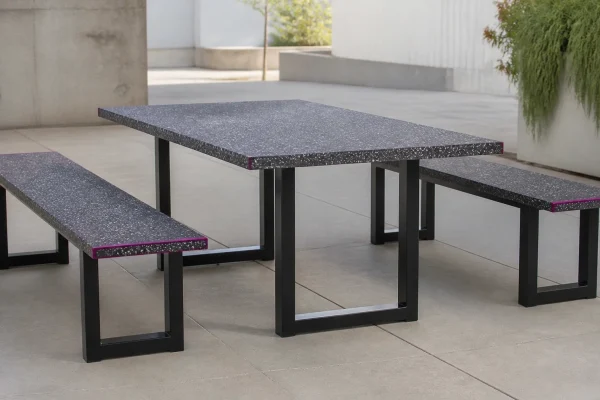
- Primary Uses: Public park benches, heavy-duty workbenches, retaining walls, and marine-grade infrastructure.
- Why Specify: At 40mm, the material is incredibly dense and acts as a direct replacement for structural timber or even some concrete applications.
- Comparison: If you're debating between this and traditional materials, read our deep dive on recycled plastic vs. concrete structural performance.
Technical Specifications: The Data You Need
When you’re drafting your Material Schedule, use these metrics to ensure compliance:
| Property | Value/Metric | Standard |
|---|---|---|
| Density | ~0.95 – 0.97 g/cm³ | ISO 1183 |
| UV Stability | High (UV stabilised for AU conditions) | Internal Testing |
| Water Absorption | 0.01% (Effectively Waterproof) | ASTM D570 |
| Chemical Resistance | Resistant to most acids, bases, and solvents | – |
| Service Temperature | -50°C to +80°C | – |
| Standard Sheet Size | 2400mm x 1200mm (Standard) | Custom sizes available |
UV Stability and Weathering
One of the biggest concerns for recycled plastic sheets in Australia is "chalking" or fading. Our panels are formulated to withstand high UV indexes. Unlike timber, which requires annual staining, our HDPE sheets are maintenance-free. They won't rot, split, or host termites. This significantly reduces the maintenance budget over the asset's life.
Machining and Fabrication: What Your Builder Needs to Know
Specifying the material is only half the battle; the builder needs to know how to work with it. The good news? You can treat our recycled plastic sheets much like high-density hardwood.
- Cutting: Use standard woodworking tools. A fine-toothed circular saw or a CNC router with a single-flute bit works best to prevent melting.
- Fastening: Always pre-drill your holes. HDPE has a higher thermal expansion coefficient than timber. We recommend using oversized or slotted holes for long runs to allow the material to "breathe" with temperature changes.
- Adhesives: Standard wood glues won't work here. Mechanical fastening (screws/bolts) is the preferred method. For a seamless look, we recommend plastic welding or specific structural adhesives designed for low-surface-energy plastics.
- Finishing: The edges come off the CNC quite clean, but a quick pass with a deburring tool or 120-grit sandpaper creates a soft, tactile finish.
"The ability to CNC these panels just like plywood, but without the risk of delamination or rot, has changed the game for our modular public furniture designs." : Lead Architect, Sydney Urban Projects
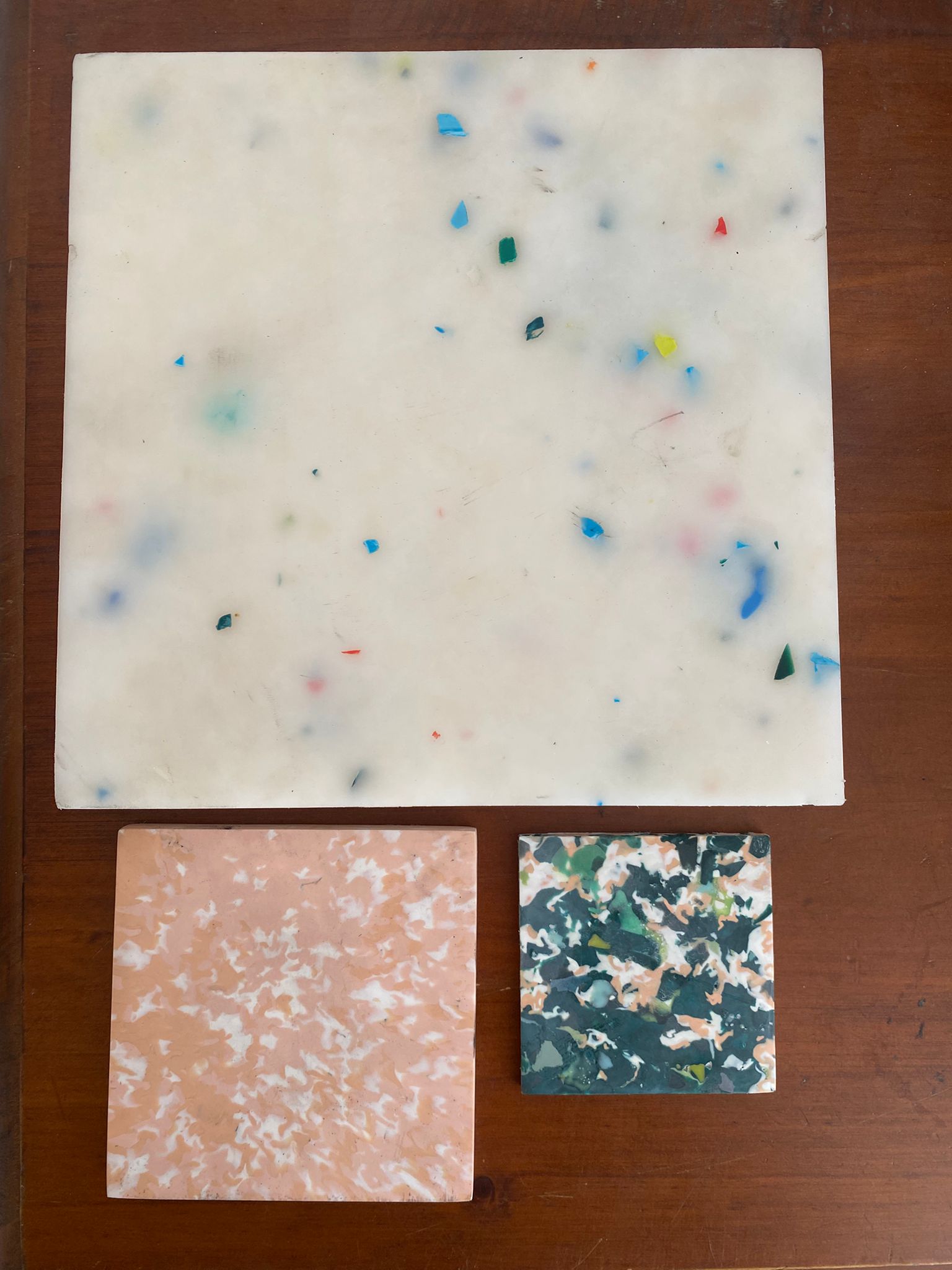
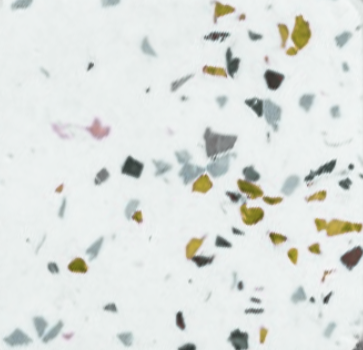
Aesthetic Versatility: "Marble & Confetti"
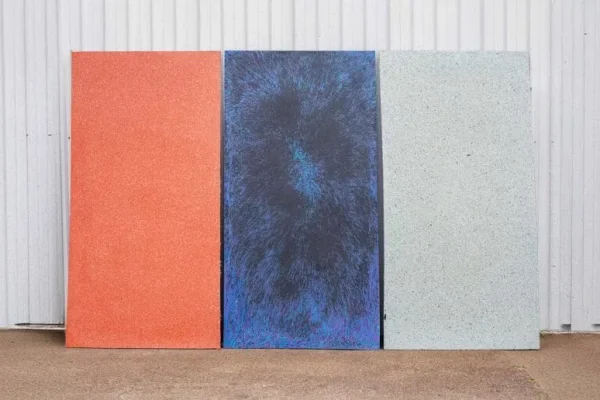
Technical doesn't have to mean boring. Because we control the "recipe" of the waste we use, we can offer distinct finishes:
- N70 White Confetti: A clean white base with pops of colour. View the N70 style here.
- Black Marbled: A sophisticated, high-end look that mimics stone but with a fraction of the weight and carbon footprint.
- Custom Brand Colours: For large-scale projects, we can source specific waste streams (like blue milk crates or green bins) to align with a brand’s corporate identity.
ESG Compliance and NABERS Ratings
In 2026, the pressure on "Embodied Carbon" reporting is intense. Specifying recycled plastic sheets in Australia isn't just a vibe; it's a data-backed win for your sustainability report.
- Traceability: Every sheet we produce is 100% Australian-made and owned. We provide full traceability on the waste origin, which is essential for avoiding greenwashing claims.
- Carbon Credits: By diverting plastic from landfill and replacing high-emission materials like virgin plastic or concrete, you may be eligible for carbon credits. Learn how to claim your carbon credits here.
- NABERS Ready: Our material data sheets are designed to be plugged directly into NABERS and Green Star certification applications.

How to Spec Resourceful Living Panels
To ensure you get exactly what you need, use this sample specification text in your plans:
Material: Resourceful Living 100% Recycled HDPE Sheet.
Origin: 100% Australian Post-Consumer/Post-Industrial Waste.
Thickness: [Select 8mm – 40mm].
Finish: [Select: Confetti / Marbled / Solid].
Compliance: Fully recyclable through manufacturer's take-back program. Must be pre-drilled for thermal expansion.
Final Thoughts for Specifiers
The transition to a circular economy isn't coming: it's here. By choosing the correct thickness and understanding the technical properties of recycled plastic, you're building assets that are durable, beautiful, and responsible.
If you’re ready to see the material in person, we highly recommend grabbing one of our sample packs or checking out our 2026 Price Guide to see how we fit into your project budget.
Need a custom technical data sheet for a specific tender? Reach out to our team. We’re here to help you move from a concept to a completed, sustainable reality.

(Suggested: A group of finished panels ready for dispatch or a close-up of a CNC machine working on a panel)