If you're operating in the Australian construction or manufacturing space in 2026, the "green" honeymoon period is officially over. We’ve moved past the phase where a simple "made from recycled materials" sticker was enough to win a contract. Today, data is the only currency that matters.
With the tightening of embodied carbon reporting in Australia, specifiers, builders, and developers are being grilled on the actual environmental cost of their materials. This has led to a bit of a scramble in the supply chain. We’re seeing a lot of confusion between two critical documents: the Environmental Product Declaration (EPD) and the Recycled Content Certificate.
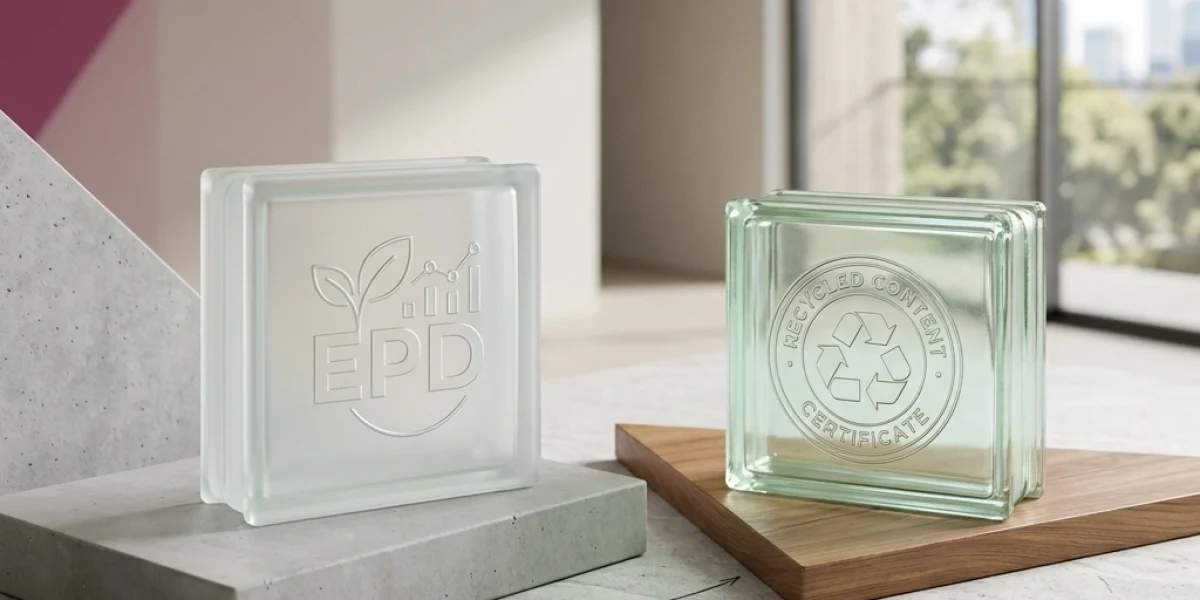
Are they the same? No. Do you need both? Almost certainly.
If you want to secure your spot on a Tier 1 Bill of Quantities (BoQ) or hit the requirements for the latest Green Star or NABERS ratings, you need to understand exactly how these documents work together to prove your sustainability credentials.
1. The 2026 Shift: Why Reporting is No Longer Optional
The landscape of sustainable building materials in Australia changed significantly as we hit 2026. Government procurement mandates now strictly require 100% transparency on embodied carbon for infrastructure projects.
Embodied carbon: the greenhouse gas emissions generated during the manufacture, transport, and construction of building materials: can account for up to 50% of a new building’s total carbon footprint. As operational efficiency (like solar and insulation) improves, the focus has shifted entirely to the "upfront" carbon found in the materials themselves.
If you can’t prove the carbon footprint of your recycled plastic sheets in Australia, you’re effectively locked out of government tenders and high-end commercial builds. This is where the EPD and the Recycled Content Certificate come into play.
2. What is an EPD? (The "Nutritional Label")
Think of an Environmental Product Declaration (EPD) as the nutritional label on a cereal box, but for construction materials. It doesn't just say "this is healthy"; it tells you exactly how much sugar, fat, and sodium is inside.
An EPD is a standardized, third-party verified document that maps out the environmental impact of a product throughout its entire life cycle. It is based on a Lifecycle Assessment (LCA) and follows strict international standards (ISO 14025 and EN 15804).
Key Data Points in an EPD:
- Global Warming Potential (GWP): The amount of CO2e (carbon dioxide equivalent) emitted.
- Resource Depletion: How much water and energy were used during production.
- A1-A3 Stages: This is the "cradle-to-gate" portion: covering raw material extraction, transport to the factory, and the manufacturing process itself.
For those looking to deep-dive into the technical side, our Specifier’s Technical Guide to Recycled Plastic Sheets breaks down how these metrics apply to different thicknesses and applications.
3. What is a Recycled Content Certificate? (The Proof of Origin)
While an EPD focuses on the impact (the carbon), a Recycled Content Certificate focuses on the origin and the provenance of the material.
This document verifies that a product actually contains the percentage of recycled material it claims to have. It provides an audit trail showing that the waste was diverted from landfill and processed correctly.

Why this matters for Australian Projects:
In Australia, the "circular economy" is a major KPI. A certificate proves you aren't just using virgin plastic that happens to be recyclable; it proves you’ve used post-consumer or post-industrial waste.
When you source recycled plastic sheets in Australia from Resourceful Living, this certificate is your proof that you are supporting local waste recovery and not just importing "green-looking" products from overseas that have a massive transport carbon debt.
4. Why You Need BOTH to Win Tenders
You might think that having an EPD is enough because it includes recycled content data. However, in the high-stakes world of winning government tenders in 2026, having both is a massive competitive advantage.
- The EPD satisfies the carbon consultant who is calculating the project's total GWP.
- The Recycled Content Certificate satisfies the social procurement and circular economy officers who need to hit "recycled content" targets (often mandated at 10-30% for new infrastructure).
Using these two documents together eliminates the risk of greenwashing. It shows you have a verified, low-carbon product that actively diverts Australian waste from landfill. If you’re aiming for a major project, check out our guide on how to win a $1M government tender using the recycled content lever.

5. The Local Advantage: Simplifying the "A4" Transport Stage
One of the biggest traps in embodied carbon reporting in Australia is the "Transport Stage" (known as A4 in EPD jargon).
If you specify a recycled material from Europe or Asia, its EPD might look great at the factory gate. However, once you add the carbon cost of shipping that material halfway across the world to a site in Sydney or Newcastle, your carbon score skyrockets.
The Resourceful Living Difference:
- 100% Australian Waste: We source our plastic locally.
- 100% Australian Made: We manufacture in regional NSW.
- Lower A4 Emissions: Because our supply chain is domestic, the "transport to site" carbon is significantly lower than imported alternatives.
By choosing local, you’re not just supporting Australian jobs; you’re making your embodied carbon report look significantly better. This is a core part of our Closed Loop ESG Partner Program, which helps businesses automate this data collection.

6. Checklist for Your Next Bill of Quantities (BoQ)
When you're specifying materials for a project that requires embodied carbon reporting, don't just ask for "sustainable options." Be specific. Use this checklist to ensure your supply chain can actually deliver the data you need:
- ✅ Third-Party Verified EPD: Is the EPD current and registered with a body like EPD Australasia?
- ✅ Product-Specific Data: Does the EPD cover the specific product you’re buying, or is it a "generic industry average" (which is less valuable for high-tier reporting)?
- ✅ Recycled Content Percentage: Is the percentage of post-consumer waste clearly stated?
- ✅ Traceability: Can the supplier prove the waste was sourced within Australia? (Look for the Australian Made and Owned logo).
- ✅ Global Warming Potential (GWP): What is the kg CO2e per unit?
- ✅ Technical Specs: Does the material meet the performance requirements for the job? (e.g., Recycled Plastic vs. Timber durability).
- ✅ End-of-Life Plan: Is the material 100% recyclable at the end of its life, or will it end up in landfill?
- ✅ Transport Stage Data (A4): Is the manufacturing plant close enough to keep transport emissions low?
- ✅ Compliance: Does the material meet NCC 2025/2026 standards for fire and moisture?
- ✅ Lead Times: Does the supplier have the capacity to meet your construction schedule?
7. Action Plan: Get Your Project Data-Ready
The transition to mandatory embodied carbon reporting in Australia doesn't have to be a headache. It’s simply a shift in how we value materials. In the past, we valued price and speed. Today, we value price, speed, and data.
If you're currently working on a project and need to swap out traditional, high-carbon materials (like timber that rots or virgin plastics) for high-performance recycled plastic sheets, we can help you get the documentation right the first time.
"The difference between a project that gets approved and one that gets stalled in 2026 is the quality of the data behind the materials. You can't manage what you can't measure." : Resourceful Living Engineering Team
Ready to level up your reporting?
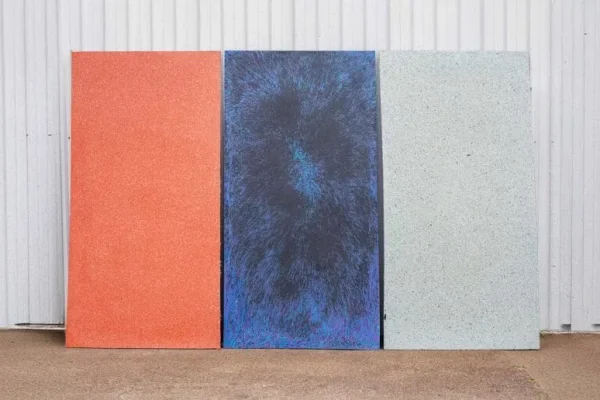
- Browse our range: See the colour and texture options available for your next sustainable project.
- Audit your current supply chain: Use our guide on how to audit your supply chain for 100% traceable Australian recycled plastic.
- Get a quote with data: Contact us today for a quote that includes the EPD and Recycled Content data you need to win.
Don't leave your carbon reporting to chance. Get the facts, get the certificates, and lead the way in circular construction.