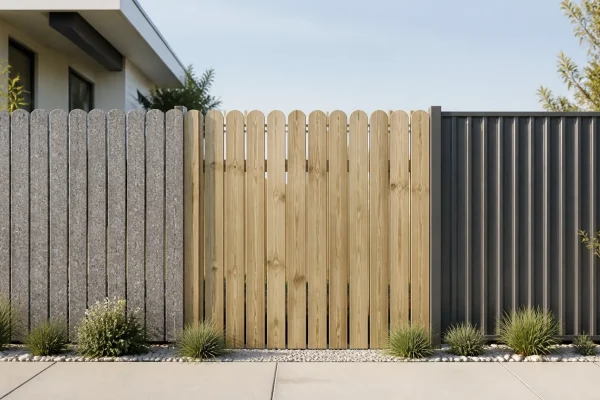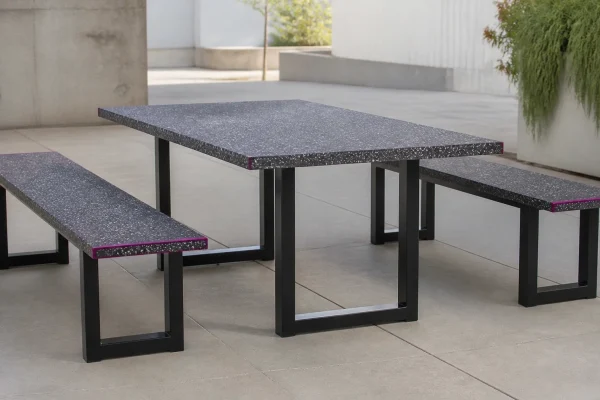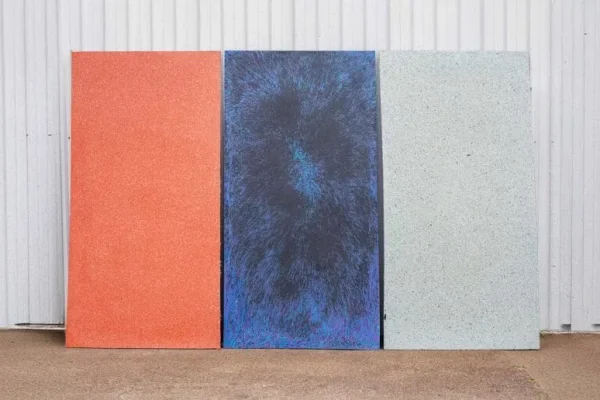
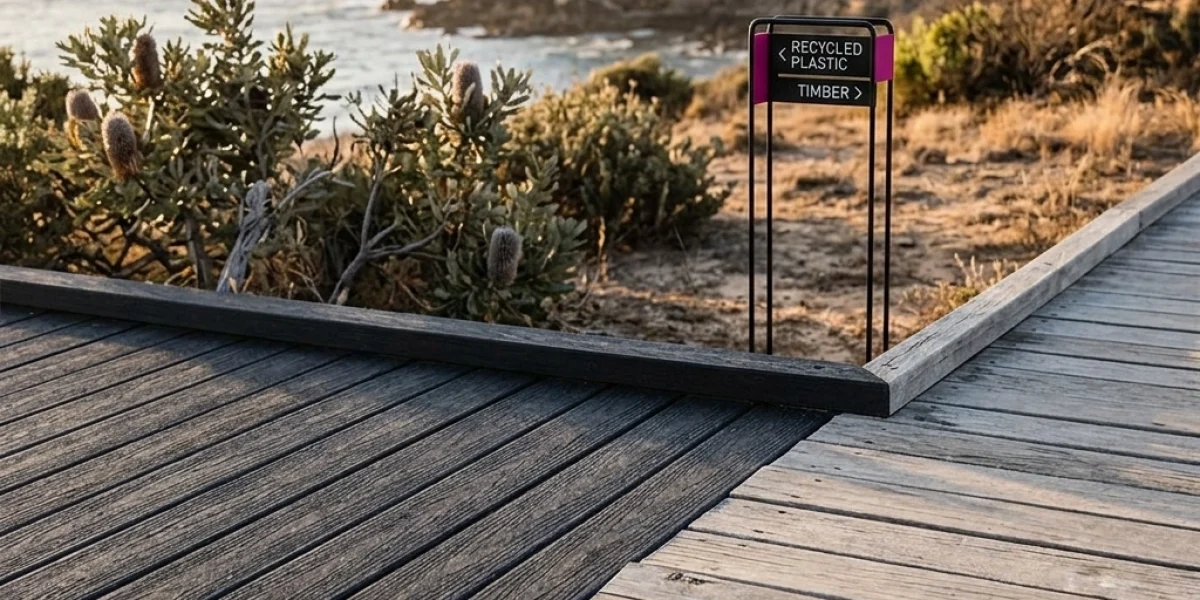
If you’ve spent any time on an Australian building site or managing council assets, you know the drill. You specify marine-grade plywood or high-end hardwood, and it looks fantastic for exactly six months. Then, the inevitable happens. The edges start to swell, the laminate begins to peel, and the relentless Aussie sun starts turning that expensive timber into a grey, splintering liability.
For decades, plywood has been the default "versatile" material. It’s what we know. It’s what we’ve always used. But as we move into mid-2026, the industry is reaching a tipping point. Between stricter embodied carbon reporting and the sheer reality of our changing climate, the old ways aren't just inefficient, they're becoming a financial burden.
It’s time to ask the hard question: Do you really need plywood for your next project, or are you just stuck in the "timber trap"?
1. The 'What We Know' Trap: Why Timber is Failing in 2026
We call it the "What We Know" trap. It’s the tendency to choose a material based on habit rather than data. For a long time, timber was the only viable option for structural and semi-structural sheets. It was relatively cheap, readily available, and easy to work with.
However, the timber of 2026 isn't the old-growth hardwood our grandfathers used. Modern plantation timber is grown fast, harvested young, and relies heavily on chemical treatments to survive the elements. In the context of sustainable building materials in Australia, these "shortcuts" are failing under the pressure of extreme weather cycles, oscillating between record-breaking floods and intense heatwaves.
When we look at a recycled plastic vs timber comparison, the performance gap has widened. Timber is organic; it’s designed by nature to eventually break down and return to the earth. That’s great for a forest, but it’s a disaster for a public bench, a horse stable, or a coastal boardwalk.
2. The Moisture Buffet: Warping, Rot, and Termites
Australia is a "Moisture Buffet" for organic materials. If the humidity doesn't get to your plywood, the ground moisture will. And if both of those fail, the termites certainly won't.
Why Plywood Fails:
- Delamination: Plywood is essentially a "wood sandwich" held together by glue. Once moisture penetrates the edges, the layers expand at different rates, causing the board to pull apart.
- The Rot Cycle: Even "treated" timber has a shelf life. As the chemicals leach out over time (especially in high-rainfall areas), the wood becomes a breeding ground for fungi.
- Termite Caviar: To a termite, a sheet of plywood is a soft, pre-processed snack. Even treated ply can be bypassed if there’s a single nick or drill hole that exposes the untreated core.
Contrast this with recycled plastic sheets in Australia. Materials like rHDPE (Recycled High-Density Polyethylene) are completely non-porous. They don't just "resist" moisture; they are chemically incapable of absorbing it.

"In coastal environments, the salt air acts like sandpaper on timber finishes, opening up the grain for moisture to settle. Recycled plastic is the only material we’ve seen that remains 100% structurally sound after five years of direct salt spray." – Resourceful Living Engineering Note.
3. The 5x Lifespan Rule: Why Recycled Plastic Outlasts Marine-Grade Ply
When we talk about the ROI of recycled plastic, we often refer to the "5x Rule." On average, in an outdoor or high-traffic environment, a high-quality recycled plastic sheet will outlast a comparable timber product by at least five times.
| Feature | Marine-Grade Plywood | rHDPE Recycled Plastic |
|---|---|---|
| Average Lifespan (Outdoor) | 3–7 Years | 25+ Years |
| Moisture Absorption | 10% – 25% | 0.01% |
| UV Resistance | Requires constant re-coating | Built-in UV stabilisers |
| Structural Integrity | Decreases with age/rot | Remains constant |
| Termite Proof | No (unless heavily treated) | Yes (100%) |
If you’re looking at winning government tenders in 2026, the lifespan of your materials is now a critical metric. Asset managers no longer want to fund a replacement every five years; they want "set and forget" infrastructure.

4. Hidden Costs: Why Timber is a Financial Sinkhole
The biggest argument for plywood is usually the upfront price. Yes, a sheet of plywood is cheaper at the checkout today than a sheet of high-spec recycled plastic. But that’s a surface-level calculation.
To keep timber functional over a 10-year period, you have to account for:
- Initial Sealing: Labour and material costs to waterproof the ply.
- Annual Maintenance: Sanding and re-oiling or re-painting every 12–24 months.
- Labour Costs: The soaring cost of trade labour to perform these maintenance tasks.
- Disposal Fees: When the timber fails, it often goes to landfill as "contaminated waste" due to the treatments (CCA), which incurs high tipping fees.
We’ve found that timber is actually costing projects up to 5x more over a decade compared to the one-off investment in recycled plastic. By moving your budget from OPEX (Maintenance) to CAPEX (Initial Build), you effectively freeze your costs for the next 20 years.
5. Workability: Yes, You Can Use Standard Tools
One of the most persistent myths we hear is: "I'd love to use recycled plastic, but I don't have the specialised tools to work with it."
The truth? If you can work with timber, you can work with our recycled plastic sheets.
You don't need lasers, water jets, or expensive industrial equipment. You can use your existing:
- ✅ Circular Saws: Use a fine-tooth blade for a clean edge.
- ✅ Routers: Perfect for edge profiling and creating rounded corners.
- ✅ Drills and Screws: Just like timber, but without the risk of splitting the grain.
- ✅ Sanders: You can even sand the edges to a smooth, matte finish.
The material behaves very similarly to a dense hardwood. It holds a screw beautifully and doesn't require any edge banding or sealing because the colour and properties are consistent all the way through the sheet.

For a deeper dive into the technical side, check out our Specifier’s Technical Guide.
6. Circularity: Toxicity in Treated Timber vs. 100% Recyclable HDPE
In 2026, the "End of Life" plan for a material is just as important as its performance.
Most outdoor-grade plywood and timber are treated with CCA (Chromated Copper Arsenate) or other heavy-duty fungicides. This makes the wood toxic. You can't burn it, you can't compost it, and most recycling centres won't touch it. It is a linear material: Extract -> Use -> Landfill.
Recycled plastic sheets represent the Circular Economy in action. At Resourceful Living, we take Australian post-consumer waste: like milk bottles and soft plastics: and turn them into durable sheets. But the best part? They are 100% recyclable again.
If a project is decommissioned in 30 years, those sheets can be returned to us, shredded, and turned into new products. No toxins, no landfill, no waste. This is a core pillar of our Closed-Loop ESG Partner Program.
The Verdict: Is it Time to Ditch the Ply?
If your project is:
- Indoors, in a bone-dry environment.
- A temporary structure meant to last less than 12 months.
- A low-budget DIY project where longevity doesn't matter.
…then plywood is probably fine.
But if you are building for public infrastructure, coastal environments, agriculture, or commercial fit-outs where you want to prove your sustainability credentials: you don't need plywood. You need a material that can actually survive the Australian sun.
Ready to make the switch?
We’ve helped everyone from local councils to bespoke furniture makers transition away from high-maintenance timber. Whether you need a single sheet for a custom project or a full pack for a major development, we can help you navigate the recycled plastic vs timber comparison with real-world data.
👉 Download our 'If Not, Why Not' Guide to see how you can successfully specify recycled plastic over traditional materials in your next project.
Let's build something that actually lasts. ♻️🛠️