If you manage public assets or infrastructure along the Australian coastline, you’re likely familiar with the "Timber Tax." It’s not an official government levy, but it’s real. It’s the endless cycle of sanding, oiling, replacing warped boards, and managing safety complaints that come with traditional timber decking in high-moisture, high-UV environments.
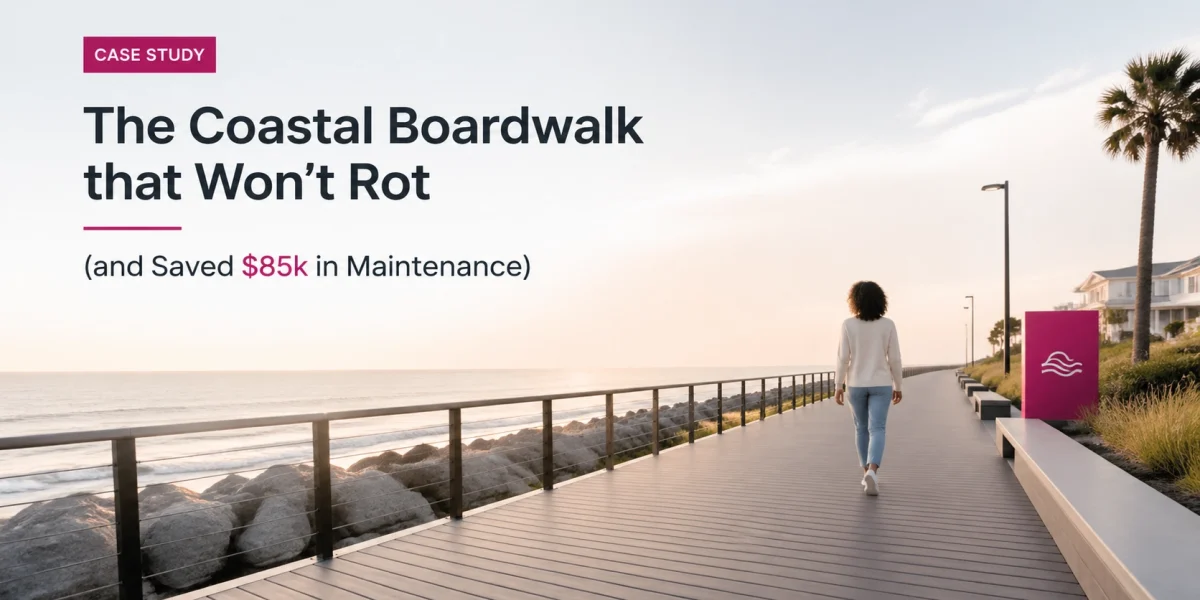
For one Australian council, this "tax" had become unsustainable. Their coastal boardwalk: a popular thoroughfare for locals and tourists alike: was becoming a liability. Between the salt spray, the intense Aussie sun, and the constant foot traffic, the timber was splintering, rotting from the inside out, and requiring intervention every six months.
The solution wasn't just another coat of oil. It was a complete material pivot. By choosing recycled plastic panels over traditional hardwood, the council didn't just fix a walkway; they diverted 12,000kg of soft plastic from landfill and locked in a projected $85,000 in maintenance savings over the next 20 years.
The Problem: Why Coastal Timber is a Budget Killer
In a coastal environment, timber is fighting a losing battle from day one. Moisture ingress leads to fungal rot, while salt crystals expand in the grain, causing the wood to check and split. When you add the Australian UV index into the mix, even the highest-grade Spotted Gum or Ironbark eventually fails.
For this specific project, the council was spending roughly $4,000 to $5,000 per year on localized repairs, safety inspections, and anti-slip treatments. Over a 20-year lifecycle, that’s $100,000 spent just to keep a decaying asset "safe."
The "Hidden" Costs of Timber Maintenance:
- Labour: Diverting council teams from new projects to patch old ones.
- Liability: Increased risk of trips and splinters in high-traffic public areas.
- Material Waste: Rotted timber cannot be easily recycled and usually ends up in landfill.
- Chemical Runoff: Traditional wood treatments and oils can leach into sensitive coastal ecosystems.

The Solution: The Shift to Maintenance-Free Decking
The council decided to trial a recycled plastic vs timber comparison to see if a circular material could stand up to the environment. They selected Resourceful Living’s 100% recycled HDPE panels, custom-engineered for heavy-duty outdoor use.
Unlike timber, recycled plastic is hydrophobic. It doesn't absorb water, which means it cannot rot, swell, or harbour mould. It’s also impervious to termites and marine borers: two major headaches for coastal infrastructure.
Diverting 12 Tonnes of Local Waste
One of the most compelling aspects of this project was the traceability of the material. The 12,000kg of plastic used for the boardwalk wasn't sourced from offshore "mystery" pellets. It was diverted from Australian waste streams: the very same soft plastics and household bottles that residents put in their yellow bins.
By choosing local manufacturing, the council was able to provide a tangible "closed-loop" story to their community. You can read more about why this matters in our guide on recycled plastic sheets and local traceability.
The $85,000 Math: Breaking Down the ROI
When comparing recycled plastic vs timber, the "sticker price" of plastic is often higher upfront. However, the Total Cost of Ownership (TCO) tells a completely different story.
Let’s look at the breakdown of how the council reached that $85k saving:
- Zero Oiling or Sealing: Timber requires sealing every 12-24 months. At approximately $15 per square metre for labour and materials, the savings over 20 years for a large boardwalk are massive.
- No Structural Rot: Traditional timber joists and decking often require partial replacement within 10-12 years. Recycled plastic panels are rated for a 50+ year lifespan.
- Vandalism Resistance: Graffiti is significantly easier to remove from HDPE panels using standard pressure washing or non-toxic cleaners, unlike timber where the ink often penetrates the grain.
- No Splintering: The elimination of "splinter-fix" callouts saved the council an estimated $1,200 annually in minor reactive maintenance.
For a deeper dive into these figures, check out our comparison of recycled plastic vs timber for asset maintenance budgets.

Technical Performance: How It Stands Up to the Elements
A common concern with recycled plastic is UV degradation and thermal expansion. To address this, the panels used in this case study were manufactured with high-grade UV stabilisers, specifically designed for the Australian climate.
Key Performance Metrics:
- Slip Resistance: The panels were finished with a textured surface that exceeds Australian Standards for public walkways, even when wet.
- Thermal Stability: By using specific fastening systems, the council's engineering team accounted for the expansion and contraction of the material, ensuring the boardwalk remained flush through summer heatwaves and winter nights.
- Load Bearing: While recycled plastic is more flexible than timber, the use of a slightly tighter joist spacing provided a rock-solid walking surface that feels identical to traditional decking underfoot.
If you're curious how this stacks up against other "permanent" materials, read our analysis on recycled plastic vs concrete for infrastructure.
The Environmental ROI: More Than Just Dollars
While the $85,000 saving is the headline, the environmental impact of this project serves the council’s Net Zero targets.
By using 12,000kg of recycled material, the council achieved:
- Carbon Sequestration: Locking away plastic waste that would otherwise release methane or microplastics in a landfill environment.
- Lower Embodied Carbon: The manufacturing process for recycled HDPE is significantly less energy-intensive than the kiln-drying and transport required for high-end hardwoods.
- Circular Economy Compliance: At the end of its 50-year life, these panels can be taken back, shredded, and turned into new panels. It’s a truly infinite loop.
For project managers navigating the new 2026 reporting standards, this data is gold. You can learn more about embodied carbon reporting in Australia here.
Implementation: What You Need to Know
Transitioning to maintenance-free decking isn't complicated, but it does require a different approach than timber. If you're looking to replicate this council's success, here are three things to consider:
- Specify the Waste Source: Ensure your supplier can provide a traceable audit trail of where the plastic came from. This protects you against "greenwashing" and ensures you're supporting local industry.
- Adjust Your Framing: Recycled plastic has a different modulus of elasticity than timber. Always consult the product data sheet to ensure your substructure is designed correctly.
- Plan for the Take-Back: A truly sustainable project includes a plan for the end of the asset's life. Choose a partner like Resourceful Living that offers a circular take-back programme.
Is It Time to Retire the Timber Tax?
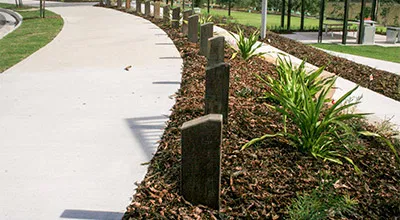
The coastal boardwalk case study proves that sustainability and fiscal responsibility aren't at odds. By investing in recycled plastic panels, this council saved $85,000, diverted 12 tonnes of waste, and provided their community with a safer, better-looking asset.
If you’re ready to stop spending your budget on oil and sandpaper, it might be time to look at the circular alternative.
Ready to see the data for yourself?
- Explore our 2026 Price Guide to compare costs.
- Learn how to win NSW tenders using sustainable materials.
- See our manufacturing process in action.
At Resourceful Living, we’re not just making panels; we’re helping Australian councils and developers build assets that last a lifetime without costing the earth, literally or figuratively. Let’s build something that doesn’t rot.