The Australian construction industry is shifting. With stricter embodied carbon targets and the rise of Green Star v1.1, sourcing sustainable materials is no longer a "nice-to-have", it's a project requirement.
However, not all "recycled" materials are created equal. If you're looking to buy recycled plastic sheets in Australia, the specifications can vary wildly between manufacturers. Misinterpreting a spec sheet doesn't just hurt your budget; it can compromise the structural integrity and sustainability credentials of your entire project.
As experts in 100% recycled plastic manufacturing, we’ve identified the 10 critical factors you must verify before you spec recycled plastic panels for your next commercial or residential build.
1. Standard Dimensions: The 2400mm x 1200mm Rule
Most recycled plastic sheets in Australia follow the standard 2400mm x 1200mm format. This mirrors traditional plywood and MDF sizes, allowing for seamless integration into existing framing and cabinetry systems.
- Pro Tip: While 2400 x 1200 is the industry standard, always check the trim tolerance. At Resourceful Living, we manufacture to these precise dimensions to ensure your CNC routing and on-site cuts are as efficient as possible.
2. Thickness Variance: 3mm to 40mm
Unlike timber, which has limited stock thicknesses, recycled plastic can be manufactured in a massive range. For most architectural and building applications, you’ll be looking at:
- 3mm – 6mm: Ideal for signage, retail displays, and wall linings.
- 12mm – 20mm: The "sweet spot" for cabinetry, furniture, and wet-area partitioning.
- 40mm: Heavy-duty structural panels for erosion control, noise barriers, and industrial storage.
3. Sourcing: Is it 100% Australian Plastic Waste?
Many products marketed in Australia use imported feedstock or "blended" resins. To truly meet local sustainability targets, you need to verify the source of the waste.
We use 100% Australian plastic waste. This reduces the carbon footprint associated with international shipping and directly supports the Australian circular economy. If your supplier can’t trace their plastic back to an Australian postcode, you might be importing more carbon than you’re saving.
4. Composition: Solid Block vs. Veneered
Some "recycled" boards use a thin veneer of recycled material over a traditional core. This creates two problems:
- Delamination: In high-moisture or high-traffic areas, the layers can separate.
- Recyclability: Mixed-material boards are often impossible to recycle at end-of-life.
Ensure you are spec'ing solid blocks of 100% recycled plastic. Our panels contain no additives, no glues, and no veneers. This makes them 100% waterproof and infinitely recyclable.
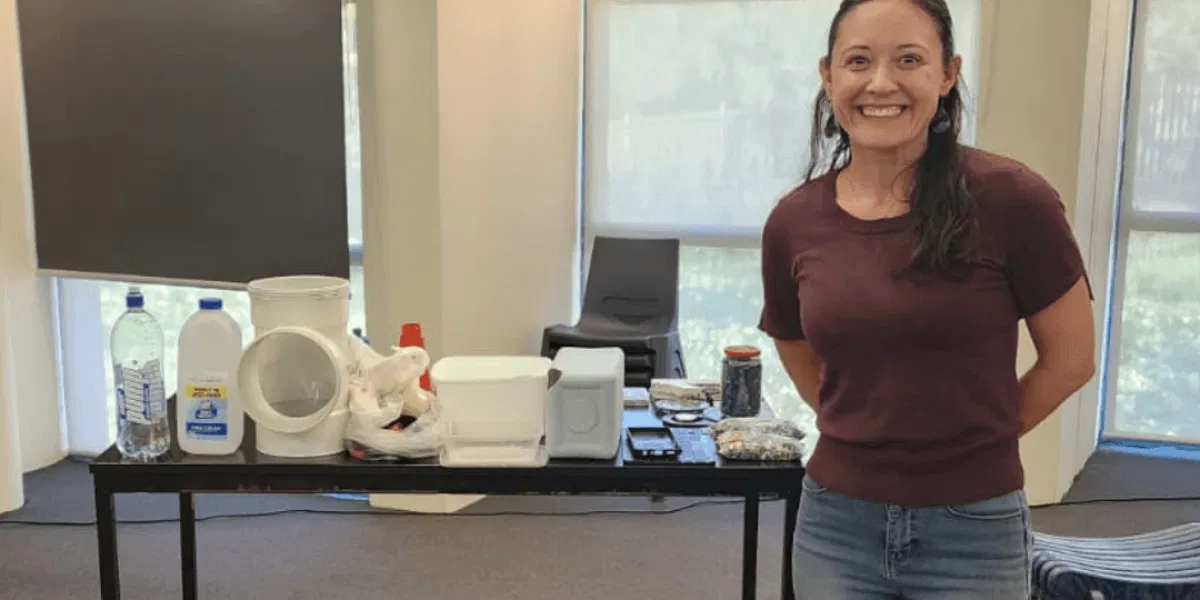
"A solid-core recycled plastic panel performs more like a high-density timber than a traditional plastic. It can be drilled, routed, and screwed with standard woodworking tools, but with none of the rot or moisture issues." , Jess Hodge, Owner, Resourceful Living
5. Colour Consistency and "Confetti" Patterns
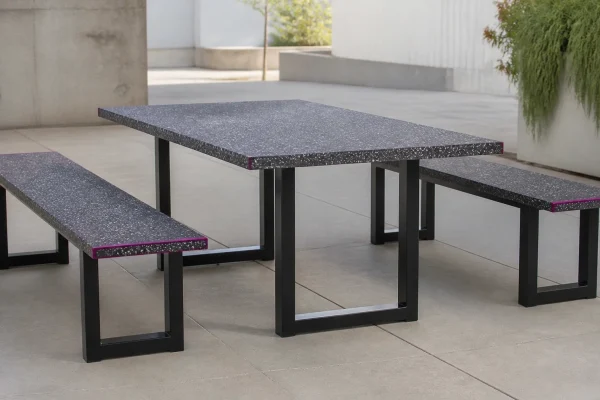
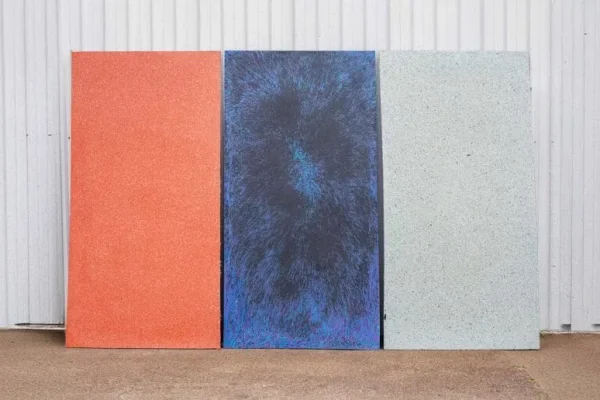
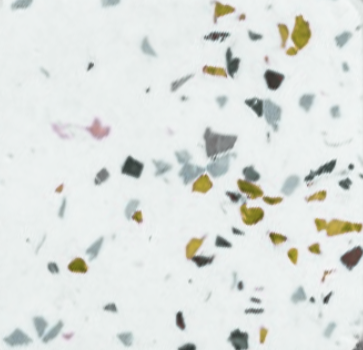
Because we use post-consumer waste (like milk bottles and detergent tubs), each batch has a unique character. We offer 6 popular standard colours, ranging from clean whites to deep charcoals.
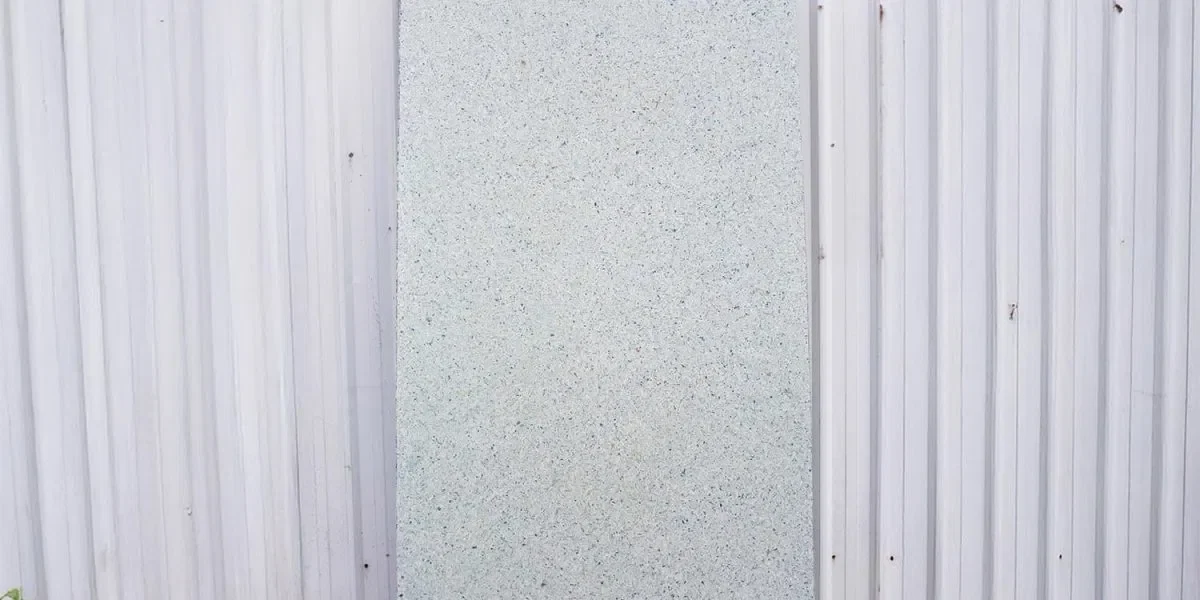
- N70 White Confetti: A fan favourite for retail and interiors, featuring a solid white base with vibrant recycled flecks.
- Custom Blends: For large-scale projects (1 tonne+), we can develop bespoke colour densities to match your brand's aesthetic.
6. UV and Weather Resistance
Australia’s UV index is brutal. If you are using sheets for external cladding or noise barriers, they must be UV-stabilised.
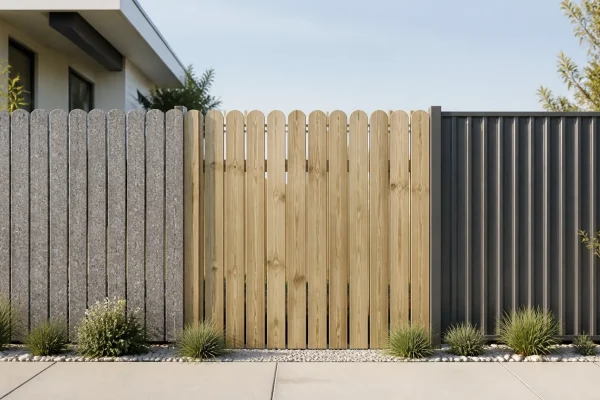
Our materials are rigorously tested for weather resistance. Unlike timber, they won't crack, splinter, or grey-off when exposed to the elements. This makes them the superior choice for coastal environments where saltwater corrosion would destroy traditional materials.
7. Lead Times and Manufacturing Capacity
In the building industry, time is money. Waiting 12 weeks for imported sustainable materials can kill a project's momentum.
We manufacture 7 days a week in our Australian facility, with the capacity to process 1 tonne of plastic per day. This allows for a much faster turnaround than many boutique or overseas suppliers.
8. Embodied Carbon and Sustainability Reporting
With the Australian government pushing for more transparent carbon reporting, you need data. Recycled plastic panels have significantly lower carbon emissions compared to virgin plastic or concrete.
Using sustainable building materials in Australia that are locally manufactured allows you to claim higher points under Green Star and other certification frameworks. We provide the traceability data you need to satisfy your clients' ESG (Environmental, Social, and Governance) requirements.
9. The "Take-Back" Program: Closing the Loop
A product is only truly sustainable if it has a plan for its end-of-life. When you spec Resourceful Living sheets, you aren't just buying a material; you're entering a circular partnership.
We offer a free take-back program. At the end of the project's life (whether that’s in 5 years or 50), we will collect our products and remanufacture them back into new sheets. This ensures zero waste to landfill.
10. Machinability: Treating Plastic Like Timber
One of the biggest misconceptions is that recycled plastic requires specialized industrial equipment.
You can work our sheets using:
- ✅ Standard table saws and circular saws.
- ✅ Standard drill bits.
- ✅ CNC machines for precision patterns.
- ✅ Standard wood screws (no pre-drilling required for most thicknesses).
Comparison: Recycled Plastic vs. Traditional Plywood
| Feature | 100% Recycled Plastic Sheet | Traditional Marine Plywood |
|---|---|---|
| Moisture Resistance | 100% Waterproof | High (but eventually rots) |
| Maintenance | Zero (no painting/oiling) | High (requires sealing) |
| End of Life | 100% Recyclable | Landfill (due to glues/resins) |
| Termite Proof | Yes | No |
| Carbon Footprint | Low (Recycled content) | Medium (Logging/Transport) |
How to Spec Your Next Project
Ready to integrate recycled plastic sheets in Australia into your next spec? Follow these three steps to ensure a smooth procurement process:
- Define your thickness: Select from our 3mm to 40mm range based on structural needs.
- Select your colour: Choose from our 6 standard colours or request a custom sample for large orders.
- Confirm your take-back plan: Ensure your project documentation includes the Resourceful Living take-back clause to satisfy circular economy requirements.
Ready to build for the future?
At Resourceful Living, we aren't just manufacturing sheets; we're helping Australian businesses transition to a waste-free future. Whether you're working on a retail fit-out, a commercial renovation, or a large-scale construction project, our 100% recycled panels offer the durability and sustainability your project deserves.
Contact our team today for a quote or to request a sample pack of our N70 White Confetti and charcoal ranges.