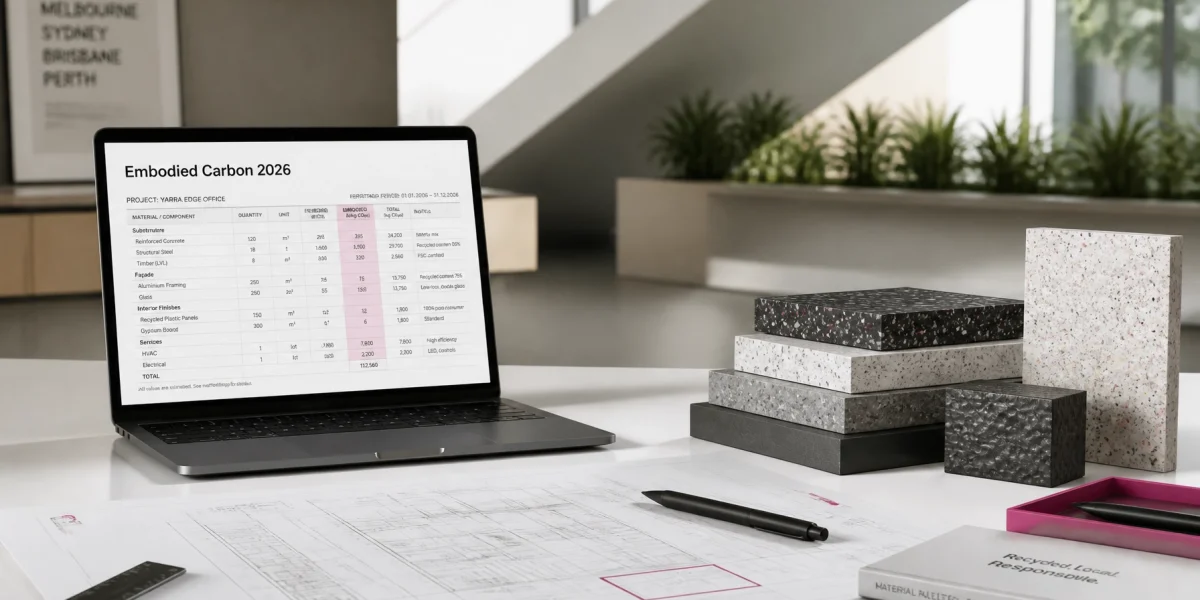
As of 2026, "sustainability" is no longer a buzzword in the Australian built environment: it's a mandatory procurement requirement. If you're bidding for Commonwealth infrastructure projects over $7.5 million, or aiming for high-tier Green Star and NABERS ratings, you must measure and report on embodied carbon.
The shift is driven by the NCC 2025 voluntary pathway and the national Embodied Carbon Measurement for Infrastructure Technical Guidance. For architects, builders, and developers, this means the difference between a winning bid and a disqualification often rests on your ability to provide transparent, auditable carbon data.
This guide breaks down the five critical steps to mastering embodied carbon reporting in Australia for your 2026 tenders.
Step 1: Define Your Lifecycle Scope (The A1–A5 Framework)
Before you open a spreadsheet, you must define the boundary of your assessment. In the 2026 tender environment, the focus has shifted almost exclusively to "Upfront Carbon". This covers the emissions generated before a building is even occupied.
To align with NABERS and the NCC 2025 voluntary pathway, your reporting should focus on the following modules:
- A1–A3 (Product Stage): Raw material extraction, transport to the factory, and manufacturing.
- A4 (Transport): Moving materials from the factory gate to your construction site.
- A5 (Construction): Site energy use, temporary works, and construction waste.
"Focusing on the upfront stages (A1–A5) allows project teams to make the biggest impact on a project's total carbon footprint during the high-leverage design phase." : Industry Insight.
By standardising your reporting to these modules, you ensure your data is compatible with Green Star Mat-1 credits and federal procurement thresholds. For more on the regulatory shift, see our Architect's Guide to NCC 2025 Compliance.
Step 2: Target the "80% Rule" for High-Impact Materials
The national guidance expects carbon calculations to cover at least 80% of materials and construction activities by cost or volume. Don't waste time tracking the carbon in every single screw; instead, focus on the carbon hotspots.
In a typical Australian project, these are:
- Concrete and Steel: The traditional heavy hitters.
- Façade Systems: Aluminium and glass.
- Internal Linings and Fit-outs: This is where 100% recycled plastic panels offer a significant advantage over high-emission alternatives like virgin plastics or treated timbers.

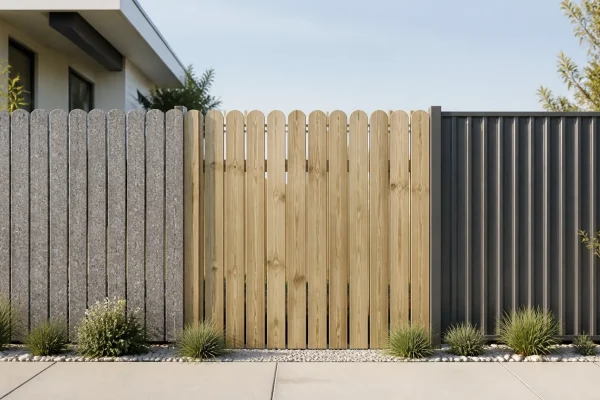
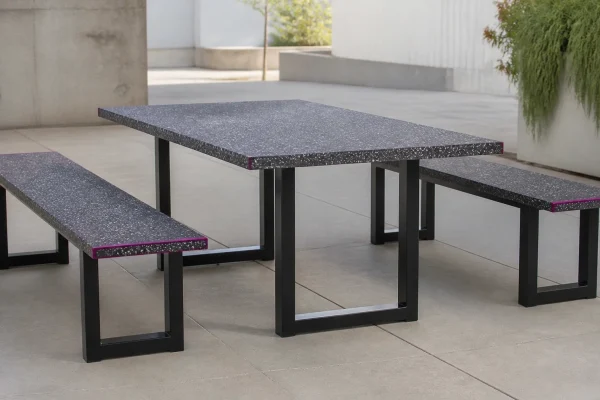
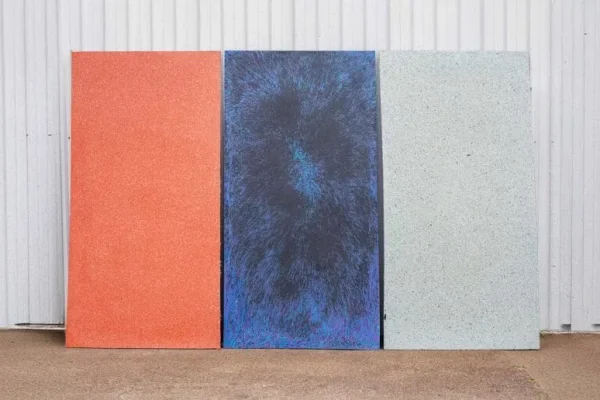
Resourceful Living panels, made from 100% Australian recycled plastic, help you hit that 80% target by replacing high-embodied-carbon materials in noise barriers, retail fit-outs, and wet-area linings. Since our material is 100% traceable, you avoid the "data gaps" that often plague imported materials.
Step 3: Source Verified Data (EPDs are Gold)
Your tender response is only as strong as your data. In 2026, generic industry averages are no longer sufficient for high-value contracts. You need a data hierarchy:
- Tier 1 (Highest Quality): Product-specific Environmental Product Declarations (EPDs). These are independently verified documents that provide the exact kgCO2e per unit.
- Tier 2: Industry-average EPDs (e.g., standard Australian concrete mixes).
- Tier 3 (Avoid if possible): Generic global database factors.
When sourcing materials, ask your suppliers for their Scope 3 data. At Resourceful Living, we manage the end-to-end recycling and manufacturing cycle, allowing us to provide precise data for your embodied carbon calculations.

Step 4: Commit to a 10% (or Greater) Reduction
Winning tenders don't just report carbon; they reduce it. Most Green Star projects now require a minimum 10% reduction in upfront carbon compared to a standard reference design.
To master this step in your tender response, you should present:
- The Baseline: What the carbon footprint would be using "business as usual" materials (e.g., virgin timber or concrete).
- The Reduction Strategy: Specific substitutions. For example, replacing timber hoardings with recyclable plastic sheets that can be taken back and remanufactured at the end of life.
- The Quantified Result: A clear statement like: "By substituting Material X with 100% recycled HDPE panels, we have reduced A1-A3 emissions for this element by 45%."
This level of detail proves to the client that you understand circular construction principles and are actively managing their climate risk. Learn more about the shift to circular construction in 2026.
Step 5: Implement a Carbon Management Plan (CMP)
The final step in mastering embodied carbon reporting in Australia is showing how you will maintain these targets during construction. A Carbon Management Plan (CMP) is often a specific tender requirement for state-level infrastructure (like NSW's Decarbonising Infrastructure Delivery Policy).
Your CMP should include:
- Governance: Who is responsible for tracking carbon data on-site?
- Procurement Controls: Ensuring only EPD-verified materials are ordered.
- Waste Management: Highlighting programs like the Resourceful Living take-back program, which ensures products don't end up in landfill (avoiding A5 waste emissions).
- Reporting Frequency: How often will you update the client on "as-built" carbon vs the "design" commitment?

Quick Checklist for Your 2026 Tender
- Identify the Rating Tool: Is it NABERS, Green Star, or the Infrastructure Sustainability Council (ISC) framework?
- Set the Boundary: Ensure you are covering modules A1 through A5.
- Collect EPDs: Gather verified data from your key suppliers early.
- Benchmark: Calculate your baseline and your proposed reduction (aim for ≥10%).
- Draft the CMP: Outline your monitoring and verification process.
The Bottom Line
Mastering embodied carbon reporting in Australia isn't just about compliance: it's a competitive advantage. By choosing local, 100% recycled materials, you not only lower your project's carbon footprint but also support the Australian circular economy.
Ready to lower the carbon footprint of your next project?
Resourceful Living manufactures 1 tonne of recycled plastic per day right here in Australia. Our sheets are tested for strength, durability, and low-carbon performance.
👉 Browse our range of 100% recycled plastic panels or contact Jess and the team today to get data for your next tender.