
If you are a Tier-1 contractor or a procurement lead in the Australian commercial fit-out space, the goalposts didn't just move: they were completely redesigned.
By now, you’ve likely felt the pressure of the Environmentally Sustainable Procurement (ESP) Policy. It’s no longer enough to just "do your best" with sustainability; the Australian Government has set hard mandates. Specifically, if your project furniture spend exceeds $1M, there are strict requirements for recycled content and circularity.
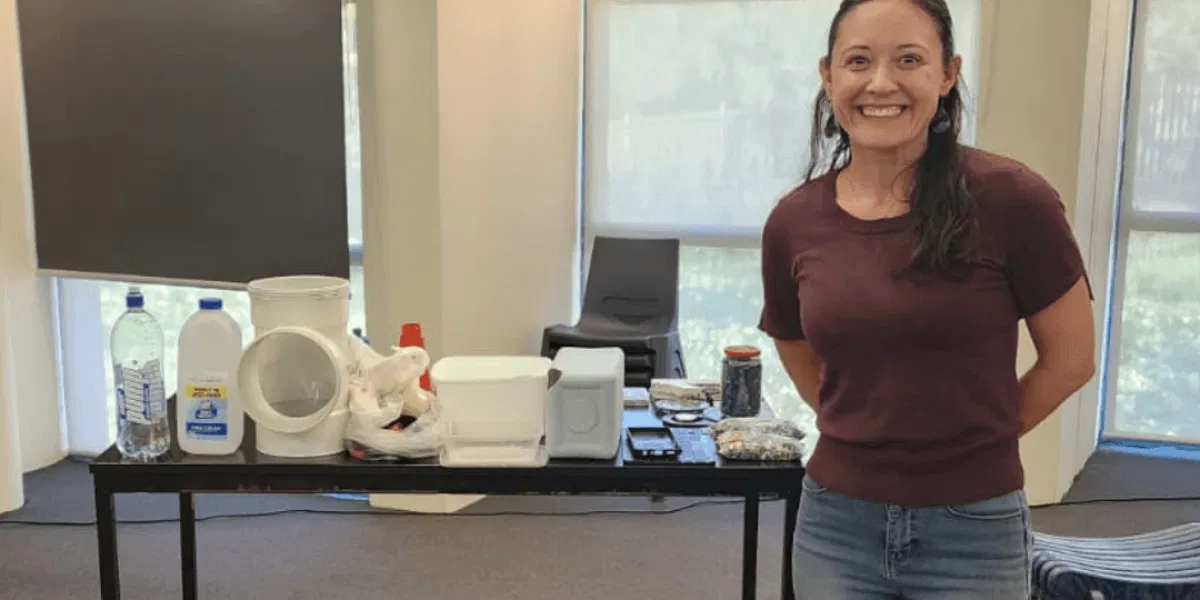
I’m Jess Hodge, and I work on the front lines here at Resourceful Living. I talk to project managers and estimators every day who are scrambling to figure out how to satisfy these mandates without blowing the budget or drowning in paperwork.
The good news? Hitting the $1M Furniture Mandate and mastering Embodied Carbon Reporting Australia is actually a massive competitive advantage if you have the right data. Here are the five steps to simplify the process and ensure your next tender is "un-rejectable."
Understanding the Stakes: The ESP Policy and the $1M Threshold
The ESP Policy is designed to pull the Australian construction industry toward a net-zero future. It targets high-impact materials, and furniture and fittings are at the top of the list. When a project hits that $1M furniture spend, you are legally and contractually obligated to demonstrate that a significant percentage of those materials are diverted from landfill and remain in a circular loop.
This isn't just about ticking a box; it’s about verified data. If you can't prove where the material came from and where it will go at the end of its life, you aren't compliant.

Step 1: Engage at the Pre-Spec Phase (Don’t Wait for the Tender)
The biggest mistake we see is procurement teams trying to "swap in" sustainable materials after the design is finalised. By then, the dimensions are locked, the lead times are tight, and you’re often stuck with whatever is available in the warehouse.
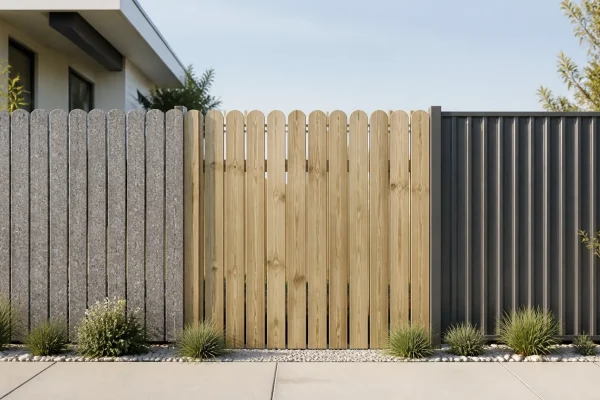
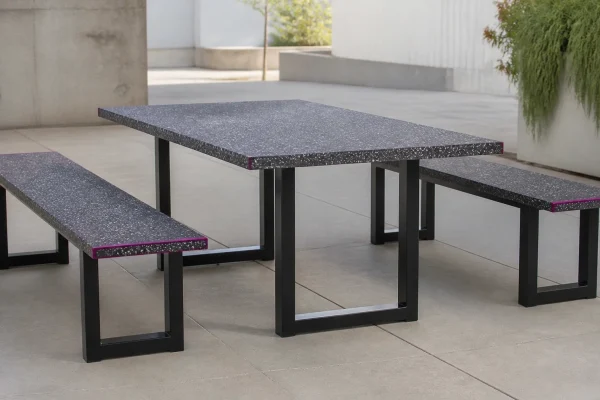
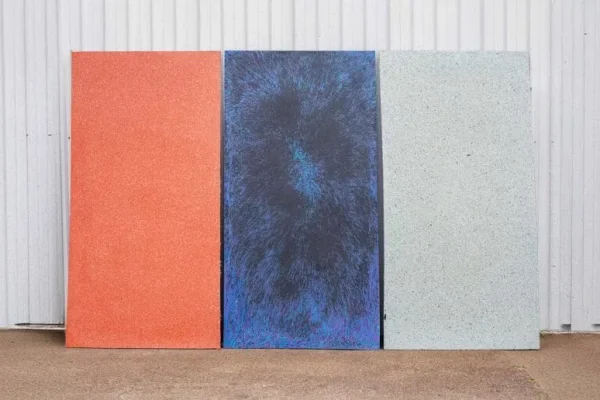
To hit the mandate effectively, you need to engage with recycled material manufacturers during the specification phase. By specifying 100% recycled HDPE panels early, you ensure the design accommodates the unique aesthetic and structural properties of the material.
If you're wondering how these materials stack up against traditional options, check out our guide on why circular construction is changing how you source fit-out materials.
Action Item:
- Review your furniture schedule early.
- Identify high-volume items (worktops, cabinetry, break-out tables) that can be transitioned to recycled plastic.
- Request a tender-ready material spec from us to include in your initial bid.
Step 2: Demand 100% Australian Traceability
The market is currently flooded with "recycled" products that are shipped halfway across the world. Not only does this blow out your embodied carbon reporting, but it also introduces significant risk regarding "greenwashing."
At Resourceful Living, we only use 100% Australian post-consumer waste. We track exactly which council or industrial stream the plastic came from. This local traceability is your best defence against audit failures. When the Department of Finance asks for proof of origin, "imported from overseas" won't cut it.
Why local traceability matters:
- Lower Transport Emissions: Massive reduction in Scope 3 emissions.
- Supply Chain Security: No waiting on international shipping lanes.
- Audit-Ready: Real data on Australian waste diversion.
For a deeper dive into why local sourcing is your best protection, read about recycled plastic sheets and why local traceability matters.
Step 3: Prioritise Circularity with a Take-Back Program
The $1M Furniture Mandate isn't just about what the furniture is made of: it’s about what happens when the lease is up. True Circular Construction requires a plan for the end-of-life.
Resourceful Living operates a guaranteed Take-Back Program. If a fit-out is decommissioned in five, ten, or fifteen years, those panels come back to our facility in Newcastle, NSW. We shred them and turn them into new products.
"Circularity isn't a buzzword; it's a logistics strategy. If you don't have a plan for the waste you're creating, you're just delaying the landfill problem." : Resourceful Living Team
By including a take-back clause in your procurement plan, you satisfy the circularity requirements of the ESP Policy effortlessly.
Step 4: Harvest Verified Data Points for Embodied Carbon Reporting Australia
Reporting is the bane of every project manager’s existence. Between NABERS, Green Star, and the new ESP reporting frameworks, the data requirements are immense.
You shouldn't have to guess the carbon footprint of your furniture. We provide verified data points that can be plugged directly into your Sustainability Plan. Our manufacturing process is low-energy and uses no water or toxic resins, meaning the embodied carbon of our panels is significantly lower than virgin plastic, timber, or concrete.
What data points do you need?
- Recycled Content Percentage: (Ours is 100%).
- Origin of Material: (Ours is 100% Australian).
- End-of-Life Pathway: (Ours is 100% Recyclable/Take-back).
- Carbon Credits: Learn how to claim your carbon credits using our material.
Step 5: Master the "If Not, Why Not?" Documentation
NSW and Federal tenders are increasingly using "if not, why not" procurement rules. If you choose a non-sustainable material over a sustainable one, you have to justify it.
To win these tenders, you need to flip the script. Instead of justifying why you didn't use sustainable materials, provide a proactive Sustainability Statement that shows exactly how you are exceeding the mandate.
We’ve put together a guide specifically for this: 5 steps to master 'if not, why not' procurement.
How to simplify your bid:
- Include our Product Data Sheets as an appendix.
- Reference the specific tonnage of Australian plastic your project will divert from landfill.
- Highlight the low-maintenance and durability benefits (our material outlasts plywood and doesn't require sanding or painting).
Why Resourceful Living is Your Secret Weapon
We aren't just selling "recycled plastic." We are providing a compliance solution for the modern Tier-1 contractor.
When you partner with us, you get:
- Australian Made Certification: Supporting local jobs and local waste solutions.
- Fast-Track Lead Times: We can move from waste to worktop in a 7-day fast-track.
- Prequalified Status: We are a pre-qualified supplier for local buy, making government procurement even easier.
Comparative Advantage at a Glance
| Feature | Resourceful Living Panels | Traditional Timber/MDF | Imported "Recycled" Materials |
|---|---|---|---|
| Recycled Content | 100% | 0% – 20% | Unknown/Variable |
| Origin | Australia | Mixed | Overseas |
| VOCs/Resins | Zero | High (Formaldehyde) | Variable |
| Circular Path | Guaranteed Take-Back | Landfill/Incineration | Landfill |
| Embodied Carbon | Ultra-Low | Moderate | High (due to shipping) |
The ROI of Circularity
Let's talk numbers. Many procurement teams worry that "sustainable" means "expensive." However, when you factor in the lifecycle costs, recycled HDPE is often the more economical choice.
Our material is waterproof, UV-stable, and chemically resistant. It doesn't rot, delaminate, or require expensive refinishing. In high-traffic commercial environments, our panels outlast plywood 5x, meaning fewer maintenance call-outs and lower replacement costs for the client.

Conclusion: Don't Just Meet the Mandate: Lead It
The $1M Furniture Mandate is a floor, not a ceiling. The contractors who are winning the biggest projects in 2026 are those who view Embodied Carbon Reporting Australia as a way to demonstrate their sophistication and commitment to a sovereign Australian circular economy.
Simplifying your reporting and hitting your sustainability targets doesn't have to be a headache. It starts with choosing a partner who provides the data you need and the quality your clients expect.
Ready to secure your next tender?
Contact us today for a tender-ready material spec or to request a sample pack for your design team. Let’s show the industry what Resourceful Living looks like.
[Contact Resourceful Living Today]