The Australian construction industry is currently standing at a massive crossroads. For decades, the model was simple: you buy timber or plastic, you build the project, and when the fit-out is done, you pay a skip bin company to take the "waste" to a hole in the ground.
But as we move into circular construction 2026, that linear model isn't just ecologically irresponsible, it’s becoming a massive financial liability.
With the rise of the Federal Environmentally Sustainable Procurement (ESP) Policy and skyrocketing landfill levies across NSW and Queensland, the way we manage materials is shifting. The most successful builders and developers aren't just looking for sustainable building materials in Australia; they're looking for Product Stewardship.
In this guide, we’ll break down why product stewardship is the "secret sauce" for de-risking your assets, meeting your ESG targets, and literally wiping waste disposal costs off your balance sheet.
The Shift: Why 'Buying' Materials is Now 'Leasing' Resources
In 2026, the concept of "ownership" in construction is being replaced by "stewardship." When you specify a material, you’re no longer just buying a physical object; you’re entering into a long-term resource agreement.
Product stewardship means the manufacturer takes responsibility for the entire life cycle of the product, especially what happens when it’s no longer needed.
"Circular construction isn't just about 'saving the planet.' It's about building a resilient Australian economy where we stop throwing away $100 billion worth of resources every decade." , Industry Insight, 2026.
By choosing materials backed by a verified take-back program, you’re effectively future-proofing your project. You are ensuring that today's fit-out material becomes tomorrow's raw resource, rather than a permanent entry in a landfill ledger.
What is Product Stewardship in the 2026 Context?
While "recyclable" was the buzzword of the 2010s, "stewardship" is the mandate of 2026. Many materials claim to be recyclable, but without a dedicated pathway to actually process them, that claim is often hollow.
At Resourceful Living, we’ve moved beyond the "recyclable" label. We operate a Closed-Loop ESG Partner Program that ensures every panel we manufacture has a guaranteed home at the end of its life.
The New Material Hierarchy for 2026 Tenders:
- Regenerative/Reclaimed: Materials already in the loop with a documented history.
- Fully Recyclable (with Take-Back): Materials like our 100% recycled plastic sheets that are designed to be shredded and remanufactured.
- Low-Carbon Virgin: Only acceptable if a circular alternative is technically impossible.
- Landfill-Bound: Materials like treated timber or complex composites are now effectively being "de-selected" from high-value government tenders.
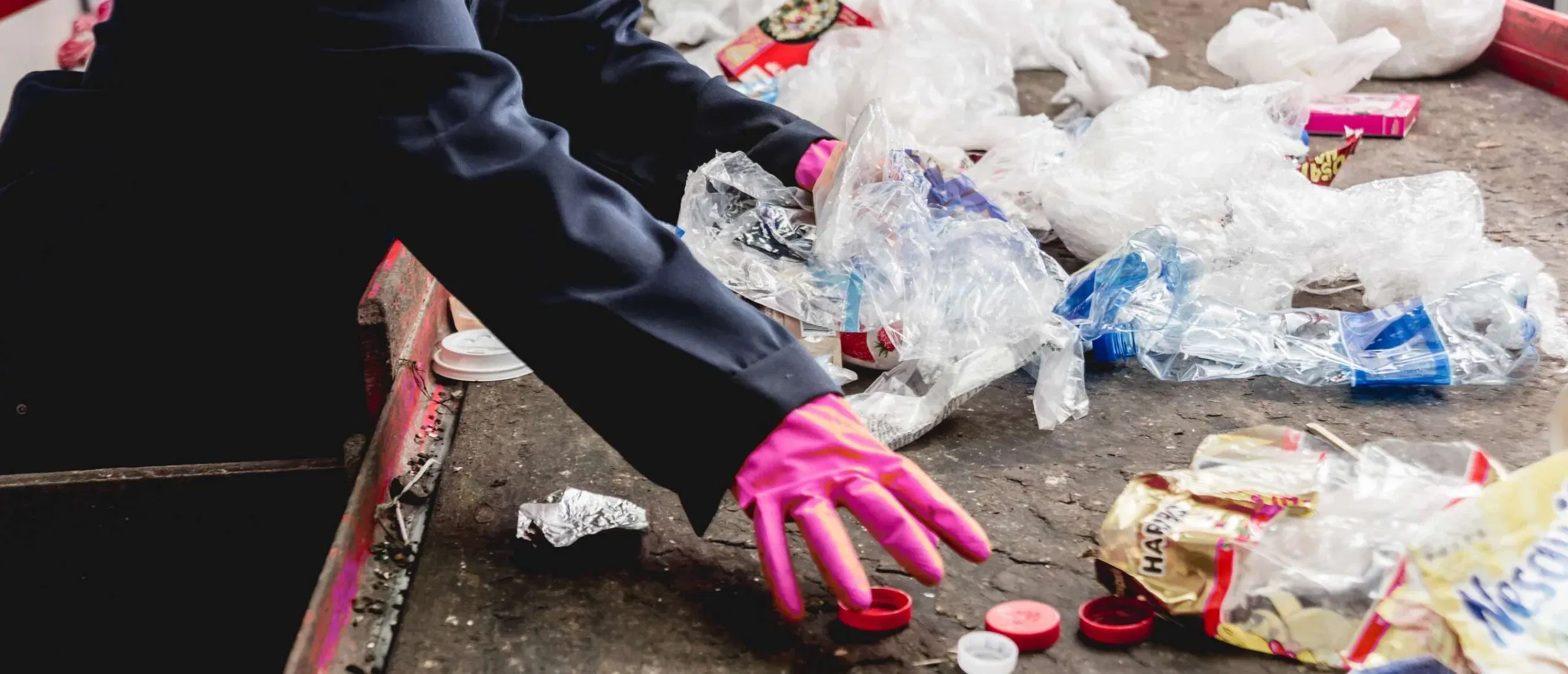
Effective stewardship starts with local, manual sorting to ensure material purity and traceability.
Slashing the Bottom Line: How Take-Back Programs Kill Landfill Fees
Let’s talk about the numbers. Waste disposal is a massive overhead. Between rising skip bin hire and government landfill levies, "paying to throw things away" is a line item that every project manager wants to delete.
When you source panels from a manufacturer with a take-back program, you’re essentially pre-paying for your waste management.
The Financial Benefits of the Resourceful Living Program:
- Zero Skip Bin Fees: Our panels don’t go in the skip. We collect them.
- No Landfill Levies: By diverting 100% of the material, you avoid the heavy taxes associated with commercial waste.
- Lower Site-Clearing Costs: Decommissioning a fit-out is faster and cheaper when the material has a direct collection route.
Builders who have switched to our recycled plastic sheets are seeing waste management costs drop by up to 40% over the project life cycle. That is a significant competitive advantage when bidding on tight-margin tenders.
De-risking Assets: Avoiding the 'Orphaned Waste' Liability
In the 2026 regulatory environment, "orphaned waste", material that has no clear recycling pathway, is a risk. If you install a material that cannot be easily disposed of or repurposed, you are essentially creating a future debt for the building owner.
By contrast, using sustainable building materials in Australia that are part of a stewardship scheme de-risks the asset.
1. Material Security and Price Stability
Global supply chains are volatile. By participating in a closed-loop program, we create an "urban mine" of high-quality Australian plastic. This means we aren't reliant on fluctuating oil prices or overseas shipping delays. We have the raw material right here, ready to be repurposed for your next project.
2. Simplified ESG and NABERS Reporting
Reporting on Embodied Carbon is no longer optional for Tier 1 projects. Sourcing from a closed-loop program provides the "gold standard" for ESG metrics. It demonstrates a level of commitment to circular construction 2026 that simply buying "recycled-content" products cannot match.

Specifying high-durability panels with a take-back guarantee simplifies long-term asset management.
The Resourceful Living ESG Partner Program: A Case Study in Local Circularity
We’ve designed our take-back program to be as frictionless as possible. We know that if a sustainability program is too hard to use, it won’t get used.
How the Loop Works:
- Project Integration: You use our panels for your retail display, office fit-out, or construction hoarding.
- Traceability: We provide the data on exactly which Australian waste stream (e.g., milk bottles or industrial scrap) went into your panels.
- End-of-Life Notification: When the project is decommissioned, you contact us.
- Free Collection: We collect the Resourceful Living products from your site free of charge.
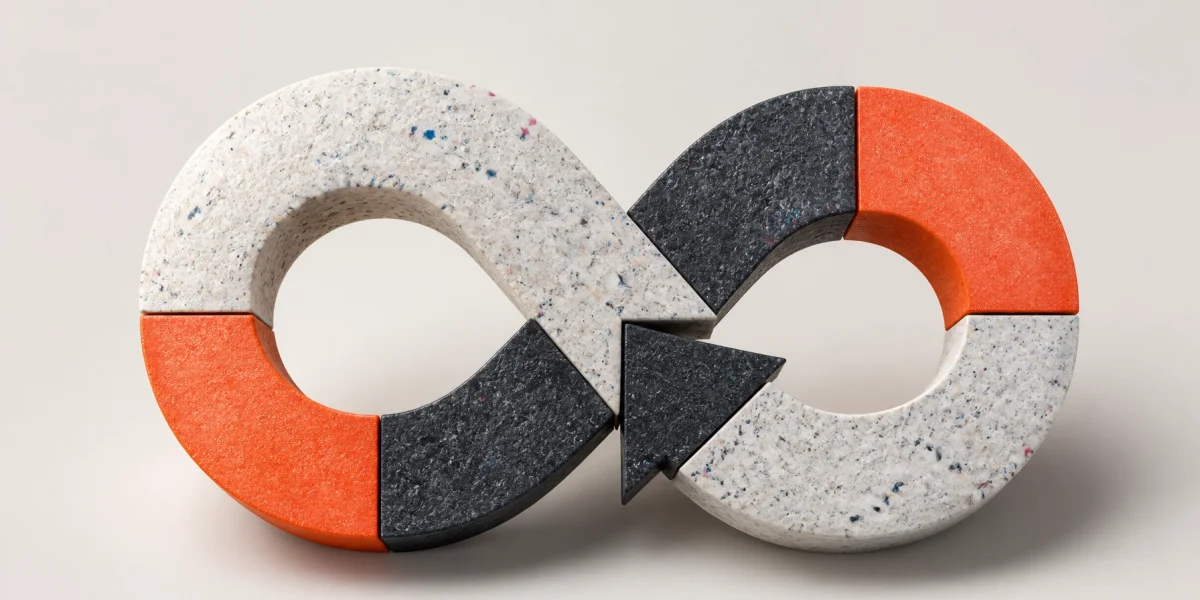
- Remanufacturing: The panels return to our facility, are shredded into "confetti" flakes, and heat-pressed into brand-new sheets.
This isn't "downcycling" (where a high-quality product becomes a low-quality one). This is horizontal recycling, where a high-quality panel becomes a brand-new high-quality panel, over and over again.

Our 'waste-to-wealth' process ensures your building materials remain a perpetual resource.
How to Implement Circular Procurement Today
If you’re ready to move toward a stewardship-based model, you don't need to overhaul your entire supply chain overnight. Start with these three steps:
1. Audit Your Current Waste Stream
Look at your current skip bins. What percentage of that waste is timber, laminate, or virgin plastic? These are the primary candidates for replacement with 100% recycled plastic panels.
2. Update Your Contractual Specifications
When writing tenders, include a clause that requires a documented End-of-Life (EoL) pathway. Ask your suppliers: "Will you take this back for free in ten years?" If the answer is no, the material isn't truly circular.
3. Demand Local Traceability
Sending plastic offshore to be "recycled" is a carbon-intensive process that lacks transparency. Ensure your stewardship program happens on Australian soil. At Resourceful Living, we process up to 1 tonne of plastic per day right here in Australia, providing full traceability for your Green Star or NABERS audits.

Circular construction materials don't just work behind the scenes; they create beautiful, high-performance end products.
The Verdict: Stewardship is the Future of the Australian Build
The transition to circular construction 2026 is more than just a regulatory hurdle: it’s an opportunity to build better, smarter, and more profitably.
By partnering with a manufacturer that takes responsibility for their products, you are protecting your business against rising waste costs, simplifying your compliance, and helping to build a truly circular Australian economy.
Is your next project ready for the loop?
If you’re looking to de-risk your assets and stop paying to throw away valuable resources, contact the Resourceful Living team today to discuss our ESG Partner Program and how we can integrate 100% recycled Australian materials into your next build.