
The Australian construction landscape is shifting beneath our feet. For decades, Formply has been the default choice for concrete formwork: a reliable, if somewhat disposable, staple of the industry. But as we move into 2026, the convergence of stricter environmental regulations, the updated AS 3610.2:2023 standards, and a national push for circular construction is making the "business as usual" approach to timber formwork a significant financial and regulatory risk.
If you’re still relying on single-use or limited-reuse plywood, you aren’t just creating waste; you’re likely falling behind on the performance metrics required for modern Australian tenders.
The Regulatory Shift: Understanding AS 3610.2:2023
The release of AS 3610.2:2023 (Formwork for concrete – Design and construction) has clarified a critical point for the industry: the standard is material-agnostic. It doesn't care if your formwork is made of timber, steel, or plastic: it cares about performance.
Specifically, the new standards focus on:
- Structural Integrity: Maintaining strength and stiffness under high-pressure concrete pours.
- Serviceability: Strict limits on deflection and deformation to ensure the final concrete structure meets architectural tolerances.
- Surface Finish: The ability to consistently deliver the specified finish class (Class 1 through 5) without blemish or degradation.
This is where traditional plywood is beginning to struggle. In the harsh, high-moisture environments typical of Australian coastal projects, timber swells, warps, and delaminates. Recycled plastic vs timber comparison data shows that while timber is predictable when new, its performance degrades rapidly after just one or two uses, making it difficult to maintain AS 3610 compliance over a long project.
Why Timber is Failing the Sustainability Test
In a world of mandatory embodied carbon reporting, the "buy-use-landfill" cycle of timber formwork is a liability. While timber is often touted as "natural," the reality of Formply is complex. It’s a composite material glued with resins and faced with plastic films, making it notoriously difficult to recycle.

Most timber formwork in Australia ends up in a skip bin after 3 to 5 uses. This high turnover doesn't just inflate your waste management costs; it destroys your Green Star and NABERS ratings. When you factor in the labor required to constantly strip, clean, and replace damaged sheets, the ROI of recycled plastic becomes impossible to ignore.
The Recycled Plastic Solution: Performance Meets Circularity
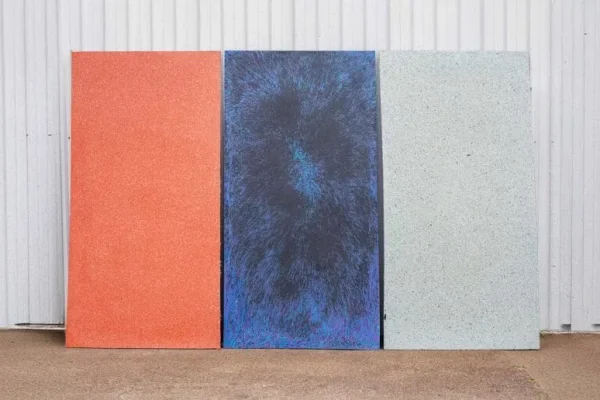
At Resourceful Living, we’ve engineered our 100% recycled plastic panels to exceed the performance requirements of the modern job site. Unlike plywood, our panels are completely impervious to moisture. They don't rot, they don't swell, and they don't harbour mould.
Key Technical Advantages:
- Reusability: While timber might give you 5 uses, our recycled plastic panels can easily achieve 10x to 50x the reuse rate with proper care.
- Weight & Handling: Our panels are lighter than traditional Formply, reducing manual handling risks and improving site efficiency.
- Consistency: Because the material is solid recycled plastic: with no veneers to peel: the surface finish remains consistent from the first pour to the fiftieth.
"The shift to recycled plastic isn't just about being 'green.' It's about engineering a more predictable, durable, and cost-effective outcome for the build. We're seeing builders save thousands in replacement costs alone." : Jess Hodge, Owner, Resourceful Living

Recycled Plastic vs Timber: The 2026 Comparison Table
| Feature | Traditional Timber Formply | Resourceful Living Recycled Plastic |
|---|---|---|
| Moisture Resistance | Poor (Swells/Warps) | 100% Waterproof |
| Average Reuse Count | 2 – 5 Pours | 50+ Pours |
| Surface Finish Consistency | Degrades quickly | Stays smooth & constant |
| End-of-Life Pathway | Usually Landfill | 100% Recyclable (Take-back) |
| Embodied Carbon | High (due to high replacement) | Low (Durable & Circular) |
| AS 3610 Compliance | Variable (as it ages) | High (consistent stiffness) |
Navigating the "Circular" Requirement in Government Tenders
If you are bidding for government-funded infrastructure or large-scale commercial developments in 2026, you’ve likely noticed a new section in the tender documents: Circular Procurement.
The Australian government is now prioritising materials that can be traced back to local waste streams. Using Resourceful Living panels allows you to tick every box:
- 100% Australian Made: Supporting local manufacturing.
- 100% Recycled Content: Diverting soft and hard plastics from local landfills.
- End-of-Life Take-Back: We offer a free program to collect our panels at the end of their multi-year life, shredding them back into new products.
This level of traceability is the "gold standard" for meeting 2026 recycled content targets and securing high-value contracts.

How to Specify Recycled Plastic for Your Next Project
Transitioning from plywood to recycled plastic doesn't require a total overhaul of your site practices, but it does require a different mindset regarding upfront vs. lifecycle costs.
- Check the Thickness: We offer sheets from 3mm up to 40mm. For heavy-duty formwork, our thicker panels provide the stiffness required by AS 3610.2 without needing excessive bracing. See our Specifiers' Technical Guide for more.
- Plan for Reuse: To maximise your ROI, treat the panels as a long-term asset rather than a consumable. Because they don't rot, you can store them outdoors between projects without concern.
- Leverage the Moisture Resistance: For wet-area fit-outs or ground-contact formwork where moisture is a constant threat, recycled plastic is the only choice that meets NCC 2025 moisture specifications.
Closing the Loop on Construction Waste
The construction industry is one of Australia's largest waste generators. By moving beyond plywood and embracing sustainable building materials in Australia, we aren't just complying with new standards: we're future-proofing our businesses.

At Resourceful Living, we believe that every formwork panel pulled from a slab should represent a step toward a zero-waste future. If you're ready to stop throwing money into the skip bin and start building with materials that last, it's time to make the switch.
Ready to de-risk your next tender? Contact us today to request a sample or a technical data sheet for your engineering team.