
In the current landscape of Australian construction, accessibility and sustainability are no longer optional "add-ons", they are regulatory mandates. As we move through 2026, the intersection of the AS 1428.1:2021 (Design for Access and Mobility) and the push for circular procurement has created a significant shift in how we specify materials for public and private infrastructure.
Traditional materials like timber and concrete are increasingly being challenged by recycled plastic sheets in Australia. These panels offer a high-performance, low-carbon alternative that simplifies compliance while drastically reducing long-term maintenance costs.
For architects, builders, and council procurement officers, understanding how to leverage sustainable building materials in Australia to meet strict accessibility codes is the key to winning tenders and delivering future-proof assets.
Decoding AS 1428.1:2021 for Recycled Materials
The 2021 update to AS 1428.1 introduced several critical refinements to the design of continuous accessible paths of travel. Whether you're designing a coastal boardwalk, a park ramp, or a building entrance, the material you choose must perform under pressure.
- Gradient Precision: Accessible ramps exceeding 1900mm must maintain a maximum gradient of 1:14. Recycled plastic panels, such as our 2400mm x 1200mm workhorse sheets, provide a dimensionally stable surface that won't warp or "cup" over time, ensuring that the 1:14 gradient remains constant.
- Gap and Threshold Tolerances: AS 1428.1:2021 (specifically Figure 7B) outlines strict tolerances for gaps in boardwalk decking to prevent wheelchair casters or cane tips from catching. Unlike timber, which shrinks and expands with moisture, 100% recycled HDPE/PP is hydrophobic, maintaining consistent spacing year-round.
- Landing Requirements: Landings are required at intervals of no more than 9m for 1:14 ramps. Using modular recycled plastic systems allows for faster installation of these critical transition points compared to poured-in-place concrete.
"The shift toward performance-based standards allows us to stop talking about 'waste' and start talking about 'resource performance.' It's the single biggest win for sustainable engineering in a decade." , Jess Hodge, CEO of Resourceful Living.
Slip Resistance: Beyond the "Non-Slip" Buzzword
When specifying for accessible paths, generic claims of "non-slip" are legally insufficient. You need data-backed classifications according to AS 4586.
The P4 and P5 Standard
For external ramps and boardwalks likely to be wet, a P4 or P5 rating is typically required. Resourceful Living’s textured recycled plastic sheets in Australia are engineered with a matte, high-grip finish designed specifically for these high-risk environments.
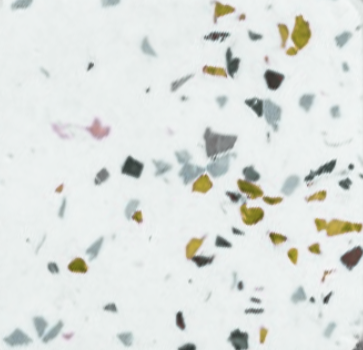
Unlike timber, which becomes dangerously slippery as algae grows in its pores, or concrete, which can polish and lose its "bite," textured recycled plastic maintains its slip resistance throughout its lifecycle. This makes it an ideal choice for coastal builders ditching timber for RHDPE.
NCC 2022/2025 and Liveable Housing
The National Construction Code (NCC) 2022 introduced mandatory Liveable Housing Design provisions, requiring step-free access to many Class 1a dwellings. These requirements are becoming even more stringent under the upcoming NCC 2025 updates regarding site moisture management.
Threshold Ramps and Step-Free Entry
Achieving a step-free entrance often requires custom threshold ramps. Traditional rubber ramps can degrade under UV exposure, and timber eventually rots at the ground interface.
Using sustainable building materials in Australia like our 100% recycled plastic allows for:
- Custom Thicknesses: Available from 3mm to 40mm, allowing for precision matching to door sill heights.
- UV Stability: Our panels are formulated to withstand the harsh Australian sun without becoming brittle.
- Termite and Rot Proof: Essential for ground-contact applications in residential and public infrastructure.
The ESG and Tendering Advantage
Specifying recycled plastic isn't just about meeting a building code; it's about meeting your Social Procurement and ESG targets. In 2026, winning government tenders requires transparent reporting on embodied carbon and local content.
- 100% Australian Traceability: We use only local plastic waste, meaning every sheet you install diverts approximately 30kg of plastic from Australian landfills.
- Low Embodied Carbon: By manufacturing locally in NSW, we eliminate the high carbon footprint associated with shipping virgin materials or imported "recycled" composites.
- Take-Back Program: Resourceful Living offers a closed-loop guarantee. At the end of the infrastructure’s life, we take the panels back for free and recycle them into new products, helping you achieve a Circular Construction score of 100%.

Comparison: Recycled Plastic vs. Traditional Materials
| Feature | Recycled Plastic (Resourceful Living) | Treated Timber | Concrete |
|---|---|---|---|
| AS 1428.1 Compliance | Easy (Stable, slip-resistant) | Difficult (Splinters, warping) | High (But high carbon) |
| Maintenance | Zero (No oiling or painting) | High (Annual maintenance) | Low (Subject to cracking) |
| Rot/Termite Proof | ✅ Yes | ❌ No | ✅ Yes |
| Embodied Carbon | 📉 Very Low | 📉 Low (but high chemicals) | 📈 High |
| End-of-Life | ♻️ 100% Recyclable | 🚮 Landfill (chemicals) | 🚮 Downcycled/Landfill |
Implementation Guide for Specifiers
If you are integrating recycled plastic into your next accessible infrastructure project, follow this checklist to ensure full compliance:
- Request the AS 4586 Report: Ensure the product has been tested for slip resistance and meets the P4/P5 requirement for its specific location.
- Specify 100% Recycled HDPE/PP: Avoid "blended" composites that use wood flour, as these can still absorb moisture and swell.
- Confirm Local Content: Verify the material is manufactured in Australia to meet the Environmentally Sustainable Procurement (ESP) Policy requirements for government contracts.
- Check Edge Protection: Ensure the ramp design includes the necessary 65mm–75mm kerbs or edge protection as required by AS 1428.1 for heights where wheels could slip off.

The Future of Australian Infrastructure is Circular
The convergence of AS 1428.1 and sustainable material innovation is a massive opportunity for the Australian built environment. By choosing recycled plastic sheets in Australia, you aren't just checking a compliance box: you're building a more inclusive, resilient, and waste-free future.
Ready to de-risk your next project?
Download our technical specifier’s guide or contact us today to request samples for your next tender.