In 2026, the definition of "waste" on an Australian construction site has undergone a radical transformation. Gone are the days when a skip bin was just a convenient way to get rid of "rubbish" and a line item in the prelims. Today, site waste is viewed as either a measurable asset or a significant carbon liability.
If you're still treating site waste as something you simply pay to haul away, you're not just losing material: you’re losing your competitive edge in a market that now demands circularity. At Resourceful Living, we’ve seen this shift firsthand as builders move away from linear "take-make-waste" models toward a closed-loop system where every offcut has a future.
1. Waste is Now a Carbon Liability
Historically, if a project ran 10% over on materials due to breakage or offcuts, it was just the cost of doing business. In 2026, that 10% is a reportable emissions hit.
With the maturation of embodied carbon reporting, every tonne of material that enters your site carries a carbon "price tag." When that material leaves in a skip, you’ve essentially paid for the carbon footprint of a product that provided zero structural or aesthetic value to the build.
- Scope 3 Emissions: Waste is a primary driver of Scope 3 emissions. Clients are now demanding Environmental Product Declarations (EPDs) that account for the entire lifecycle of materials.
- Zero Avoidable Waste: Federal and state policies have shifted. Diverting 90% from landfill is no longer the gold standard; preventing the waste from occurring through better design and circular procurement is the new benchmark.
2. From "Diverted from Landfill" to "Asset Recovery"
In the past, a "Green Star" rating might have been satisfied by showing a receipt from a recycling facility. In 2026, we focus on High-Value Recovery.
Recycling concrete into road base is fine, but it’s a "down-cycling" process. Circular construction prioritizes keeping materials at their highest utility. This is where your site waste starts to look like inventory.
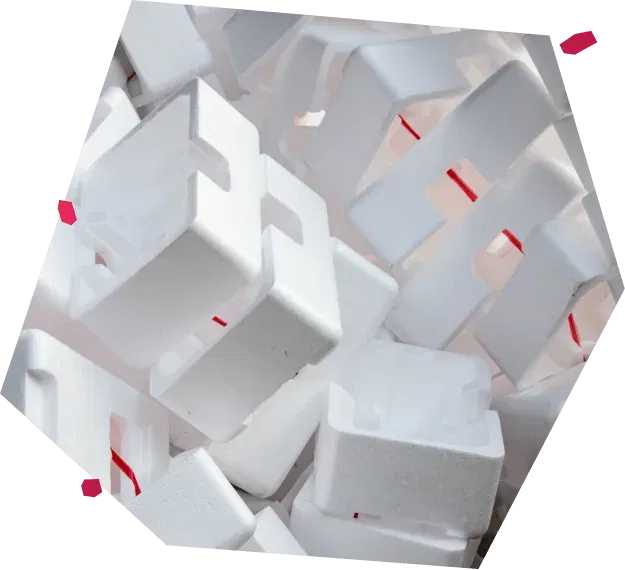
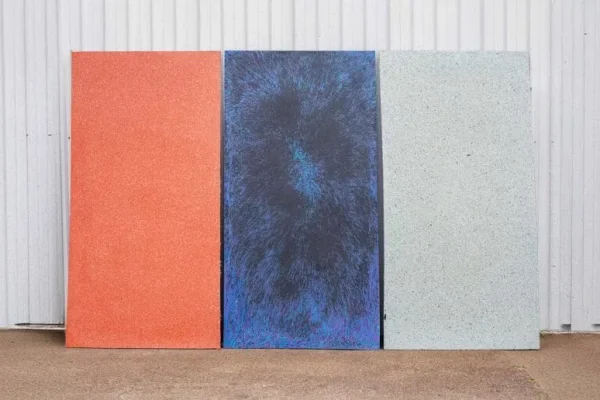
Take Expanded Polystyrene (EPS), for example. It’s bulky, messy, and historically a nightmare for site managers. Under a circular model, this isn't "white foam waste"; it’s the raw feedstock for your next set of recycled plastic sheets. By segregating these streams correctly, you aren't just cleaning the site; you're harvesting resources.
3. The Power of Circular Procurement
The way you value waste begins before you break ground. Circular procurement means choosing suppliers who take responsibility for their products' end-of-life.
When you specify materials for a 2026 project, you should be asking: "What is the buy-back or take-back value of this material in 10, 20, or 50 years?"
"Circular construction isn't just about what you build with; it's about ensuring your site never becomes a graveyard for expensive materials." : Industry Insight, 2026
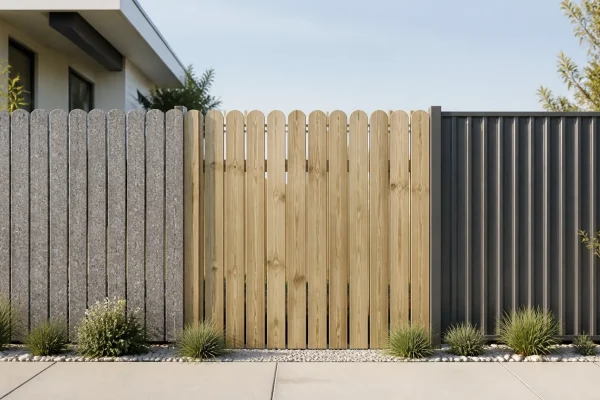
By using traceable Australian recycled plastic, you are installing an asset that is 100% recyclable. Unlike timber, which may be treated with chemicals that make it hazardous waste at end-of-life, or concrete, which requires massive energy to re-process, Recycled HDPE (RHDPE) can be shredded and re-manufactured indefinitely.
4. Digital Twins and Site Waste Data
Data has made waste visible. In 2026, BIM (Building Information Modelling) and digital waste tracking software allow site managers to forecast waste by material type before the first brick is laid.
- Accurate Take-offs: Reducing over-ordering by just 3% can save tens of thousands in procurement and disposal fees.
- Traceability: Clients now want to know exactly where their waste went. Was it actually recycled into a new product, or did it just sit in a sorting facility?
- Audit Readiness: Using tools like a simple waste audit checklist ensures you are ready for the rigorous reporting required in government tenders.

5. Winning the Tender: The Recycled Content Lever
If you're bidding for government work in Australia today, you know that Local Content and Recycled Content are no longer optional "nice-to-haves." They are weighted heavily in the scoring process.
By integrating circularity into your site management, you can prove to stakeholders that you are:
- Reducing the project's total embodied carbon.
- Supporting the local Australian circular economy.
- Complying with Australia’s 2026 plastic bans.
Using a pre-qualified local supplier allows you to bypass supply chain risks and ensure that your waste management strategy directly contributes to your ability to win $1M+ tenders.

6. The Resourceful Living Take-Back Program
The most significant change in how you value site waste comes through partnership. At Resourceful Living, we don't just manufacture panels; we provide a circular solution for your project's plastic waste.
Our Take-Back Program is designed to close the loop for builders and developers. Here’s how it changes the value proposition of your site waste:
- Cost Reduction: Instead of paying high commercial gate fees for plastic waste disposal, our program provides a streamlined route for clean, segregated plastic waste (like EPS and HDPE).
- Guaranteed Circularity: We take your site waste and process it at our facility, turning it back into 100% recycled plastic sheets.
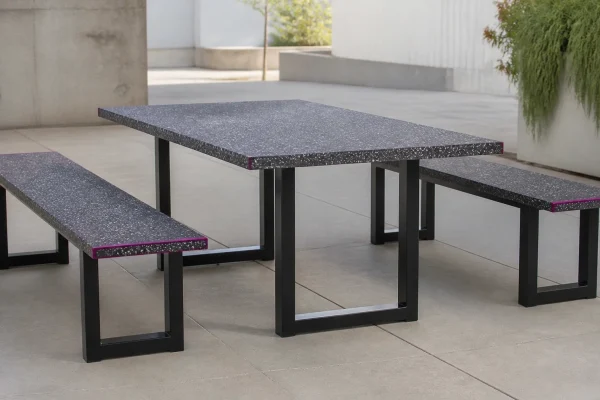
- The Circular Loop: Imagine using recycled plastic hoarding panels on Site A, and when the project is finished, returning them to us to be remanufactured into furniture or permanent fixtures for Site B. That is the definition of valuing waste as an asset.

7. Action Plan: How to Pivot Your Waste Strategy
If you want to transition from a linear waste model to a circular one, follow these five steps:
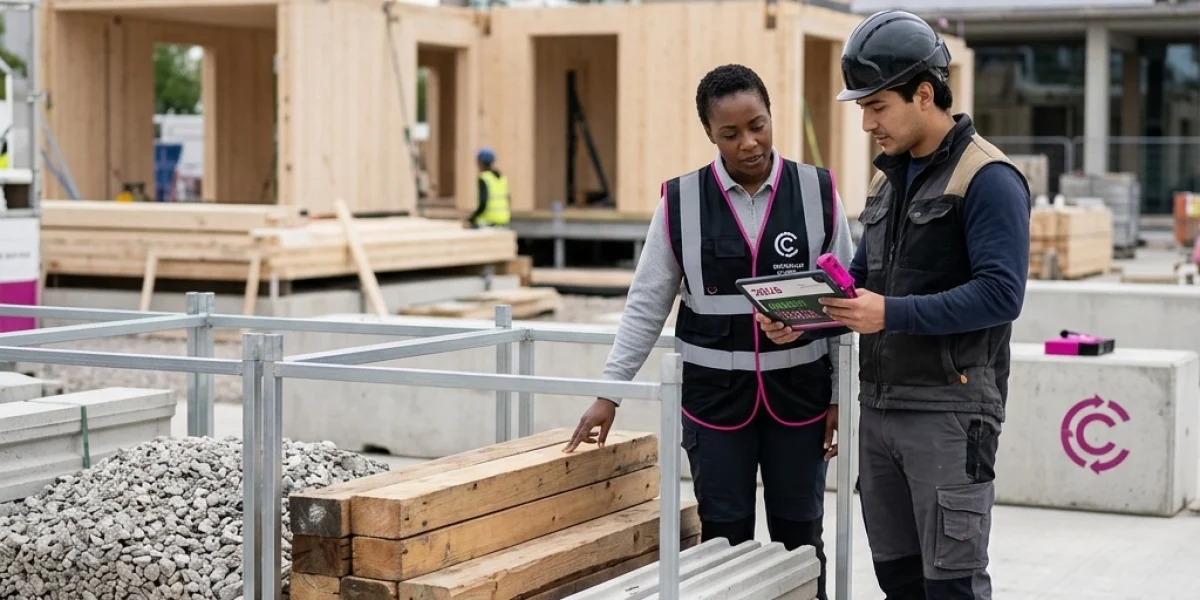
- Conduct a 2026-Ready Waste Audit: Identify your highest-volume waste streams. Are they timber, plastic, or masonry? Start here with our audit guide.
- Segregate at Source: Mixed waste is expensive to process and often ends up in landfill. Segregated waste has value. Provide dedicated bins for EPS, soft plastics, and rigid HDPE.
- Specify "Design for Deconstruction": Choose materials that can be easily removed and reused. Avoid adhesives where mechanical fixings can be used.
- Partner with a Circular Manufacturer: Engage with Resourceful Living early in the design phase to discuss how our closed-loop ESG partner program can automate your reporting and take-back logistics.
- Measure the ROI: Don't just look at the upfront cost. Factor in the reduced disposal fees, the carbon credits, and the increased tender winning percentage. You'll find that timber and traditional materials are often costing you 5x more over a 10-year asset lifecycle.
The Bottom Line
In 2026, the construction industry is no longer rewarded for how much it builds, but for how resourcefully it builds. Site waste is the "leak" in your profit bucket. By valuing that waste: measuring it, segregating it, and returning it to the circular economy: you stop the leak and start building a more resilient, profitable business.
Site waste isn't a problem to be hidden away in a skip; it's the raw material for the future of Australian construction. Are you ready to close the loop?
Ready to transform your site waste into a strategic asset? Contact Resourceful Living today to discuss our take-back programs and how our 100% recycled Australian plastic panels can future-proof your next project.