
Hey there, I’m Jess from Sales here at Resourceful Living. It’s April 2026, and if you’ve spent any time in a site shed or an architecture studio lately, you know the "vibe" around sustainability has shifted. It’s no longer about "doing our bit" for the planet; it’s about compliance, tenders, and hard data.
The days of claiming a building is "green" because it has a few solar panels are over. Today, the focus is squarely on embodied carbon reporting in Australia. Whether you’re a builder trying to win a government contract or an architect aiming for a 6-star Green Star rating, you need to know exactly what’s in your materials before they even reach the site.
This guide is designed to help you navigate the complex landscape of circular construction 2026, explaining the "what," the "why," and: most importantly: the "how" of tracking your project's hidden footprint.
🏗️ What Exactly is Embodied Carbon in 2026?
For those who need a quick refresher, embodied carbon refers to the greenhouse gas emissions generated during the entire lifecycle of a building material. This isn't about the electricity used to run the AC (that’s operational carbon); it’s about the carbon released during:
- A1-A3: Raw material extraction, transport to the factory, and manufacturing.
- A4-A5: Transport to your site and the construction process itself.
- C1-C4: Demolition and disposal at the end of the building's life.
In the context of circular construction 2026, the goal is to keep these numbers as low as possible by choosing materials that are recycled, recyclable, and locally made.

📋 The Regulatory Landscape: Why You Can’t Ignore This Anymore
If you feel like the goalposts have moved recently, you’re right. Several key frameworks have converged to make carbon reporting a non-negotiable part of the Australian construction industry.
1. NABERS Embodied Carbon Rating
Launched back in late 2024, the NABERS Embodied Carbon Rating is now the gold standard. It requires a detailed Bill of Quantities (BoQ) with verified carbon claims for every major material used in a build. If you want to get your building NABERS ready, you need suppliers who provide transparent data.
2. NCC 2025 Transitions
The National Construction Code (NCC) 2025 introduced voluntary standards for embodied carbon. However, as of 2026, many Tier 1 builders and government agencies have made these "voluntary" standards a mandatory requirement for their supply chains. We expect these to become law across the board by 2027.
3. NSW State Environmental Planning Policy (SEPP)
In NSW, the "Design and Place" SEPP has created a ripple effect. Developers are now pushed to provide evidence of carbon reduction during the DA stage. This is why specifying sustainable building materials isn't just a design choice: it's a legal strategy.
📉 Material Selection: The Easiest Way to Drop Your Numbers
The secret to a low-carbon project isn't complex engineering; it's smarter procurement. Traditionally, we’ve relied on carbon-heavy materials like concrete, virgin steel, and imported plywood. But in 2026, the data shows that swapping these for circular alternatives can slash your upfront emissions by up to 23%.

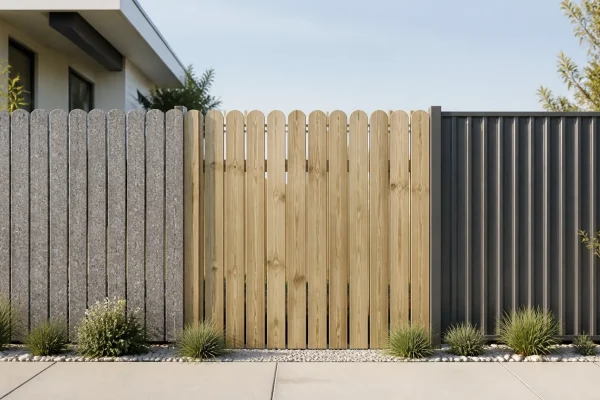
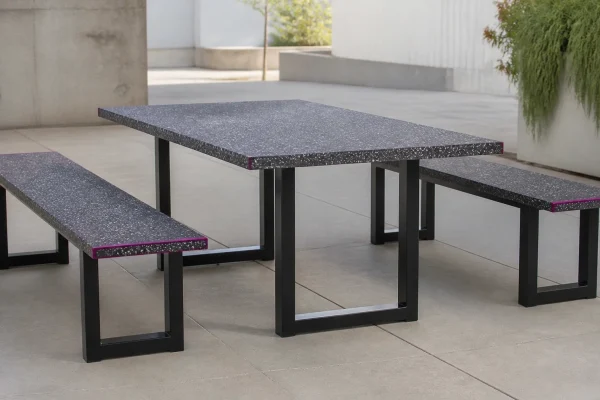
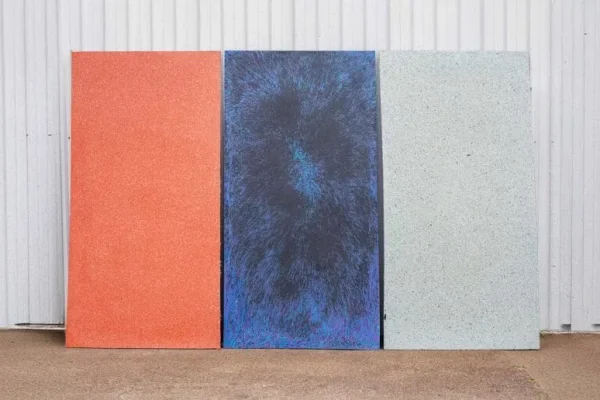
At Resourceful Living, we manufacture 100% recycled plastic panels right here in Australia. Because we use local waste, our A1-A3 emissions are significantly lower than materials that have been shipped across the globe or manufactured using high-heat virgin processes.
Comparison: Resourceful Living Panels vs. Traditional Materials
| Material | Primary Carbon Source | Circularity Score | Reporting Ease |
|---|---|---|---|
| Recycled HDPE (Resourceful Living) | Low-energy shred/press | 100% Recyclable | High (Local Data) |
| Timber/Plywood | Logging, resins, transport | Medium | Medium (FSC/PEFC) |
| Virgin Plastic/Acrylic | Petrochemicals, global shipping | Low | Low (Complex Supply Chain) |
| Concrete | Cement chemical reactions | Very Low | High (EPD Required) |
If you're wondering about the cost-to-benefit ratio, our 2026 price guide breaks down the investment vs. the long-term carbon savings.
🛠️ How to Track and Report Embodied Carbon (A Step-by-Step)
If you’re an architect or project manager tasked with a carbon report, here is the workflow you should follow to stay compliant and win those circular tenders.
Step 1: Define Your Scope
Are you reporting on just the structure, or the fit-out as well? Most circular construction 2026 requirements now include internal fit-outs. This is where materials like our recycled plastic sheets shine, as they replace carbon-intensive laminates and virgin plastics in cabinetry and wall linings.
Step 2: Demand Verified EPDs
An Environmental Product Declaration (EPD) is your best friend. It’s a verified document that tells you exactly how much CO2 was produced to make that product. At Resourceful Living, we pride ourselves on traceability. We know exactly where our waste comes from, which makes your reporting job a lot easier.
Step 3: Use the "If Not, Why Not" Principle
Many NSW and federal tenders now use the "If Not, Why Not" procurement framework. This means if you don't choose a recycled material, you have to justify why a sustainable alternative wasn't used. Choosing our panels satisfies this requirement immediately.
Step 4: Calculate the End-of-Life (Modules C1-C4)
A huge part of embodied carbon reporting in Australia involves what happens when the building is eventually renovated or demolished. Because our panels are 100% recyclable, you can report a "closed-loop" credit, effectively lowering your total carbon score.
💡 Why Local Manufacturing is Your Secret Weapon
In 2026, "made in Australia" is about more than just supporting local jobs: it’s about reducing transport emissions (Module A4).
When you source materials from overseas, the carbon footprint of the shipping alone can blow your budget. By using Australian-made recycled panels, you're cutting out thousands of "food miles" for your building materials.
"The biggest mistake we see in carbon reporting is architects forgetting to account for the transport of 'eco-friendly' materials from Europe. If it’s sustainable but travels 15,000km to get here, is it really low-carbon?"
🚧 Common Pitfalls in Carbon Reporting
I’ve chatted with plenty of builders who’ve hit roadblocks with their reports. Here are three things to watch out for:
- Ghost Data: Using generic international averages for carbon intensity instead of supplier-specific data. This often results in a higher (worse) carbon score than you actually deserve.
- Ignoring the Fit-out: Focusing entirely on the concrete and steel but ignoring the tonnes of plastic and timber used in the interiors. Fit-outs are replaced more often, meaning their "cumulative" embodied carbon is often higher than the structure itself over 50 years.
- Greenwashing Risks: Buying materials labeled "recycled" that only contain 5% recycled content. These won't help you with a NABERS rating. You need high-content materials to make a dent in your report.

✅ Your 2026 Compliance Checklist
To wrap this up, if you want to succeed in the current market, keep this checklist handy for your next project:
- Identify Carbon Targets early: Ensure they are in the project brief from Day 1.
- Specify Local: Prioritise Australian-made materials to simplify transport reporting.
- Gather EPDs early: Don't wait until the build is finished to ask suppliers for their carbon data.
- Consider the ROI: Remember that recycled plastic outlasts plywood 5x in harsh conditions, reducing the need for future carbon-intensive replacements.
- Check for Circularity: Can the material be recycled again? If so, claim those credits!

🚀 Ready to Lower Your Project's Footprint?
At Resourceful Living, we’re not just making plastic panels; we’re helping the Australian building industry transition to a low-carbon future. Whether you need samples for a client presentation or technical data for a NABERS submission, we’ve got you covered.
Embodied carbon reporting in Australia is a challenge, but it’s also an opportunity to build better, more resilient structures. Let’s get to work on your next circular project.
Want to see the materials in action? Check out our manufacturing lifecycle to see how we turn Aussie waste into high-performance construction materials.