If you’re managing a mining site or a large-scale industrial facility in Australia, you’re likely overseeing one of the most inefficient financial loops in modern industry. We call it the "Landfill Double-Dip."
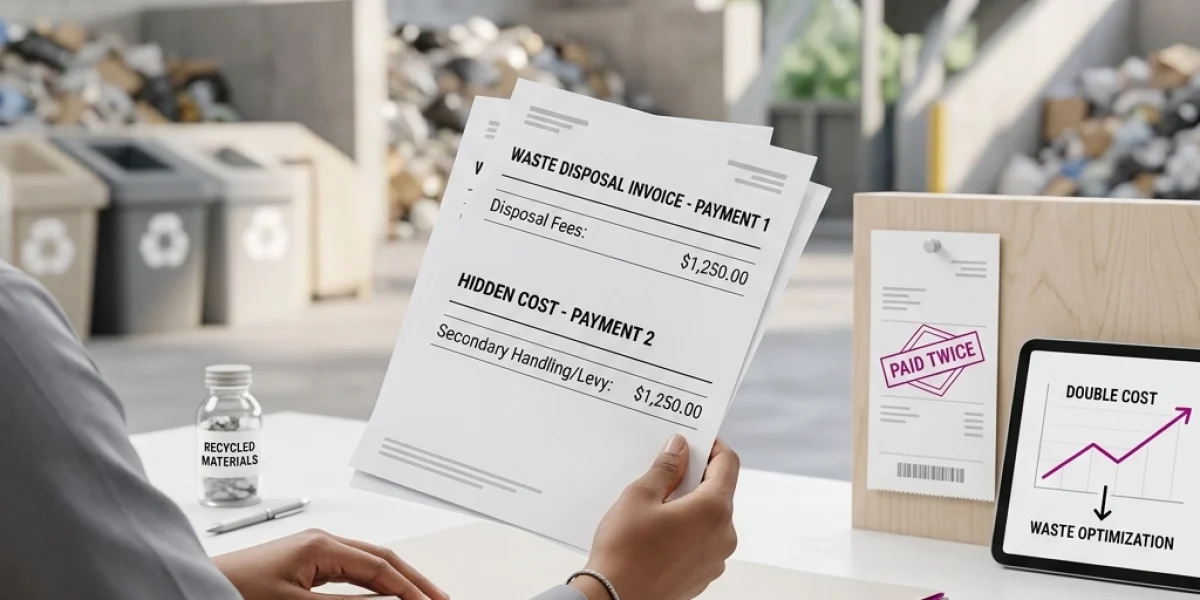
It’s a simple, albeit expensive, cycle: You pay thousands of dollars in logistics and tipping fees to haul plastic waste, packaging, and discarded liners off-site to a landfill. Then, sometimes in the very same week, you pay again to truck in new infrastructure: retaining walls, sleepers, outdoor furniture, and signage: made from virgin materials.
In 2026, with rising fuel costs and the tightening of the Environmentally Sustainable Procurement (ESP) rules, this "double-dip" isn't just an environmental oversight; it’s a direct hit to your OpEx.
The Hidden Cost of "Away"
In remote operations, there is no such thing as "throwing it away." "Away" is a 400-kilometre truck journey.
When you break down the costs of industrial waste management, the landfill levy is often the smallest line item. The real killers are logistics and carbon liabilities.
- Transport Costs: Fuel, driver hours, and vehicle maintenance for heavy-haul waste removal.
- Landfill Levies: State-mandated fees that continue to climb as landfill capacity shrinks across Australia.
- Procurement Premium: Buying new timber or concrete products that require their own expensive transport to site.
By failing to close the loop on-site, you are essentially subsidising a logistics company to move air and plastic, only to buy that same utility back at a premium.
The Comparison: Recycled Plastic vs. Traditional Materials
To stop the double-dip, you need to replace your traditional procurement with materials that can be manufactured from your own waste streams. But for a site manager, the material has to perform. Let’s look at how sustainable building materials in Australia stack up in a harsh industrial environment.
Recycled Plastic vs Timber Comparison
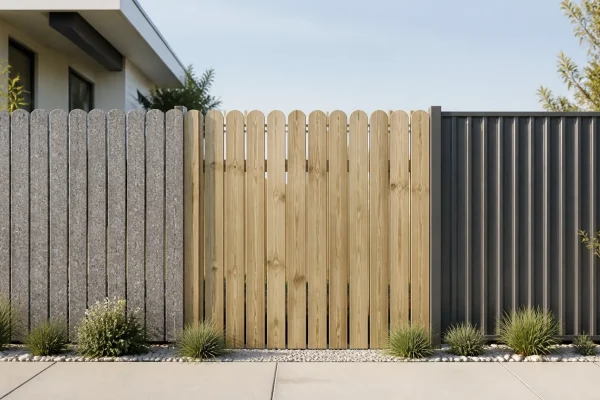
For decades, timber has been the default for sleepers, bollards, and boardwalks. However, in the high-moisture or high-heat environments common to Australian mining, timber is a liability.
- Maintenance: Timber requires staining, treating, and eventual replacement due to rot or termite infestation.
- Longevity: In a head-to-head recycled plastic vs timber comparison, recycled plastic wins on every durability metric. It doesn't crack, splinter, or absorb water.
- Cost: While the upfront cost of a recycled plastic sheet might be higher than low-grade plywood, the Total Cost of Ownership (TCO) is significantly lower because you aren't replacing it every three years.
Recycled Plastic vs Concrete Structural
When it comes to retaining walls and heavy-duty barriers, concrete is the standard. But concrete is heavy, carbon-intensive, and prone to cracking under soil movement.
- Weight: Transporting concrete to a remote site is a logistical nightmare.
- Carbon Footprint: With the new embodied carbon reporting requirements, every tonne of concrete on your site adds to your emissions profile.
- Flexibility: Recycled plastic vs concrete structural comparisons show that for non-load-bearing or modular earth retention, high-density polyethylene (HDPE) panels offer better impact resistance and easier installation without the need for heavy machinery.
How to Stop the Double-Dip: The 3-Step Circular Loop
Closing the loop on an industrial site doesn't happen by accident. It requires a shift from "Waste Management" to "Resource Recovery."
1. On-Site Shredding and Collection
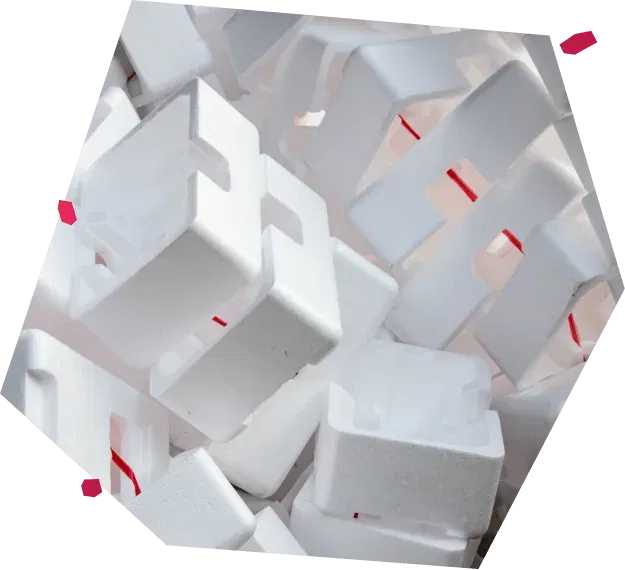
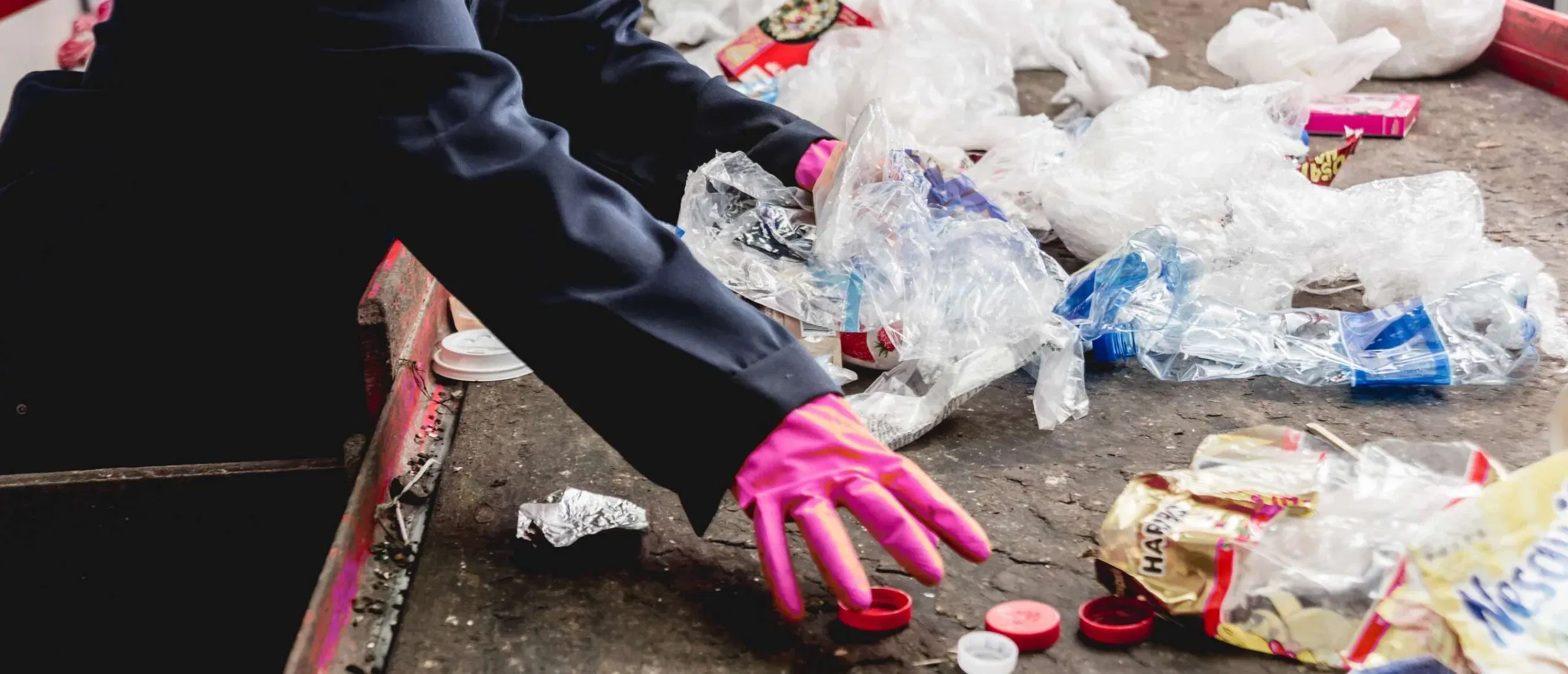
The biggest barrier to recycling is volume. Transporting loose plastic film or bulky expanded polystyrene (EPS) is like paying to transport oxygen. By implementing on-site shredding, you reduce the volume of your waste by up to 90%.
This transformed waste becomes a high-density "feedstock" that is far cheaper to transport: or better yet, can be processed into panels and products directly for your site’s needs.
2. Standardising Your Infrastructure
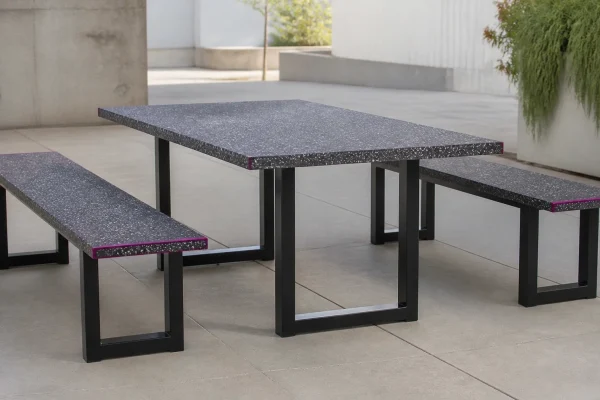
Stop buying bespoke timber furniture and "throwaway" signage. By standardising your site infrastructure to use 100% recycled plastic panels, you create a modular system.
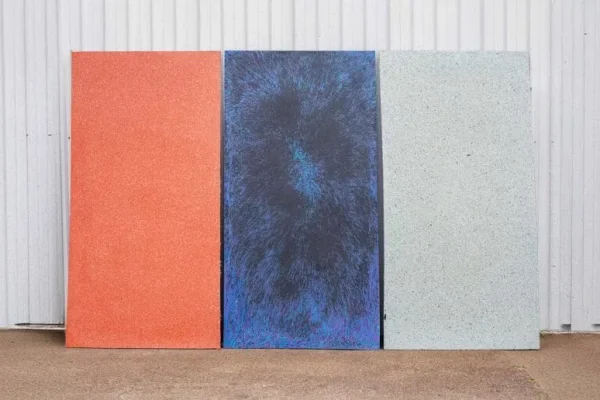
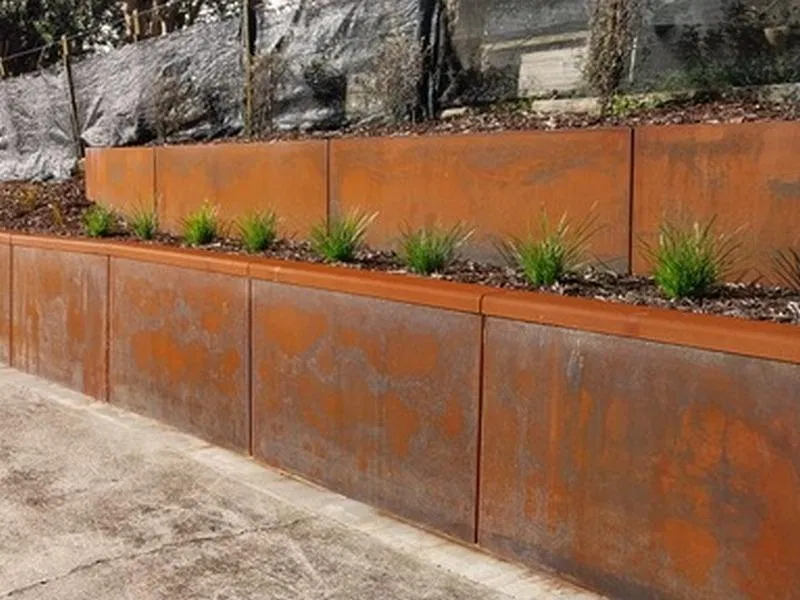
- Retaining Walls: Use 2400mm x 1200mm panels for erosion control.
- Fit-outs: Use recycled boards for cabinetry in site offices and wet areas.
- Ground Protection: Use heavy-duty sheets to protect surfaces from tracked machinery.
3. Implementing a Take-Back Program
The ultimate way to end the landfill double-dip is to ensure that even the products you buy never see a hole in the ground. Resourceful Living operates a circular take-back program. When a piece of furniture or a retaining wall panel finally reaches the end of its multi-decade life, we don't send it to landfill. We take it back, shred it, and turn it into a new panel.
The 2026 Compliance Reality: ESG and Tenders
If the cost savings aren't enough to trigger a change, the compliance landscape will. The Australian government and major Tier-1 contractors have moved toward "Circular Procurement" mandates.
"In 2026, companies that cannot demonstrate a clear path to reducing embodied carbon and diverting waste from landfill will find themselves locked out of major infrastructure tenders."
By using sustainable building materials in Australia, you are effectively "pre-qualifying" your site for future contracts. You aren't just saving on tipping fees; you are building a data-backed case for your company's sustainability performance. Each panel produced by Resourceful Living comes with a data sheet detailing exactly how much plastic was diverted from landfill: data that is gold for your annual ESG report.
Financial Breakdown: A Hypothetical Site Audit
Let’s look at the numbers for a standard mid-sized mining operation:
- Current State: 50 tonnes of plastic waste sent to landfill annually. Cost: $15,000 (Levies) + $35,000 (Logistics) = $50,000/year.
- Infrastructure Spend: $40,000 per year on timber sleepers, seating, and signage that requires replacement every 5 years.
- The Resourceful Living Loop: By processing that 50 tonnes into on-site utility products, the landfill cost drops to near zero. The procurement cost for new timber disappears.
Total potential saving: $90,000+ per year, excluding the massive reduction in carbon credits you would otherwise need to purchase to offset the landfill emissions.
Why Australian Made Matters for Industry
In a global supply chain that is increasingly fragile, sourcing your materials locally is a matter of operational security. Resourceful Living is Australian Made and Owned, meaning we aren't waiting on a shipping container from overseas to fix your site’s infrastructure needs.
We use 100% Australian plastic waste. When you work with us, you’re not just hitting a "green" target; you’re supporting a local supply chain that turns Australian problems (waste) into Australian solutions (durable building materials).
Taking the First Step
The Landfill Double-Dip is a habit, not a necessity. To break it, you need a clear picture of what you’re throwing away and what you’re buying in.
Most site managers are surprised to find that up to 70% of their "waste" is actually high-value HDPE or LDPE plastic that we can transform into structural-grade panels.
Are you ready to stop paying twice?
[Book a Waste Audit with Resourceful Living today]
We’ll help you quantify your waste streams, calculate your potential logistics savings, and show you exactly how to transition from a linear "dump" model to a circular "resource" model.
Stop the dip. Start the loop.
Related Reading: