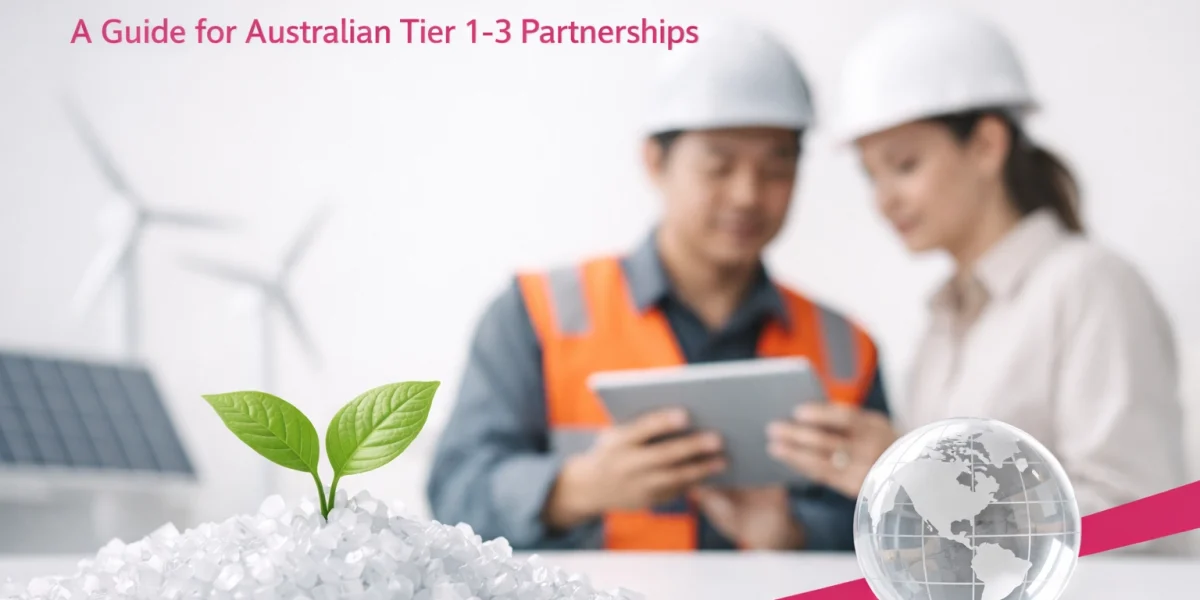
For Australian Tier 1, 2, and 3 construction and corporate firms, "sustainability" is no longer a buzzword you can slap on a brochure and call it a day. It’s a contractual requirement. Whether you’re tendering for a massive government infrastructure project or fitting out a high-end corporate headquarters, your Environmental, Social, and Governance (ESG) targets are under the microscope.
Investors, stakeholders, and the government are moving beyond pinky-promises. They want data. They want traceability. And most importantly, they want to see that you’re moving away from the "take-make-waste" linear economy and embracing a circular one.
At Resourceful Living, we help our partners hit these targets by turning plastic waste into high-performance materials. But this isn't about the usual suspects like decking or cladding. This is about a deeper integration of recycled materials into your supply chain.
The ESG Landscape: Why the Bar is Rising
The Australian regulatory environment is shifting fast. The National Packaging Targets, managed by APCO, are setting the pace: 100% of packaging must be reusable, recyclable, or compostable by 2025. While that might seem like a "packaging" problem, it’s actually a supply chain opportunity for the construction and corporate sectors.
When a Tier 1 contractor partners with a local manufacturer to use recycled materials, they aren't just buying a product; they are participating in an Extended Producer Responsibility (EPR) mindset. This creates a closed loop that looks excellent on an ESG report and provides tangible proof of carbon reduction.
"If all landfilled packaging in Australia had been recycled in 2020-21, it would have reduced national greenhouse gas emissions by approximately 2.2 million tonnes. That’s the equivalent of taking 740,000 cars off the road for a year." : Australian Government Data.

Traceability: The "Holy Grail" of ESG Reporting
One of the biggest headaches for ESG managers in Tier 2 and 3 firms is greenwashing risk. If you claim a product is "recycled," but you can’t prove where the raw material came from or how it was processed, your ESG report is built on sand.
This is where Resourceful Living changes the game. We emphasize the complete traceability of our plastic source.
- Local Sourcing: We don't buy mystery "recycled" pellets from overseas. We process Australian plastic waste right here.
- Verification: Our partners know exactly which waste stream their panels came from: whether it’s post-industrial waste or post-consumer plastics.
- Chain of Custody: This level of transparency allows you to report on your circular procurement with 100% confidence.
By choosing locally processed materials over international imports, you also reduce the "Scope 3" emissions associated with long-distance shipping. You can learn more about how this fits into a broader strategy in our guide on what is a closed-loop ESG partner program.
Circularity Without the Clichés (No Decking, No Cladding)
Let’s be honest: when most people hear "recycled plastic," they think of composite decking or outdoor cladding. At Resourceful Living, we’ve taken a different path. We specialize in 100% recycled plastic panels designed for functional, high-end applications that actually solve problems for Tier 1-3 partners.
Where Our Materials Fit Your Projects:
- Corporate Fit-outs: Custom joinery, internal partitions, and office furniture that tell a sustainability story.
- Commercial Signage: Durable, weather-resistant boards that replace virgin plastics.
- Mining & Industrial: We produce recycled plastic products for mining sites, including wheel stops and rehabilitation products.
- Workstations & Furniture: Creating functional office environments that meet strict "Green Star" ratings.
By avoiding "typical" building materials like cladding or flooring, we focus on the high-value circular economy. We take waste that would otherwise end up in a landfill and turn it into a durable asset that can be recycled again at the end of its life.

How Partnering with Us Hits Your Targets
When a Tier 1 construction firm integrates Resourceful Living panels into their procurement list, they are checking several ESG boxes at once:
1. Landfill Diversion
Every tonne of recycled plastic used is a tonne diverted from Australian landfills. This is a primary metric for ESG reporting. We even help companies understand their own waste better through tools like our waste audit template.
2. Carbon Footprint Reduction
Recycling plastic uses significantly less energy than producing virgin plastic from oil. Furthermore, by using Australian-made products, you eliminate the massive carbon footprint of international logistics.
3. Circular Procurement
Moving from "procurement" to "circular procurement" is a massive win for Tier 2 and 3 companies looking to differentiate themselves in tenders. It shows you aren't just looking for the cheapest option, but the most sustainable one. This approach can also reduce landfill costs over the long term.
The Financial Logic: ESG vs. The Bottom Line
A common misconception is that "green" materials always cost more. However, when you factor in the Life Cycle Assessment (LCA), the math changes.
| Feature | Virgin Material (Timber/Steel) | Resourceful Living Recycled Plastic |
|---|---|---|
| Maintenance | High (painting/sealing) | Zero (UV stable, rot-proof) |
| Longevity | Medium (subject to environmental decay) | High (Lasts decades) |
| ESG Impact | Negative/Neutral | Highly Positive |
| End of Life | Often Landfill | 100% Recyclable |
We’ve done a deep dive into the recycled plastic vs. timber vs. steel cost and lifespan to help your procurement team make the right call.

A Practical Guide for Tier 1-3 Integration
If you’re a Project Manager or ESG Officer, here’s how you can start integrating these materials into your next project:
- Identify High-Impact Areas: Look at fit-outs, temporary site infrastructure, or specialized industrial needs. Avoid the "decking" trap: think bigger.
- Request Traceability Documentation: Don't just take a supplier's word for it. Ask for the "source to shelf" data.
- Calculate the Carbon Save: Use the data provided by your manufacturer to quantify the carbon emissions avoided by choosing recycled over virgin materials.
- Incorporate into Tenders: Use your partnership with a circular manufacturer as a USP (Unique Selling Proposition) in your next government or corporate bid.
Supporting the Australian Circular Economy
The Recycling Modernization Fund (a $250 million government investment) is currently accelerating the demand for recycled plastics across the country. By partnering with Resourceful Living, you are aligning your business with this national movement.
Instead of exporting our waste and importing our products, we are building a sovereign capability to process, manufacture, and reuse our own resources. This is the definition of a resilient supply chain.

Final Thoughts: The Future is Circular
The transition to a circular economy isn't something that will happen "someday." It’s happening right now in the boardrooms of Tier 1 construction firms and the offices of corporate ESG directors.
Partnering with Resourceful Living gives you the material edge you need to meet your recycled plastic circular economy goals without sacrificing quality or durability. Whether it's for a high-traffic commercial fit-out or a rugged mining application, our panels provide the traceable, sustainable, and high-performance solution the Australian market demands.
Ready to see how we can help your firm hit its next ESG milestone? Let’s talk about your next project.
Explore our product sitemap to see our full range of circular material solutions.