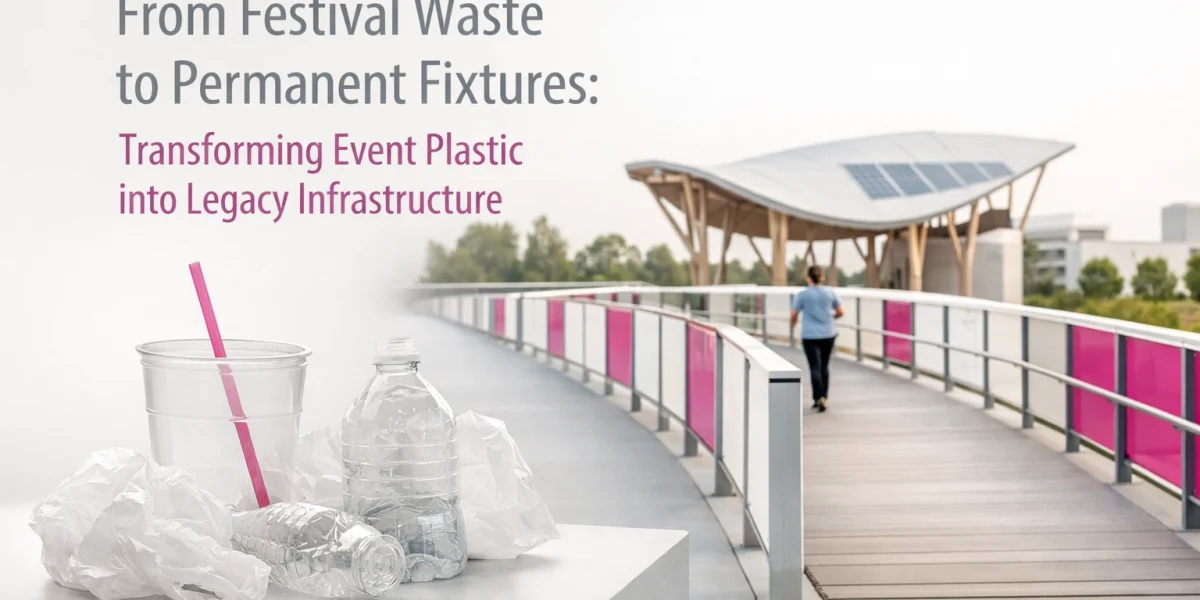
Every major Australian music festival or sporting event faces a predictable, sobering reality the morning after the gates close: the "event hangover." Beyond the literal cleanup, organizers are left with a mountain of single-use plastic: bottles, lids, food packaging, and discarded site materials.
For years, the industry standard has been to bag it up, ship it off, and hope for the best in the traditional recycling stream. But we know the truth. 90% of single-use plastic items used at festivals end up as litter or in landfill due to contamination and the sheer volume of material.
At Resourceful Living, we’re shifting the narrative. We don’t see festival waste as a disposal problem; we see it as raw material for Legacy Infrastructure. By capturing this Australian plastic and processing it into high-performance, 100% recycled plastic panels, events can transform their environmental footprint into permanent, functional assets like site furniture, storage solutions, and signage.
The Scale of the "Resource Opportunity"
A single multi-day music festival in Australia can generate over 100 tons of waste. While composting and cardboard recycling have made leaps forward, plastic remains the most difficult fraction to manage.
The traditional "linear" model looks like this:
- Procure: Buy thousands of plastic items.
- Consume: Patrons use them for minutes.
- Discard: Items are co-mingled and contaminated.
- Dispose: High transport and landfill costs.
The circular economy model, however, changes the endgame. Instead of paying to get rid of resources, event organizers can use that same material to build the infrastructure for next year’s event. This isn’t just about being "green": it’s about circular procurement and long-term cost-efficiency.
"The most sustainable way to manage event waste isn't to find a better bin; it's to ensure the material never leaves the value chain." – Jess Hodge, CEO, Resourceful Living.
What is Legacy Infrastructure?
When we talk about legacy infrastructure, we are moving away from temporary, flimsy solutions. We’re talking about heavy-duty, weather-resistant fixtures built from the very waste the event produced.
Because our panels are made from 100% recycled Australian plastic, they are incredibly durable, UV-stabilized, and require zero maintenance compared to timber or steel.
Key Applications for Event Legacy Projects:
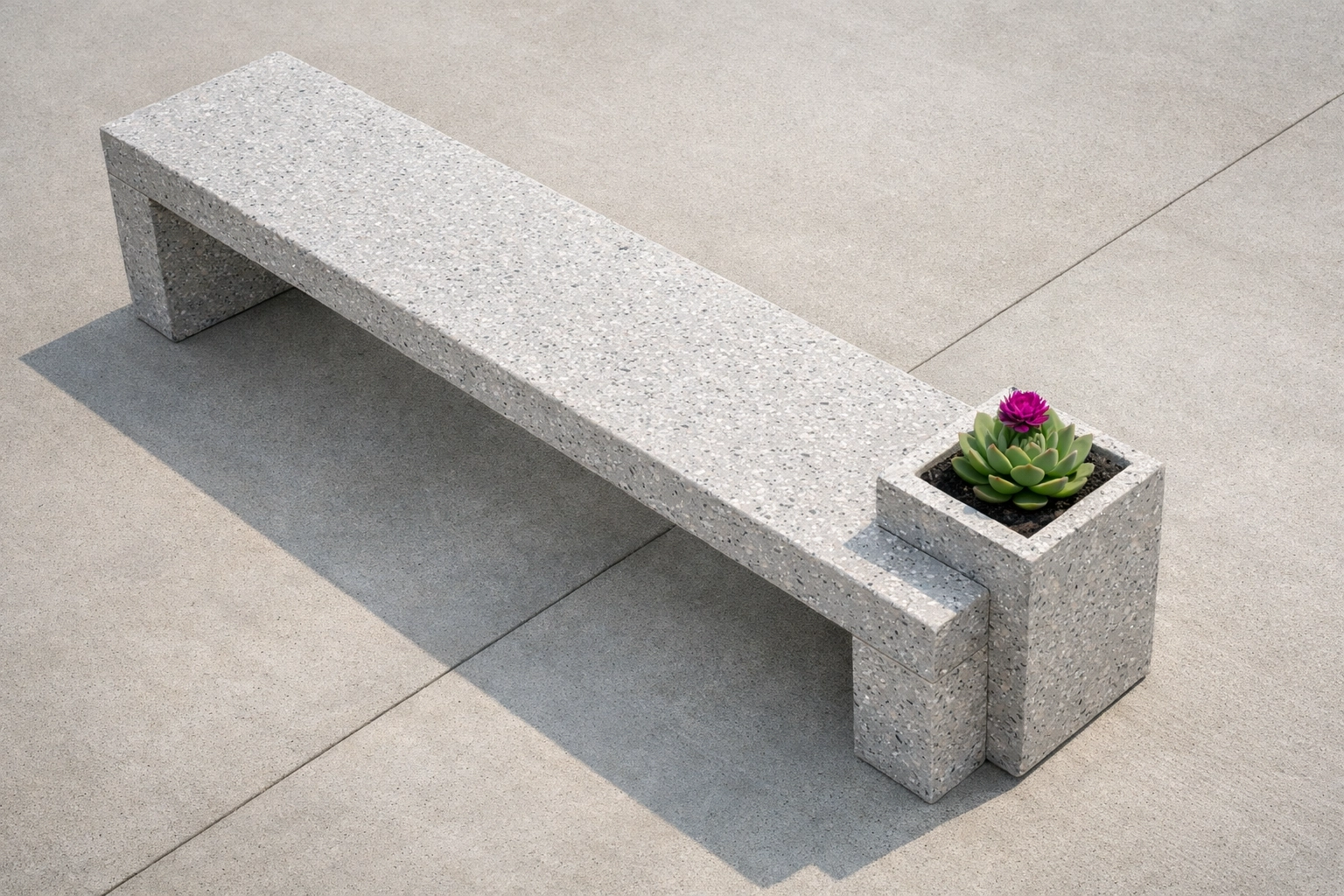
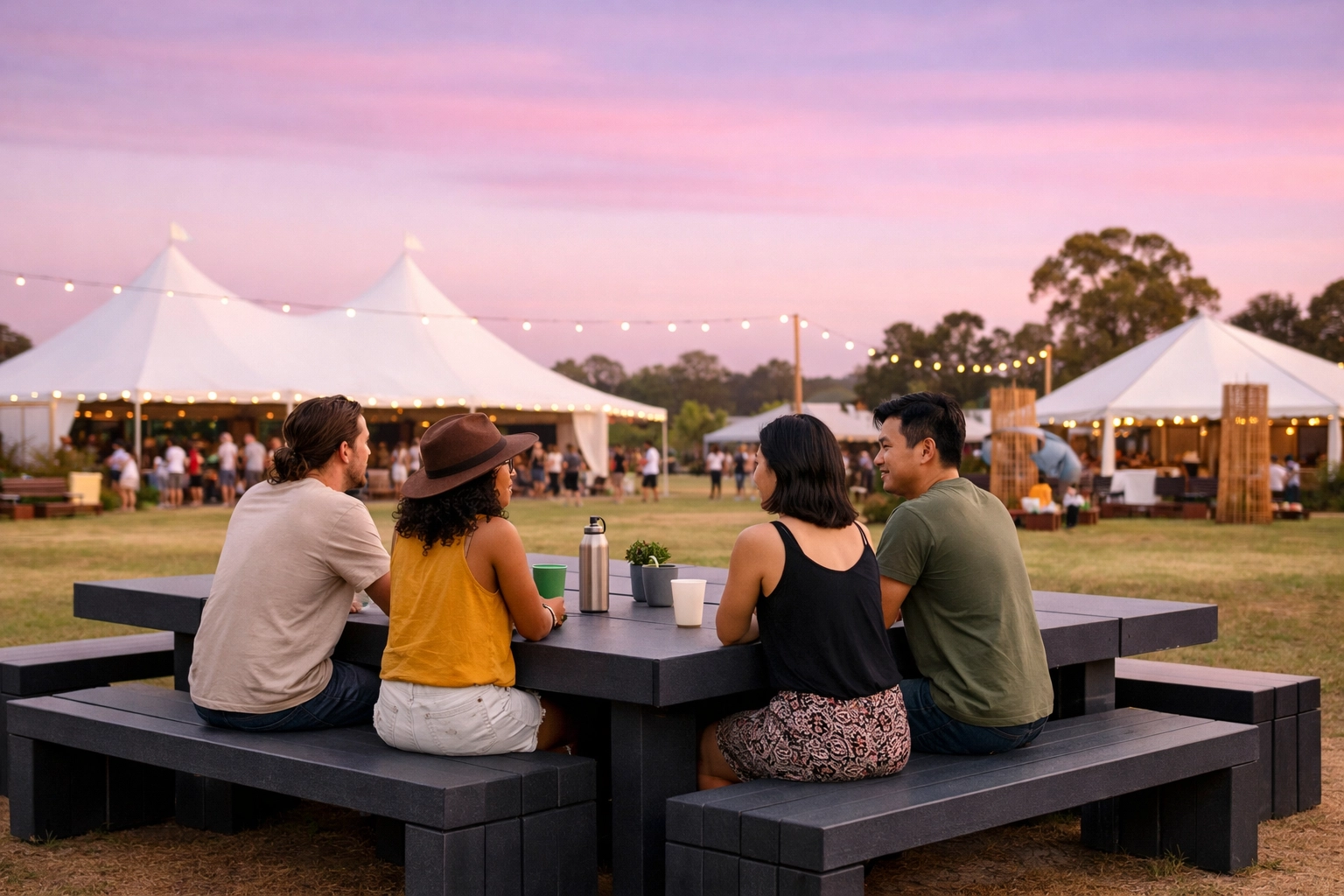
- Outdoor Furniture: Picnic tables, benches, and communal seating areas for "chill-out" zones.
- Storage Solutions: Weatherproof lockers for staff or patrons and heavy-duty equipment crates.
- Signage & Wayfinding: Permanent maps, stage signs, and directional pillars that won't rot or fade.
- Site Amenities: Planter boxes for site beautification and waste enclosures that actually look professional.
- Bollards & Barriers: Sturdy crowd control elements that can be branded with the event's colors.
Why Australian Plastic Matters
A critical part of our mission at Resourceful Living is keeping the loop local. Using Australian plastic reduces the carbon footprint associated with international shipping and supports the local manufacturing industry.
When a festival in New South Wales or Victoria collects its HDPE (High-Density Polyethylene) and LDPE (Low-Density Polyethylene), and we turn it into panels in our facility, we are creating a closed-loop system. This provides a transparent, trackable story for your ESG (Environmental, Social, and Governance) reporting.
You can learn more about how this fits into a broader strategy on our page regarding what is a closed-loop ESG partner program.
The Technical Edge: Recycled Plastic vs. Timber vs. Steel
In high-traffic event environments, durability is non-negotiable. Traditional materials often fail under the pressure of weather and heavy use.
| Feature | Recycled Plastic Panels | Timber | Steel |
|---|---|---|---|
| Moisture Resistance | 100% Waterproof | Absorbs water / Rots | Corrodes / Rusts |
| Maintenance | Zero (Wipe clean) | Needs oiling/staining | Needs painting |
| Longevity | 50+ Years | 5-10 Years | 10-15 Years |
| Vandalism | Graffiti easily removed | Soaks into grain | Hard to clean |
| Carbon Footprint | Negative (Diverts waste) | High (Harvesting) | Very High (Smelting) |
For a deeper dive into the numbers, check out our comparison of recycled plastic vs timber vs steel cost and lifespan.
Step-by-Step: How to Build an Event Legacy
Transforming waste into infrastructure doesn't happen by accident. It requires a tactical approach to waste management and procurement.
1. Conduct a Waste Audit
You can't manage what you don't measure. Before your next event, run a waste audit to identify the types of plastic coming through your gates. We’ve developed a simple waste audit template to help you get started.
2. Streamline Collection
The "Eco-Brick" initiatives seen at overseas festivals like Boom Festival prove that when you give patrons a clear way to contribute to a "building project," they engage. Create dedicated collection points for specific plastics (like HDPE milk bottles or bottle caps) and explain that this material is being saved to build next year's seating.
3. Manufacture Custom Panels
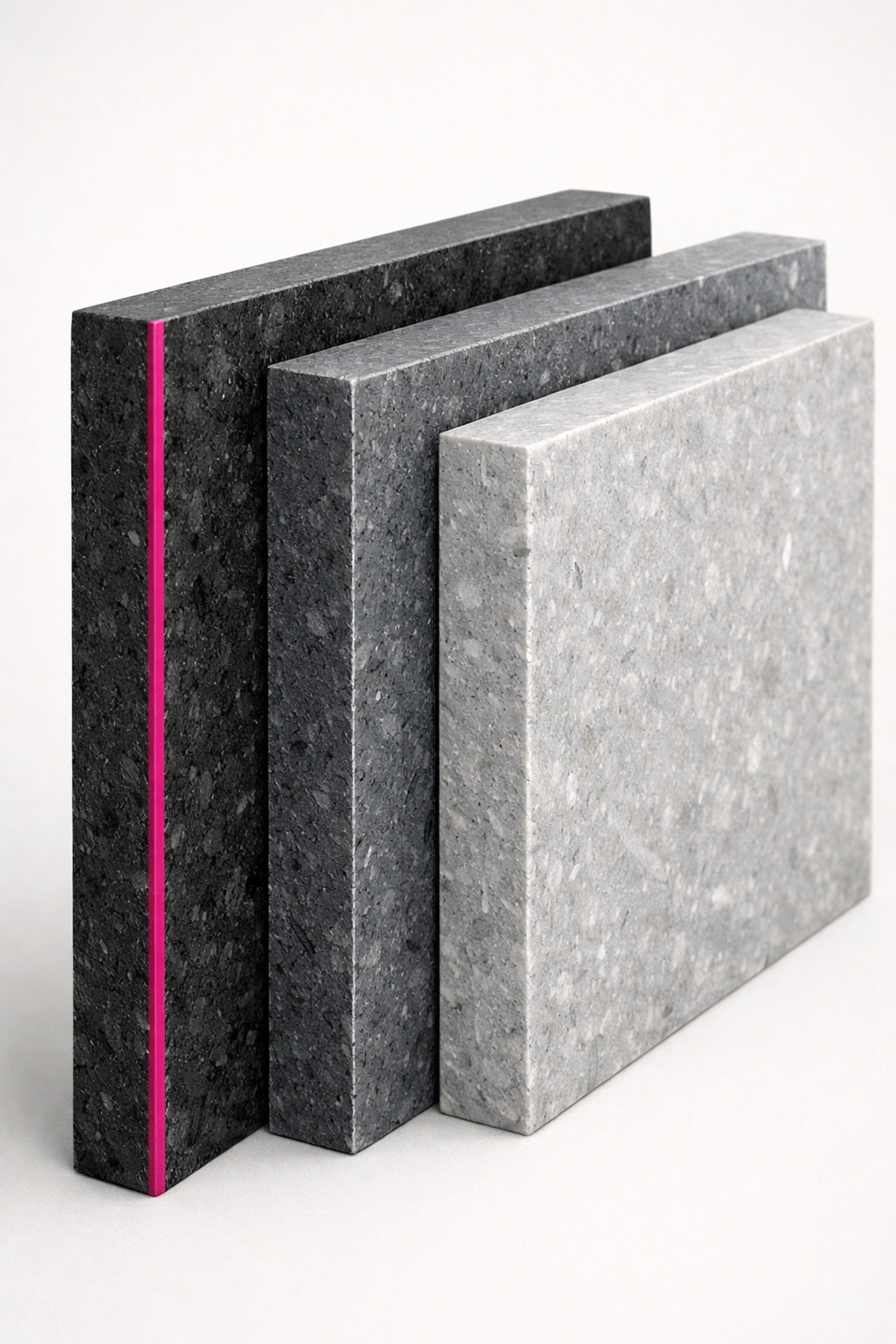
Once the material is collected and cleaned, Resourceful Living processes it into 100% recycled plastic panels. These panels can be color-matched to your event branding, creating a visual link between the waste and the final product.
4. Design for Disassembly
We work with your site designers to create furniture and fixtures that are functional and modular. The goal is to create assets that can be easily stored, moved, or even expanded upon as the event grows year after year.
Financial Incentives: Reducing Landfill Costs
The economic argument for legacy infrastructure is just as strong as the environmental one. Landfill levies in Australia are rising annually. By diverting tons of plastic waste away from the bin and into a manufacturing pipeline, you are directly reducing landfill costs with circular procurement.
Instead of a "sunk cost" (waste disposal), the expenditure becomes a "capital investment" (site assets). Over a 5-to-10-year period, the savings on replacement furniture and waste fees can be significant.
Case Study Concept: The Circular Festival Site
Imagine a 3-day music festival.
- Year 1: The festival collects 5 tons of HDPE plastic (bottles and caps).
- Post-Event: Resourceful Living processes that 5 tons into 150 structural panels.
- Year 2: The festival unveils a new "Sustainability Hub" featuring 20 picnic tables and 50 lockers made entirely from the previous year's waste.
- The Result: A tangible "Legacy" that patrons can touch and sit on. It’s a powerful marketing tool that proves the event's commitment to the recycled plastic circular economy.
Designing for the Elements
Australia’s climate is harsh. Whether your event is in the dusty outback or on a humid coastline, your infrastructure needs to withstand extreme UV and moisture.
Because our panels are solid-core and non-porous:
✅ They won't swell in the rain.
✅ They won't crack in the sun.
✅ They are resistant to termites and pests.
✅ They are easy to sanitize (essential for public furniture).
This durability ensures that your "Legacy" doesn't become a maintenance headache in three years' time.
Moving Beyond "Greenwashing"
Patrons today are savvy. They can spot "greenwashing" from a mile away. Merely putting out more recycling bins is no longer enough to satisfy a modern audience.
By creating permanent fixtures from event waste, you are providing proof of performance. You aren't just saying you recycle; you are showing the results. This builds deep trust with your community and sponsors, positioning your event as a leader in the future of sustainable building.
Conclusion: Start Your Legacy Today
The transition from a high-waste event to a circular, legacy-driven one doesn't happen overnight, but it does start with a single decision.
Whether you are managing a small community fair or a massive international festival, the plastic waste generated on your site has the potential to become something permanent, beautiful, and functional.
Ready to turn your festival waste into your next site asset?
At Resourceful Living, we specialize in helping Australian businesses and event organizers navigate the path from waste to high-value material.
- Step 1: Download our waste audit template.
- Step 2: Contact us to discuss your site furniture and fixture needs.
- Step 3: Let’s start building a legacy that lasts.
Visit us at resourcefulliving.com.au to see our range of recycled plastic panels and start your circular journey.